


Best Puppy Toys for Teething Pain: Top Picks & Guide
Table of Contents
- Best Puppy Toys for Teething Pain at a Glance
- Safe Chew Toys for Puppies: Materials and Firmness
- Cooling Teething Toys for Puppies: Does Cold Really Help?
- Best Chew for a 12-Week-Old Puppy: Age and Development
- How to Soothe a Teething Puppy: Non-Toy Methods
- How to Introduce and Rotate Teething Toys
- Toy Safety, Cleaning, and Replacement
- Conclusion
- Frequently Asked Questions
Last Updated: October 12, 2026
Best Puppy Toys for Teething Pain at a Glance
Teething pain in puppies is caused by new teeth pushing through sensitive gums, and the right chew toy can ease that discomfort while protecting your furniture. At FurEver Finds, we hear from new puppy owners every week who are overwhelmed by the wall of toys at big-box stores. The best puppy toys for teething pain share three traits: the right firmness for your puppy's jaw, a texture that massages sore gums, and a size that can't be swallowed. This guide breaks down materials, cooling options, and age-specific picks so you can choose with confidence.
Quick Picks:
- Best Overall: Dog Tug Rope Toy, for supervised tug and gentle gum massage
- Best for Solo Chewing: 6 Inch Medium Bully Sticks, a single-ingredient edible chew
- Best for Comfort: ChewPal CuddleBuddy, a plush squeaky toy for anxious chewers
| Toy | Price | Material | Best For | Supervision |
|---|---|---|---|---|
| Dog Tug Rope Toy | $56.99 | Durable rope | Interactive tug and fetch | Required |
| 6 Inch Bully Sticks (25 Count) | $69.58 | Single-ingredient beef | Edible chewing, dental health | Recommended |
| ChewPal CuddleBuddy | $46.99 | Soft plush | Comfort and solo play | Light |
The American Veterinary Medical Association notes that chewing is a normal, healthy behavior for puppies, and redirecting it early prevents destructive habits later AVMA guidance on puppy behavior and chewing.

Safe Chew Toys for Puppies: Materials and Firmness
Firmness matters more than brand. A toy that's too hard can crack a puppy tooth, while one that's too soft shreds in minutes. As a rule, if you can't dent the material with a fingernail, it's too hard for a teething puppy.
Here's how the common materials compare:
- Rubber: Flexible, easy to clean, good for stuffing treats
- Nylon: Long-lasting, best for determined chewers past 16 weeks
- Rope: Gently flosses teeth, ideal for tug-of-war
- Fabric and plush: Comforting but short-lived with heavy chewers
A common mistake is handing a 10-week-old puppy an adult nylon bone. Puppy jaws are still soft, and hard nylon can cause gum irritation. Match firmness to your puppy's size and chewing intensity, not to how long you want the toy to last.
Cooling Teething Toys for Puppies: Does Cold Really Help?
Yes, cold helps. Chilling a toy numbs sore gums the same way an ice pack soothes a bruise, and most puppies instinctively chew longer on a cold toy. The effect is temporary, usually a few minutes of relief, but that's often enough to settle a fussy puppy.
Freezer-safe options include rubber toys filled with water or broth, damp rope toys, and dedicated teething rings. Skip anything you can't fully dry, since a wet toy left in the freezer can grow bacteria. Never freeze a toy rock-solid; a partially chilled toy is safer on delicate gums.
Best Chew for a 12-Week-Old Puppy: Age and Development
A 12-week-old puppy is in the thick of teething, with baby teeth loosening and adult teeth starting to shift the gum line. At this stage, soft-to-medium chews work best: something with give that still offers resistance.
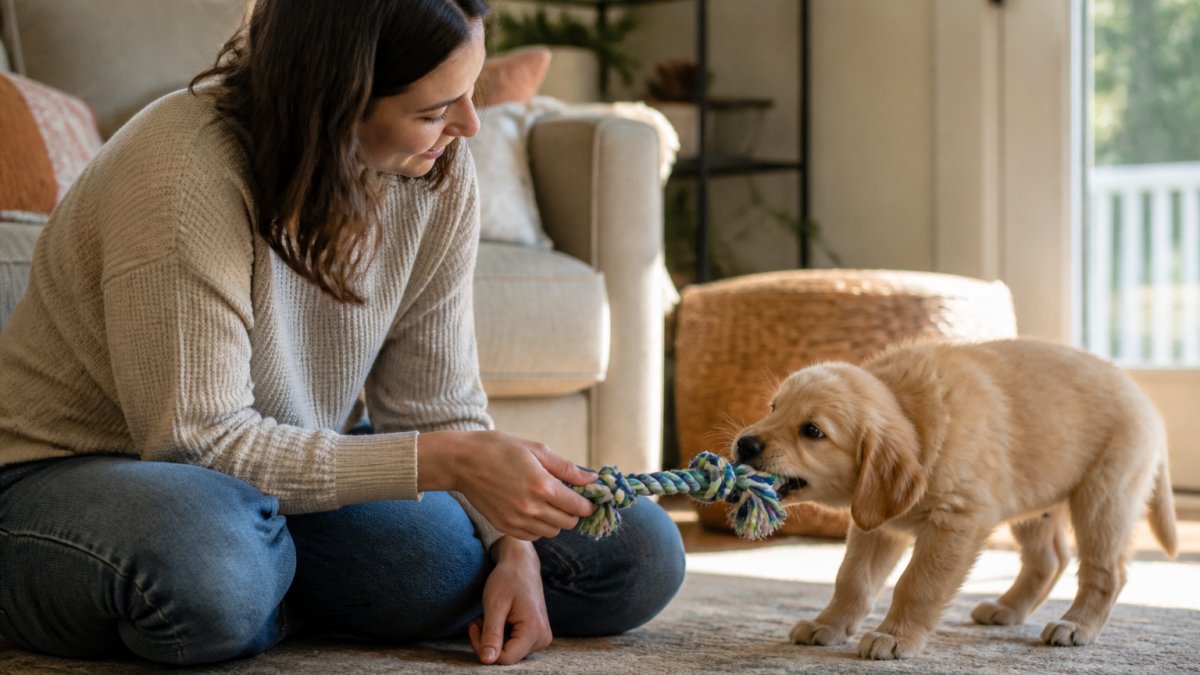
But 12 weeks is one snapshot, not the whole teething timeline. Toy choice should shift as teeth erupt, loosen, and finally give way to a full adult set. Here is how the stages break down.
Weeks 3-6 (early eruption). The first baby teeth break through. Puppies this young are still with the litter or just settling in, and their mouths are tender.
Weeks 8-12 (peak baby-tooth discomfort). This is when most owners notice the chewing. Baby teeth are fully in but already starting to loosen, and gums are inflamed. Soft-to-medium rubber, chilled rope, and thin bully sticks fit here.
Weeks 12-16 (loosening and transition). Baby teeth start falling out, you may find them on the floor or notice a little blood on a chew. Gums are tender and the adult teeth are pushing underneath.
Weeks 16-24 (adult teeth emerging). The adult incisors and canines are in, and the molars are working through. Chewing intensity climbs sharply. This is the right window to introduce firmer rubber and, for determined chewers, puppy-specific nylon.
Months 6-8 (final molars). The last molars come in, and many puppies get a second, milder round of gum discomfort.
Our Dog Tug Rope Toy suits the 8-to-16-week window well. The durable rope construction stands up to tugging and chewing, and the fibers help reduce plaque while your puppy works out that gum itch.
For edible options, the 6 Inch Medium Bully Sticks are single-ingredient and easily digestible, which matters when a puppy's stomach is still adjusting. They also stimulate the gums and help remove plaque as your puppy chews.

How to Soothe a Teething Puppy: Non-Toy Methods
Toys do most of the work, but they aren't the only tool. A few simple habits ease teething pain between chew sessions.
- Cold washcloth: Dampen, twist, and freeze for a cheap gum soother
- Frozen treats: Freeze broth in a silicone mold for a slow-release chew
- Gentle gum massage: Rub your finger along the gums for 30 seconds
- Frozen carrots: A firm, edible option for puppies over 12 weeks
- Extra naps: Tired puppies fuss less; teething is exhausting
If your puppy refuses food, runs a fever, or has swollen, bleeding gums that won't settle, call your veterinarian. Teething discomfort is normal, but those signs point to something else.
- 6 Inch Medium Size Bully Sticks (25 Count) - Bulk Bully Sticks for Dogs - No →
How to Introduce and Rotate Teething Toys
Novelty keeps puppies interested, so rotate three to five toys instead of leaving all of them out. Offer one or two at a time, then swap every few days. This also extends the life of each toy.
When introducing a new toy, let your puppy sniff it first, then play together briefly. If your puppy nips at your hands instead, redirect to the toy and praise the swap. Consistency teaches the difference between fingers and chews.
Toy Safety, Cleaning, and Replacement
Most teething-toy injuries don't come from a bad product. They come from a good product that was the wrong size, past its useful life, or left with a puppy unsupervised. A simple set of criteria removes most of the guesswork.
Sizing: the two-thumb rule. A chew toy should be wider than your puppy's muzzle so it can't be swallowed whole, and long enough that at least two of your thumbs fit side by side across the part your puppy actually chews.
Firmness: the fingernail test. Press a fingernail into the material. If it leaves a dent, the toy is soft enough for a teething puppy. If it doesn't dent at all, it's too hard and can crack a puppy tooth or bruise the gum line.
Damage: the discard triggers. Retire a toy immediately when you see any of the following:
- Cracks, splits, or a rough, pitted surface on rubber or nylon
- Loose strands, fraying, or a rope that has flattened and hardened
- Exposed squeaker, stuffing, or plastic insert
- A chew that has shrunk to a size your puppy could gulp down, for bully sticks, toss the last inch
- Missing pieces, or a seam that has opened on a plush toy
A good rule: if you'd hesitate to give it to a friend's puppy, it's time for a new one.
Supervision: match it to the toy. Edible chews and rope need eyes on the puppy the entire time. Plush toys like the ChewPal CuddleBuddy are comfort items, not heavy-duty chews, they can be left in the crate, but check seams often, because a determined chewer can open one in minutes.

Cleaning by material.
- Rubber and nylon: Hand-wash in warm water with a pet-safe soap, rinse thoroughly, and air-dry completely before returning to the puppy. Dishwasher-safe rubber toys can go on the top rack, but skip the heated dry cycle.
- Rope: Rope is the hardest to keep clean because the braided fibers trap saliva and debris. Soak in warm water with a pet-safe soap, agitate the strands, rinse until the water runs clear, and air-dry in a well-ventilated spot. A rope that stays damp or smells sour should be replaced, not rewashed.
- Plush and fabric: Check the care tag first. Most plush toys can be machine-washed on gentle in a mesh bag and air-dried, but heat can shrink seams and loosen stitching. If a plush toy has a squeaker, confirm it's securely encased before washing.
- Edible chews: No cleaning needed, but store bully sticks and similar chews in a cool, dry place and discard any that become damp or develop an off smell.
Freezer hygiene. Any toy headed for the freezer should be fully dry first. A wet toy left in the freezer can grow bacteria, and a toy that's been frozen and thawed repeatedly should be washed between uses.
A quick weekly routine. Once a week, gather every toy, inspect each one under good light, wash the ones that need it, and pull anything that fails the checks above. Rotation makes this easy: toys that are out of rotation are the ones you inspect, so worn items get caught before they go back into the puppy's mouth.
Conclusion
Teething is a short season, but the habits you build now shape how your puppy chews for life. Choosing the right firmness, rotating toys, and knowing when to replace them keeps sore gums soothed and your home intact.
At FurEver Finds, we curate premium pet essentials with the same care we'd want for our own dogs. Our Dog Tug Rope Toy, 6 Inch Medium Bully Sticks, and ChewPal CuddleBuddy each serve a different teething need, and every order placed by 12 PM ships next-day. Get started with FurEver Finds and give your puppy the comfort they deserve.
Frequently Asked Questions
What is the best chew for a 12-week-old puppy?
At 12 weeks, a puppy's teeth are still coming in, so choose a soft, flexible chew that gives gently under pressure. A plush molar toy like the ChewPal CuddleBuddy ($46.99) works well for small to medium puppies, while a rope toy such as the Dog Tug Rope Toy ($56.99) offers a firmer texture for supervised chewing. Avoid hard nylon or antler chews until adult teeth arrive, and always watch for pieces breaking off.
What are some good cooling teething toys for puppies?
Cooling relief comes from a chilled or frozen toy, not a hard block. A plush toy that is freezer-safe can be chilled for 10 to 15 minutes, then offered for short sessions. The cold numbs sore gums and reduces swelling. Always supervise, and never leave a frozen toy out for long periods, as over-chilling can hurt sensitive teeth.
How long should a puppy chew on a teething toy?
Keep sessions short, around 10 to 15 minutes at a time, especially with firmer chews. Puppies can overdo it and make their gums sorer. Rotate between toys and textures so the puppy stays interested without wearing down one spot. If you notice bleeding or excessive drooling, pause and offer a softer option or a chilled cloth.
When should I replace a puppy's chew toy?
Replace any toy as soon as you see cracks, missing chunks, exposed squeakers, or frayed rope ends. Chewing intensity varies by puppy, so check toys weekly. A damaged toy can become a choking hazard or cause gum irritation. For rope toys, trim loose fibers; for plush toys, repair or discard if seams open. Fresh, intact toys are safer and more appealing.
Can puppies use frozen toys for teething?
Yes, frozen toys can help, but use them correctly. Choose a freezer-safe toy, chill rather than freeze solid, and limit sessions to about 10 minutes. Frozen carrots or a chilled plush toy can soothe sore gums. Avoid freezing hard rubber or nylon, which can become too hard and damage teeth. Always supervise and let the toy warm slightly before giving it to your puppy.