


Durable Calming Toys for Anxious Dogs
Table of Contents
- Why Anxious Dogs Need Durable Calming Toys
- Best Chew Toys for Aggressive Chewers
- Treat-Dispensing Toys That Reduce Separation Anxiety
- How to Use Enrichment Toys for Anxiety
- Puzzle Toys and Mental Stimulation Options
- Soothing Textures and Licking Mats for Anxiety Relief
- How Long Should a Dog Play with a Puzzle Toy
- Safety Tips for Unsupervised Play and Material Selection
Last Updated: August 18, 2026
Why Anxious Dogs Need Durable Calming Toys
Separation anxiety in dogs is a genuine stress response that escalates into destructive behavior, excessive barking, and self-injury if unaddressed. Anxious dogs chew intensely and compulsively, their attempt to self-soothe through repetitive action. Standard toys fail under this pressure. A durable calming toy withstands that intensity while remaining safe for unsupervised play, providing mental stimulation, satisfying the urge to chew, and creating positive associations with alone time.
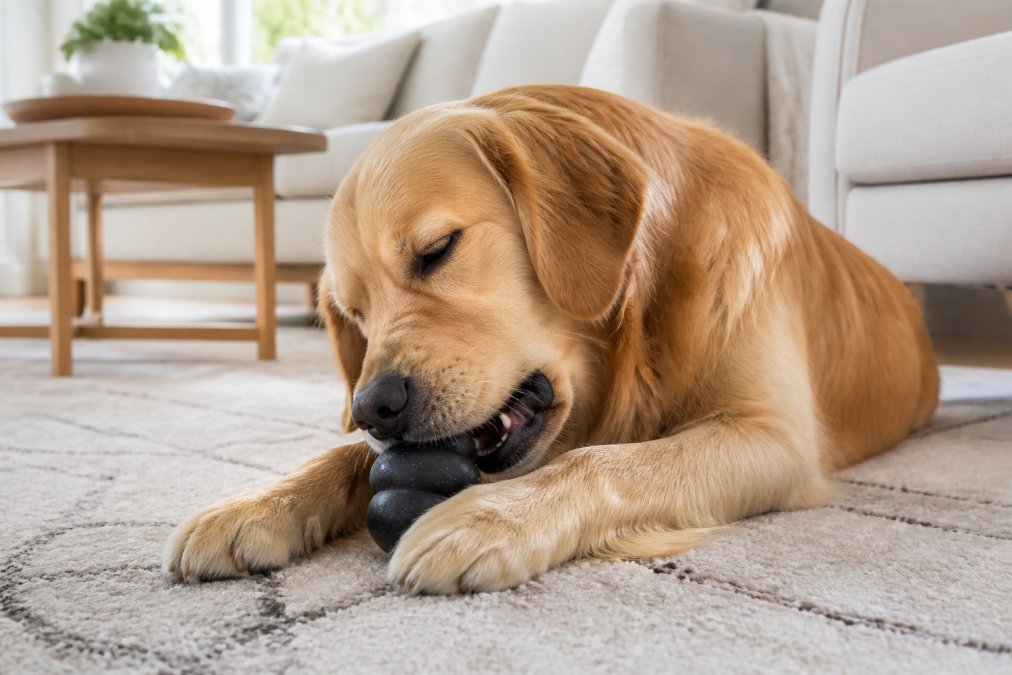
The difference between a toy that survives and one that truly calms comes down to material science and design. Toys made from natural rubber, reinforced nylon, and resilient polymers provide the sensory feedback anxious dogs need. A toy that splinters teaches destruction is possible, reinforcing anxiety-driven behavior. A toy that withstands hours of intense chewing provides genuine stress relief.
At FurEver Finds, we've curated toys specifically chosen for dogs dealing with anxiety and stress. The right toy does more than survive, it actively reduces anxiety by providing cognitive engagement, satisfying compulsive chewing urges, and offering soothing textures that trigger calming responses.
Best Chew Toys for Aggressive Chewers
Heavy-duty chew toys form the foundation of any anxiety management strategy. Aggressive chewers need toys engineered specifically for their chewing power.
KONG Extreme: The Gold Standard for Power Chewers
The KONG Extreme is the industry benchmark for durable toys. Made from KONG's proprietary black natural rubber formula, it's engineered for the most intense chewers. You can stuff it with treats, kibble, or freeze it with peanut butter or broth for extended engagement. The unpredictable bounce makes it work for interactive play and solo chewing sessions. For anxious dogs, the stuffing capability transforms it into a problem-solving tool that keeps their mind engaged while extracting rewards. Available in sizes from Small to XXL, you can match it to your dog's weight and chewing intensity. Veterinarians and trainers recommend it consistently. The primary limitation is that the material is genuinely hard, dogs with sensitive gums or weak teeth may experience discomfort.
GoughNuts: Virtually Indestructible with Lifetime Warranty
GoughNuts takes durability to another level with carbon rubber construction made in the USA. The material is denser and more resilient than most alternatives, designed to resist puncture, tearing, and splintering even under extreme chewing pressure. What makes GoughNuts unique is their patented safety indicator system: a green outer ring with a red inner core. When you see red showing through, it's time to replace the toy. The lifetime chew-through warranty is backed by real confidence in the product. For anxious dogs whose owners worry about ingesting toy fragments, this safety system provides genuine peace of mind. The downside is cost, they're more expensive than many alternatives, but that investment pays for itself through longevity.
Nylabone Dura Chew: Dental Benefits and Long-Lasting Durability
Nylabone Dura Chew toys serve a dual purpose: they satisfy the urge to chew while promoting dental health. Made from durable nylon, they're designed to last weeks even with aggressive chewers. The textured surface helps clean teeth and control plaque buildup. Available in multiple shapes and flavors like bacon and peanut butter, Nylabone offers variety that keeps dogs interested. Veterinarian-recommended specifically for power chewers, the material is hard enough to withstand intense chewing but not so hard that it risks tooth damage.
Treat-Dispensing Toys That Reduce Separation Anxiety
Treat-dispensing toys transform chewing from a passive activity into active problem-solving. For anxious dogs, this cognitive engagement is therapeutic, redirecting anxious energy into purposeful activity.
West Paw Zogoflex Tux: Stuffable and Dishwasher Safe
The West Paw Zogoflex Tux is a treat-dispensing toy made from Zogoflex, a proprietary pliable, bouncy material that's non-toxic and fully recyclable. You can stuff it with treats, kibble, or frozen rewards. The shape allows dogs to grip it easily, and the opening is sized so treats require effort to extract but aren't impossible to reach. For anxious dogs, that effort provides exactly the right amount of cognitive engagement. The toy floats and is dishwasher safe, which matters for hygiene when rotating toys through your dog's routine.
Benebone Wishbone: Real Flavor Infusion for Extended Engagement
Benebone Wishbone toys are made from super-strong nylon infused with 100% real bacon, peanut, or chicken flavor throughout the entire toy. The ergonomic wishbone shape gives dogs something to grip comfortably. The real flavor infusion runs through the material, so the toy remains appealing as the dog chews it down over weeks. The toy is durable for aggressive chewers, often lasting weeks of regular use. Some aggressive chewers can break off small pieces, so supervision is recommended initially.
How to Use Enrichment Toys for Anxiety
Using toys effectively for anxiety requires strategy. The most effective approach pairs toys with behavioral training and creates structured routines that reduce anxiety triggers.
Pairing Toys with Behavioral Training
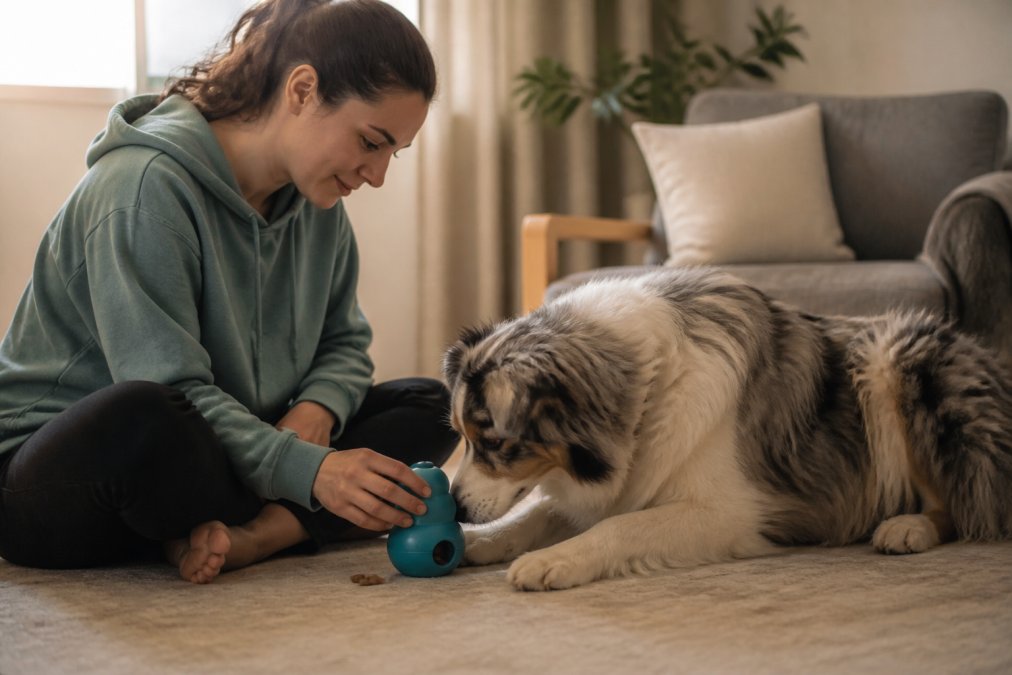
Enrichment toys work best when paired with desensitization training. If your dog has separation anxiety, introduce the toy during moments when you're present, so the dog learns that the toy is rewarding. Stuff it with something highly rewarding, frozen peanut butter, high-value treats, or wet food. Once the dog is engaged, briefly step out of the room. Return before anxiety escalates, so the dog learns that departures are brief and manageable. Over weeks, extend the duration of departures while the toy is present. The dog's brain learns: toy appears, owner leaves briefly, owner returns. The toy becomes a predictor of your return, not a symbol of abandonment.
Establishing a Toy Rotation Schedule
Dogs habituate to toys and lose interest in the same toy day after day. A rotation schedule maintains novelty and engagement. Rather than leaving the same toy available constantly, rotate through three to four toys on a weekly basis. Store rotated toys out of sight. When you introduce a toy from rotation, the dog perceives it as new, which resets engagement and extends the lifespan of each toy.
Puzzle Toys and Mental Stimulation Options
Puzzle toys elevate enrichment beyond simple chewing. They require problem-solving, which engages the dog's cognitive capacity and provides genuine mental fatigue. For anxious dogs, mental stimulation redirects anxious energy into focused thinking.
Planet Dog Orbee-Tuff Snoop: Interactive Challenge for Slower Eating
The Planet Dog Orbee-Tuff Snoop is an interactive puzzle toy designed to make treat extraction challenging. The translucent, squishy material has a deep crevice where you hide treats. For anxious dogs, the Snoop's design is therapeutic, the dog's focus narrows to the problem of getting the treat out. The toy also naturally slows eating, which improves digestion and prevents bloat. Made from Orbee-Tuff TPE material, which is free from BPA, lead, and phthalates, it's durable enough for regular chewing but isn't designed for aggressive chewers who gnaw relentlessly.
Outward Hound Hide-A-Squirrel: Engaging Natural Hunting Instincts
The Outward Hound Hide-A-Squirrel taps into dogs' natural hunting instincts. The toy is a soft tree trunk with squeaky plush squirrels hidden inside. Dogs pull the squirrels out and engage in natural predatory play. For anxious dogs, this toy channels energy into instinctive behavior rather than anxious pacing or destructive chewing. The soft plush material is gentle on teeth and gums. Supervision is recommended to prevent ingestion of torn pieces.
Soothing Textures and Licking Mats for Anxiety Relief
Certain textures and activities have direct calming effects. Repetitive licking and foraging-based activities trigger endorphin release, creating genuine physiological calming.
LickiMat Tuff: Calming Through Repetitive Licking
The LickiMat Tuff is a textured mat with nubs, squares, or crosses designed to hold soft foods and treats. When a dog licks the mat repeatedly, it stimulates endorphin release, the same neurochemical response that calms human anxiety. You can spread wet food, peanut butter, or yogurt on the mat, freeze it for extended engagement, or use it as a slow feeder during meals. The mat is made with a solid polypropylene base, making it dishwasher safe and easy to clean.
Snuffle Mat: Foraging-Based Stress Relief
A snuffle mat is a foraging toy made from soft fabric strips where you hide treats or kibble. Dogs use their powerful sense of smell to search for hidden rewards, engaging in natural foraging behavior that's deeply satisfying. Foraging-based enrichment is particularly effective for anxious dogs because it mimics natural behavior patterns. You can use the snuffle mat for daily meals, hiding kibble throughout the fabric, or as a special enrichment activity. The mat is machine washable. It's not suitable for aggressive chewers who try to eat the fabric itself.
How Long Should a Dog Play with a Puzzle Toy
Most dogs should spend 15 to 30 minutes with a puzzle toy before they either solve it or lose interest. For anxious dogs, multiple shorter sessions throughout the day are more effective than one long session. A 15-minute puzzle toy session in the morning, another at midday, and one in the evening provides regular mental stimulation without creating dependency. Once your dog loses interest or becomes frustrated, remove the toy. If your dog regularly fails to solve a puzzle toy, the difficulty level is too high, switch to an easier option or provide more guidance.
Safety Tips for Unsupervised Play and Material Selection
Unsupervised play with toys carries inherent risks. The goal is to minimize those risks through smart material selection and monitoring.
Choosing Non-Toxic, Dishwasher-Safe Materials
Materials matter significantly for safety. Non-toxic materials are essential since your dog will spend hours with their mouth on these toys. Look for toys made from natural rubber, recyclable polymers, or food-grade silicone. Avoid toys made from materials that splinter easily or break into sharp fragments. For anxious dogs, durability directly impacts safety. A toy that breaks quickly becomes a hazard. Investing in genuinely durable toys, even at higher cost, is a safety decision.
Recognizing Signs of Stress During Play
Watch your dog during toy play. Signs of stress include excessive panting, whining, obsessive repetition of the same action, or sudden disinterest. If your dog becomes fixated on a single toy to the point of obsession, or if play seems frantic rather than enjoyable, remove the toy and redirect. Also watch for physical signs of wear on your dog's mouth. Excessive drooling, bleeding gums, or reluctance to eat can indicate a toy is too hard or causing irritation. If you notice these signs, switch to softer alternatives or reduce chewing duration.
| Toy Type | Best For | Durability | Material | Safety Notes |
|---|---|---|---|---|
| KONG Extreme | Power chewers, stuffing | Exceptional | Natural rubber | Hard; monitor gum sensitivity |
| GoughNuts | Extreme chewers | Virtually indestructible | Carbon rubber | High cost; lifetime warranty |
| Nylabone Dura Chew | Aggressive chewers | Weeks of use | Nylon | Not for puppies or weak teeth |
| West Paw Zogoflex Tux | Treat-dispensing, water play | Very durable | Zogoflex polymer | Dishwasher safe; flexible |
| Benebone Wishbone | Flavor-motivated dogs | Weeks of use | Nylon with real flavor | Hard; supervision recommended |
| Planet Dog Orbee-Tuff Snoop | Puzzle engagement, slow eating | Moderate | Orbee-Tuff TPE | Not for aggressive chewers |
| Outward Hound Hide-A-Squirrel | Interactive play, hunting instincts | Moderate | Plush fabric | Soft; supervise for ingestion risk |
| LickiMat Tuff | Anxiety relief, licking behavior | Durable | Polypropylene | Licking tool, not a chew toy |
| Snuffle Mat | Foraging, olfactory engagement | Moderate | Fabric strips | Not for dogs that eat fabric |
Anxious dogs need tools that work within a comprehensive anxiety management strategy. The toys covered here deliver genuine results: they survive aggressive chewing, provide meaningful engagement, and create the conditions for anxiety reduction through mental stimulation and self-soothing behavior.
The most common mistake pet owners make is treating toys as entertainment rather than therapeutic tools. For anxious dogs, the right toy paired with behavioral training and consistent routines can meaningfully reduce stress and destructive behavior. FurEver Finds curates these products because quality matters when your dog's wellbeing is at stake. Premium toys last longer, provide better engagement, and ultimately deliver better results than cheaper alternatives. Your anxious dog deserves a toy that actually works. The American Kennel Club's guide to anxiety in dogs provides additional behavioral context, and [veterinary research on enrichment toys(/collections/toys-enrichment-training) | avma.org] supports the therapeutic benefits of proper toy selection. Start with one toy that matches your dog's chewing intensity, pair it with a rotation schedule and training consistency, and you'll see measurable improvements in anxiety behavior within weeks.
Frequently Asked Questions
What are the best toys for calming anxiety in dogs?
The best calming toys for anxious dogs combine durability with mental engagement. Treat-dispensing toys like the West Paw Zogoflex Tux and LickiMat Tuff are highly effective because they extend playtime and promote repetitive, soothing behaviors. For aggressive chewers, KONG Extreme and GoughNuts provide the durability needed to withstand intense chewing while keeping dogs focused. Puzzle toys and snuffle mats engage a dog's natural foraging instincts, providing cognitive engagement that helps redirect anxiety into productive activity.
Do chew toys actually help with dog anxiety?
Yes, chew toys help reduce anxiety by providing focused mental stimulation and a healthy outlet for stress. Chewing releases endorphins, which naturally calm anxious dogs. Durable chew toys keep dogs occupied during stressful situations like thunderstorms or when owners leave home. For best results, pair chew toys with a consistent routine and positive reinforcement training. Rotating toys every few days maintains novelty and sustained interest, preventing boredom-related anxiety from returning.
How long should a dog play with a puzzle toy?
Most dogs benefit from 10-20 minutes of puzzle toy engagement per session, though this varies by age and energy level. Puppies and senior dogs may need shorter sessions of 5-10 minutes to avoid frustration or fatigue. Interactive puzzle toys should be supervised during initial use to ensure your dog doesn't become overly frustrated. Rotate puzzle toys every few days to maintain engagement. If your dog loses interest within 5 minutes, the toy may be too difficult; try easier options or pair it with higher-value treats.
What materials are safest for anxious dogs?
Look for toys made from non-toxic, BPA-free materials like natural rubber, food-grade silicone, and durable TPE (thermoplastic elastomer). Natural rubber toys like KONG Extreme are tough and safe for heavy chewers. Nylon toys such as Nylabone Dura Chew are durable but require supervision to prevent ingestion of small pieces. Dishwasher-safe toys like West Paw Zogoflex and LickiMat Tuff are easier to keep clean, reducing bacteria buildup. Always verify that toys have no loose parts, seams, or small pieces that could be swallowed.
How can I tell if my dog is experiencing separation anxiety?
Signs of separation anxiety include destructive behavior, excessive barking or howling when alone, pacing, panting, and attempts to escape. Some dogs become overly clingy or show signs of stress before you leave. Anxious dogs may refuse to eat or have accidents indoors despite being housetrained. Calming toys paired with gradual desensitization training help reduce these behaviors. Start with short absences and reward calm behavior. Consult a veterinarian or certified dog behaviorist if anxiety symptoms persist, as medication may be recommended alongside toy-based enrichment.
This article was written using GrandRanker