


Durable Chew Toys for Aggressive Chewers: Top 9 Picks
Table of Contents
- How We Evaluated Durable Chew Toys for Aggressive Chewers
- Quick Comparison: Best Chew Toys for Heavy Chewers
- Safe Materials for Heavy Chewers: Rubber vs. Nylon vs. Natural Chews
- 1. KONG Extreme: Best Natural Rubber Toy for Power Chewers
- 2. GoughNuts Black Ring: Best for Extreme Bite Force
- 3. Benebone Wishbone: Best Nylon Chew for Aggressive Chewers
- 4. West Paw Zogoflex Tux: Best Treat-Dispensing Toy for Mental Stimulation
- 5. Nylabone Dura Chew Power Chew: Best for Dental Health
Last Updated: August 2, 2026
Finding durable chew toys for aggressive chewers is one of the most frustrating challenges dog owners face. The right toy, matched to your dog's chew intensity and size, can last weeks or months instead of minutes. Below, we'll walk you through how to identify an aggressive chewer, which materials hold up, and our top five picks that survive the toughest bite forces.
Material density, toy geometry, and your dog's specific chewing behavior all determine whether a toy survives. Get those variables right, and you stop wasting money on toys that don't last.
How We Evaluated Durable Chew Toys for Aggressive Chewers
Our evaluation criteria focused on material integrity under sustained bite force, safety standards, mental enrichment value, and real-world longevity for heavy chewers.
How to Identify an Aggressive Chewer
An aggressive chewer is a dog that consistently destroys standard toys within minutes to hours. Common signs include toys reduced to fragments within one play session, rapid destruction of rope fibers or squeakers, and sustained, focused gnawing rather than brief play.
Breed is a factor, but not the only one. Pit Bulls, German Shepherds, Labrador Retrievers, and Rottweilers are frequently cited as power chewers, but a determined Border Collie or anxious rescue dog of any size can destroy toys just as efficiently.
Chewing Behavior Psychology: Why Dogs Destroy Toys
Chewing is rooted in predatory drive, stress relief, and dental maintenance. Dogs that chew destructively are often under-stimulated, anxious, or fulfilling a biological need without an appropriate outlet. A mentally stimulating toy, like a treat-dispensing design, can redirect obsessive chewing into problem-solving behavior, reducing anxiety-driven destruction.
Quick Comparison: Best Chew Toys for Heavy Chewers
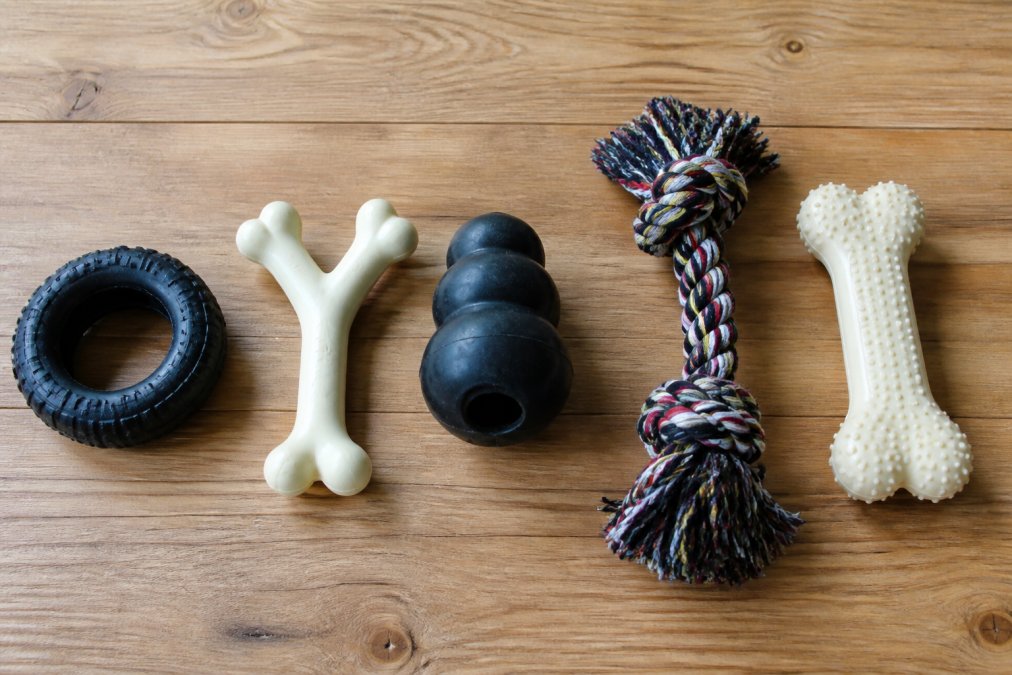
| Toy | Material | Best For | Treat-Dispensing | Dental Benefit | Guarantee |
|---|---|---|---|---|---|
| KONG Extreme | Natural black rubber | Power chewers, anxiety relief | Yes | Moderate | Varies by retailer |
| GoughNuts Black Ring | Black rubber compound | Extreme bite force, safety | No | Moderate | Lifetime |
| Benebone Wishbone | Nylon | Extended gnawing, flavor engagement | No | Moderate | None stated |
| West Paw Zogoflex Tux | Zogoflex (non-toxic) | Mental stimulation, interactive play | Yes | Moderate | One-time replacement |
| Nylabone Dura Chew | Nylon | Dental health, plaque control | No | High | None stated |
Safe Materials for Heavy Chewers: Rubber vs. Nylon vs. Natural Chews
Material selection is the single most important decision when buying chew toys for a power chewer.
Natural rubber is the gold standard for aggressive chewers. It flexes under bite pressure rather than shattering, making it far less likely to produce sharp fragments and gentler on tooth enamel than rigid nylon.
Nylon toys offer extreme wear resistance but come with trade-offs. Hard nylon can cause slab fractures in dogs with powerful bite forces. The "thumbnail test" is useful: if your thumbnail doesn't leave a mark, the toy is likely too hard for safe chewing.
Natural chews (yak milk chews, bully sticks) are digestible, a significant safety advantage. If a dog breaks off a piece, it passes through the digestive system rather than creating blockage risk.
Material Toxicity and Safety Standards to Know
Pet toys are not regulated under the Consumer Product Safety Improvement Act, so the burden of vetting materials falls on manufacturers and consumers.
What to look for on any chew toy label:
- BPA-free and phthalate-free: These plasticizers have been linked to endocrine disruption.
- Non-toxic rubber compounds: Natural rubber is inherently safer than synthetic rubber blends.
- Made in the USA: Domestic manufacturing is subject to more consistent quality oversight.
1. KONG Extreme: Best Natural Rubber Toy for Power Chewers
The KONG Extreme is the benchmark against which every other durable chew toy gets measured. Made from KONG's proprietary ultra-durable black natural rubber formula, it's specifically engineered for dogs that destroy standard toys in minutes.
The hollow center is the real genius: stuffing it with kibble, peanut butter, or wet food transforms it into a mental stimulation tool. Freezing the stuffed toy extends engagement time substantially, particularly useful for dogs with separation anxiety.
What works: The erratic bounce adds unpredictable play that keeps dogs engaged. The size range is extensive, and veterinarians widely recommend it as a safe outlet for natural chewing instincts.
What doesn't: No toy is truly indestructible, and extreme power chewers may eventually work through the rubber. Cleaning dried peanut butter from the interior requires a bottle brush or dishwasher cycle.
Pros:
- Highly durable natural rubber resists puncture and tearing
- Treat-dispensing design provides mental enrichment
- Safe on tooth enamel
Cons:
- Not truly indestructible for the most powerful chewers
- Interior can be difficult to clean
2. GoughNuts Black Ring: Best for Extreme Bite Force
For dogs that have destroyed every other toy, the GoughNuts Black Ring is the answer. Designed by a rubber chemist with three decades of experience, this is the most technically rigorous chew toy available.
The defining feature is the safety indicator system. The ring is manufactured with a red inner core that remains hidden as long as the toy is intact. If a dog chews through to the red layer, the toy has reached the end of its safe service life. GoughNuts backs this with a lifetime guarantee: chew through to the red, send it back, and they'll replace it.
This is the only chew toy that builds a safety monitoring system directly into the product design. For owners of Pit Bulls, Mastiffs, or German Shepherds with serious bite force, that peace of mind is worth the higher price point.
What works: The ring shape is ergonomic for dogs to grip and gnaw. Made in the USA from natural rubber, it passes material safety standards. The lifetime guarantee is genuine and well-documented.
What doesn't: The GoughNuts lineup offers limited shapes compared to brands like KONG. It's also one of the pricier options and doesn't offer treat-dispensing functionality.
Pros:
- Virtually indestructible for most power chewers
- Safety indicator system removes guesswork about replacement
- Lifetime guarantee provides real consumer protection
Cons:
- Higher price point
- No treat-dispensing feature, limited shape variety
3. Benebone Wishbone: Best Nylon Chew for Aggressive Chewers
Most nylon chews fail aggressive chewers because the dog loses interest before the toy wears out. Benebone solved this by infusing the nylon with real food flavors, bacon, chicken, and peanut, rather than relying on surface coatings that fade quickly.
The wishbone shape is ergonomically designed to let dogs grip the toy with their paws while chewing. Made in the USA, the Benebone Wishbone is built for extended gnawing sessions, with many owners reporting the toy lasting weeks.
What works: Real food flavor infusion runs throughout the material, so dogs stay engaged as they wear the toy down. The ergonomic grip design is genuinely engaging for dogs.
What doesn't: The Benebone is very hard. Dogs with worn enamel or older dogs should be monitored closely, as hardness can stress teeth. This toy is not appropriate for puppies.
Pros:
- Real flavor infusion maintains dog interest through extended chewing
- Ergonomic shape allows dogs to apply full bite force
- Very durable, often lasting weeks
Cons:
- Too hard for puppies or dogs with dental issues
- Not treat-dispensing
4. West Paw Zogoflex Tux: Best Treat-Dispensing Toy for Mental Stimulation
The West Paw Zogoflex Tux is the best argument for why treat-dispensing toys belong in every aggressive chewer's rotation. Pure chew toys address the physical need to gnaw. The Tux addresses the behavioral root cause by turning chewing into problem-solving.
Made from West Paw's proprietary Zogoflex material, the Tux is BPA-free, phthalate-free, and FDA-compliant for food contact surfaces. It floats for water play and is dishwasher safe. West Paw manufactures it in Montana and backs it with a one-time replacement guarantee.
The Tux's shape, with a weighted bottom and irregular top opening, makes treat dispensing unpredictable. Dogs must work the toy from multiple angles, extending engagement and providing genuine mental enrichment.
What works: The combination of durability and mental stimulation is the Tux's defining strength. For dogs that chew from boredom or anxiety, this toy addresses the underlying behavior. The dishwasher-safe design is a practical advantage.
What doesn't: The Zogoflex material, while durable, is not the hardest compound on this list. For extreme power chewers, the GoughNuts Black Ring may outlast it.
Pros:
- Combines durability with genuine mental stimulation
- Non-toxic, BPA-free, FDA-compliant materials
- Dishwasher safe, floats for water play
Cons:
- Not the hardest material for extreme power chewers
- Treat residue requires prompt cleaning
5. Nylabone Dura Chew Power Chew: Best for Dental Health
The Nylabone Dura Chew Power Chew earns its place by actively improving dental health while satisfying the urge to chew. The textured surface with nubs and raised ridges functions like a mechanical toothbrush, scraping plaque and tartar from tooth surfaces.
According to American Veterinary Dental College guidance on dental disease, dental disease affects the majority of adult dogs and is one of the most commonly diagnosed health problems in veterinary practice. A toy that provides daily passive dental cleaning has real preventive health value.
Made in the USA from tough nylon, the Dura Chew Power Chew is available in multiple sizes and flavors.
What works: The dental benefit is genuine and well-documented. For owners who struggle to brush their dog's teeth regularly, this toy provides meaningful daily plaque control. The price point is accessible.
What doesn't: Nylon is not digestible. Small nylon flakes can break off during aggressive chewing and are generally considered safe in small quantities, but owners should monitor wear closely and replace the toy when large pieces break away.
Pros:
- Textured surface actively reduces plaque and tartar buildup
- Long-lasting for persistent chewers
- Available in flavors that maintain engagement
Cons:
- Not digestible; must be replaced when pieces break off
- Some dogs prefer rubber or natural chew textures
How to Stop a Dog from Destroying Toys: Rotation and Supervision Strategies
The most durable chew toy will still wear out faster if a dog has unsupervised, unlimited access to it. Toy rotation and active supervision are the two most underrated strategies for extending toy lifespan and keeping chewing safe.
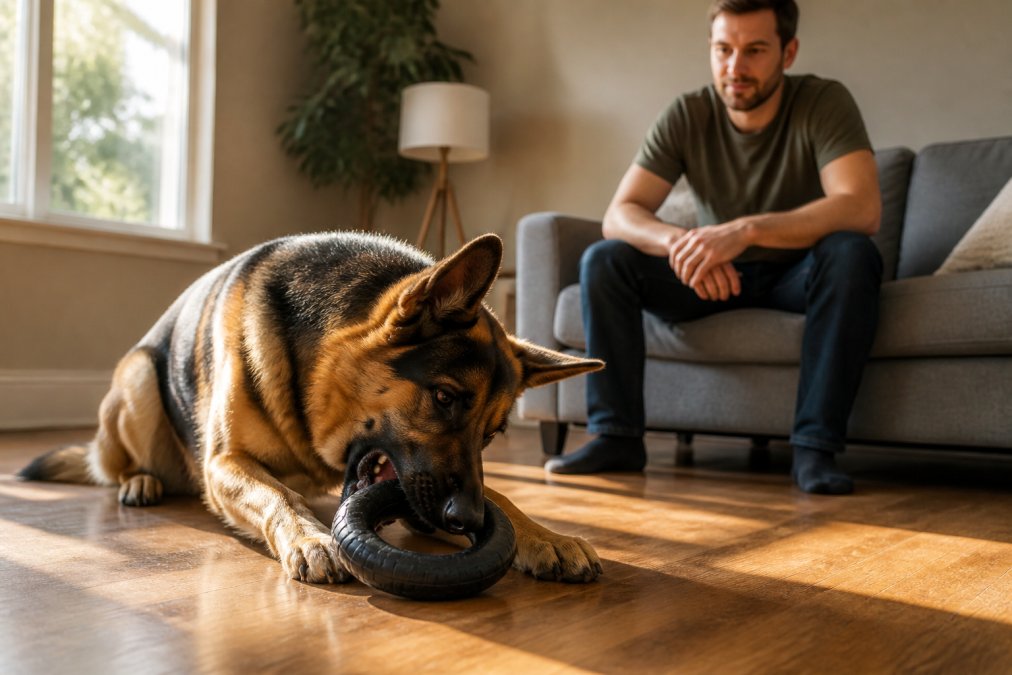
Toy rotation means keeping three to five toys in active circulation rather than leaving all toys available at once. Rotate toys in and out every two to three days. Dogs habituate quickly to familiar objects; a toy put away for three days registers as novel again.
Supervision guidelines matter because even the toughest toy becomes a hazard once chewed down to a certain size. If a toy piece is small enough to fit entirely in your dog's mouth, it's time to discard it.
Repair vs. Replace criteria:
| Condition | Action |
|---|---|
| Surface scratches, minor tooth marks | Continue use, monitor |
| Deep gouges exposing inner material | Replace immediately |
| Pieces breaking off | Replace immediately |
| Toy reduced to half original size | Replace |
| GoughNuts red layer visible | Replace, claim guarantee |
| Rope toy fibers unraveling significantly | Replace |
Swallowed toy fragments are a leading cause of gastrointestinal obstruction in dogs, often requiring emergency surgery.
Dental Health Benefits of Chewing: What the Evidence Actually Shows
Chewing is one of the most effective natural mechanisms for canine dental hygiene. The mechanical action of gnawing scrapes biofilm and early plaque deposits from tooth surfaces, particularly between teeth that a toothbrush can't easily reach.
Natural rubber toys provide moderate dental benefit through flexing and compression against tooth surfaces. Nylon toys with textured ridges, like the Nylabone Dura Chew, provide more aggressive mechanical cleaning.
The important caveat: no chew toy replaces professional dental cleaning. According to American Animal Hospital Association dental care standards, professional veterinary dental cleanings under anesthesia remain the gold standard for addressing established tartar buildup and periodontal disease. Chew toys are a preventive tool, not a treatment.
For owners of aggressive chewers, the dental angle matters because hard chewing on inappropriate surfaces (real bones, antlers, hooves) is a documented cause of slab fractures in carnassial teeth. Choosing toys with appropriate material density protects dental health while satisfying the chewing drive.
Finding the right durable chew toys for aggressive chewers requires matching material density to your dog's actual bite force, understanding the behavioral drivers behind destructive chewing, and committing to a rotation and supervision routine that keeps every toy safe throughout its lifespan. FurEver Finds curates premium pet essentials with exactly this kind of quality standard in mind, selecting products based on safety, durability, and genuine enrichment value. Explore the FurEver Finds collection for thoughtfully chosen chew toys and enrichment products, with next-day delivery available on orders placed by 12 PM.
Frequently Asked Questions
What is the strongest material for a durable chew toy for aggressive chewers?
Natural rubber and high-density nylon are the two strongest materials for chew toys built for aggressive chewers. Natural rubber options like the KONG Extreme and GoughNuts Black Ring flex under bite force without splintering, making them gentler on teeth. Nylon toys like the Nylabone Dura Chew are harder and longer-lasting but should be monitored for flaking. For the most extreme power chewers, natural rubber with a safety indicator, like the GoughNuts' red inner core, offers the best combination of toughness and peace of mind.
Are nylon or rubber toys better for aggressive chewers?
Both work well for aggressive chewers, but they serve different needs. Rubber toys such as the KONG Extreme or GoughNuts Black Ring flex under pressure, which is easier on teeth and gums. They also work well as treat-dispensing toys for added mental stimulation. Nylon toys like the Nylabone Dura Chew are harder and better for dogs who grind rather than tear. The safest choice depends on your dog's chew style, bite force, and whether they tend to break off and swallow pieces.
How do I choose a safe chew toy for a heavy chewer?
Start by matching the toy's size rating to your dog's weight and breed. Look for non-toxic, BPA-free, and phthalate-free materials. Avoid toys that splinter, shatter, or produce sharp edges under pressure. Check whether the toy is veterinarian-approved and whether the manufacturer offers a safety indicator or guarantee, as GoughNuts does with its red inner core. Always supervise chewing sessions, especially with a new toy, and retire any toy that shows deep cracks, missing chunks, or exposed inner layers.
What can a dog chew on for hours without destroying it?
Himalayan Dog Chews and jumbo bully sticks are among the longest-lasting options for power chewers because their density forces dogs to work slowly. For synthetic options, the GoughNuts Black Ring and KONG Extreme are designed to withstand extended chewing sessions without breaking down quickly. Treat-dispensing toys like the West Paw Zogoflex Tux extend chew time further by keeping dogs mentally engaged. No toy lasts forever with a true aggressive chewer, so pairing durable toys with a rotation schedule helps maintain interest and longevity.
How do I know when to replace a chew toy for an aggressive chewer?
Replace a chew toy immediately if it develops sharp edges, large chunks have been bitten off, or the toy has shrunk to a size that could become a choking hazard. For GoughNuts toys, the red inner core is a built-in signal: if it becomes visible, stop use and request a replacement under the warranty. For nylon toys, heavy flaking or cracking means it is time to retire the toy. A good rule of thumb is to inspect every chew toy before and after each session.
This article was written using GrandRanker