


How to Calm an Anxious Dog Naturally: 8 Proven Steps
Table of Contents
- Signs of Anxiety in Dogs You Should Recognize First
- Step 1: Build a Safe Space That Reduces Stress Daily
- Step 2: Use Physical Exercise and Mental Stimulation
- Step 3: Try Therapeutic Massage and Physical Contact
- Step 4: How to Calm an Anxious Dog Naturally With Herbal Supplements
- Natural Calming Treats for Dogs: What to Look For
- Step 5: Music Therapy, Sound Environments, and Pheromones
- Behavioral Training for Anxious Dogs: Desensitization and Counter-Conditioning
Last Updated: August 4, 2026
Dog anxiety is more common than most pet owners realize, and you do not need a prescription to start making a real difference. This guide from FurEver Finds walks you through eight proven steps, from building a safe space to behavioral conditioning, so you can start helping your dog today. The key is treating anxiety as a layered issue that responds best to a holistic approach.
According to the American Veterinary Medical Association's resources on canine behavior, anxiety in dogs can stem from separation, loud noises, unfamiliar environments, and past trauma. Understanding what drives your dog's stress is the foundation of everything else in this guide.
Signs of Anxiety in Dogs You Should Recognize First
Recognizing anxiety early gives you the best chance of addressing it before it escalates. Common indicators include excessive barking or whining, panting when it is not hot, pacing, destructive chewing, and house soiling despite training. Subtler signs include repeated yawning, lip licking, tail tucking, and avoiding eye contact. Hyperactivity can also signal anxiety, a dog that cannot settle after exercise often has elevated cortisol levels rather than excess energy.
Breed-Specific Anxiety Triggers to Watch For
Breed matters significantly. Herding breeds like Border Collies and Australian Shepherds develop anxiety from lack of mental stimulation. Toy breeds including Chihuahuas and Maltese are prone to separation anxiety due to intense single-person bonding. Working breeds like German Shepherds often develop noise phobias to thunderstorms and fireworks. Sight hounds such as Greyhounds, especially rescues, struggle with environmental anxiety in busy households. Knowing your dog's breed-specific triggers lets you tailor every step in this guide more precisely.
Step 1: Build a Safe Space That Reduces Stress Daily
A safe space is the single most consistent tool in natural anxiety management. Dogs are den animals by instinct, and a defined, quiet retreat reduces baseline stress even on calm days. Choose a corner away from high-traffic areas using a crate with the door open or a covered dog bed with raised sides. The goal is a space your dog chooses voluntarily, not one they are sent to as punishment.
Add familiar scents like a worn t-shirt or blanket carrying your scent, which provides comfort when you are absent, especially useful for separation anxiety. Keep the space consistent; moving it undermines the security it provides.
Feed treats there occasionally, never use it as punishment, and let your dog retreat without disturbance.
Step 2: Use Physical Exercise and Mental Stimulation
Adequate exercise is the most underused calming tool for anxious dogs. Physical activity burns excess energy and reduces cortisol levels. Mental stimulation matters equally, puzzle feeders, sniff walks where the dog leads, and training sessions tire a dog's brain in ways standard leash walks cannot. A 20-minute sniff walk often leaves a dog calmer than a 45-minute brisk walk because it engages the olfactory system and requires problem-solving.
For anxious dogs, combine physical exercise to lower cortisol with mental stimulation to redirect focus. Aim for at least two sessions daily; high-energy or herding breeds often benefit from three shorter sessions.
| Calming Method | Best For | Frequency | Expected Benefit |
|---|---|---|---|
| Sniff walks | Most breeds | Daily | Reduces cortisol, improves focus |
| Puzzle feeders | Herding, working breeds | 1-2x daily | Mental fatigue, reduces hyperactivity |
| Therapeutic massage | High-strung, senior dogs | 3-5x weekly | Lowers heart rate, builds trust |
| Safe space use | Separation anxiety | Always available | Baseline stress reduction |
| Herbal supplements | Mild to moderate anxiety | Per product label | Mild sedative effect |
| Desensitization training | Fear-based anxiety | 3-5x weekly | Long-term behavioral change |
| Music therapy | Noise phobia, home-alone anxiety | As needed | Masks triggers, soothes nervous system |
| Compression wraps | Thunderstorm, firework anxiety | During events | Immediate situational relief |
Step 3: Try Therapeutic Massage and Physical Contact
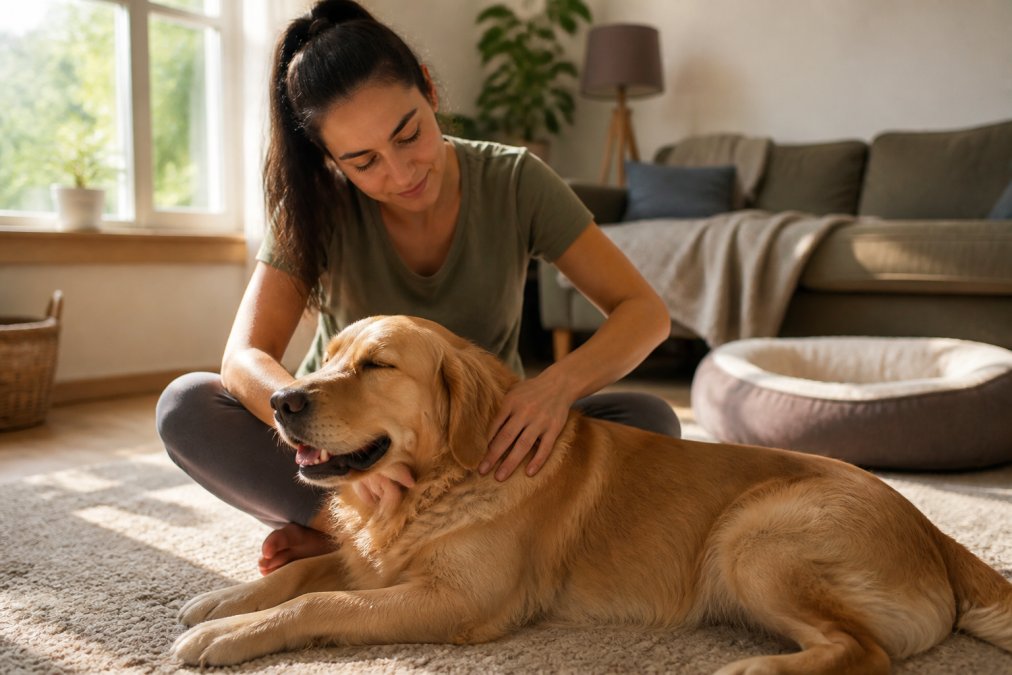
Physical contact shifts a dog's nervous system from stress response to calm state. Therapeutic massage increases oxytocin in both dog and owner, lowers heart rate, and soothes tense muscles. For anxious dogs, this is a legitimate calming aid, not optional pampering.
Start with slow, circular strokes along the back and neck using gentle pressure. Watch your dog's response: leaning in means they enjoy it; stiffening, moving away, or repeated yawning means ease off. The ear rub is particularly effective, the base of the ear contains nerve endings that, when gently massaged, trigger a parasympathetic response. Many dogs show visible relaxation within 30 seconds.
DIY Calming Tools: Wraps, Compression Shirts, and Pheromone Diffusers
Compression shirts work like swaddling an infant, gentle, consistent pressure signals safety to the nervous system. Products like the Thundershirt are effective for situational anxiety during thunderstorms and fireworks, particularly when introduced before the trigger occurs.
Pheromone diffusers release synthetic versions of the calming pheromone nursing mother dogs produce. Available as plug-in diffusers, sprays, and collars, they have meaningful effects on many dogs with separation anxiety or new-environment stress. They work best as part of a broader approach. DIY options include a snug-fitting t-shirt wrapped around the torso for mild compression or a few drops of lavender essential oil on a loose bandana, ensuring the dog cannot ingest the oil.
Step 4: How to Calm an Anxious Dog Naturally With Herbal Supplements
Several plant-based compounds have genuine calming properties for dogs. Chamomile has mild sedative and anti-inflammatory properties. Valerian root acts as a natural sedative, particularly useful for noise phobia. Passionflower supports GABA activity in the brain, reducing anxious nerve firing. Tryptophan, an amino acid supporting serotonin production, influences mood and anxiety levels. Many commercial calming treats combine these ingredients for layered effect.
Safety and Dosage Guidelines for Herbal Remedies
Herbal supplements are not automatically safe just because they are natural. Valerian root can cause excessive sedation in small dogs if overdosed. Chamomile can cause allergic reactions in dogs sensitive to daisy-family plants. Passionflower should not combine with pharmaceutical sedatives without veterinary guidance.
Start with the lowest recommended dose on the product label, observe your dog for 48 to 72 hours, and only increase if there is no adverse reaction and effect is insufficient. Always consult a veterinarian before adding supplements to a dog already on medication.
According to the American Kennel Club's guidance on dog supplements and safety, veterinary consultation before starting any supplement regimen is strongly recommended, particularly for senior dogs and those with existing health conditions.
Natural Calming Treats for Dogs: What to Look For
Natural calming treats vary considerably in quality. The best formulations combine multiple calming compounds rather than relying on a single ingredient. Look for treats listing specific active ingredients with dosages, not vague "proprietary blend" language.
Key ingredients to look for:
- Chamomile extract for mild sedation and digestive calming
- Valerian root for deeper relaxation, especially for noise anxiety
- L-theanine for stress relief without sedation
- Tryptophan for serotonin support and mood balance
- Melatonin for nighttime anxiety and sleep disruption
- Passionflower for situational anxiety
Avoid treats with artificial colors, high sugar content, or fillers comprising the majority of the ingredient list. Active compounds should appear near the top of the ingredient list.
FurEver Finds curates calming products selected specifically for ingredient quality and transparency. Every product is chosen with one standard: if the label cannot tell you exactly what is in it and at what dosage, it does not make the cut.
Step 5: Music Therapy, Sound Environments, and Pheromones
Sound has a measurable effect on canine stress levels. Research published through the Scottish SPCA and University of Glasgow's study on music and canine stress found that dogs in shelters showed lower stress behaviors when exposed to certain music, with classical and soft rock producing the most consistent calming responses.
Leave calm music or a dedicated dog-anxiety playlist playing when your dog is home alone. Avoid sudden silence followed by sudden loud sound, which heightens anxiety in noise-sensitive dogs. White noise machines effectively mask street noise and neighboring dogs.
Pheromone products complement sound therapy well. An Adaptil diffuser in your dog's main space creates a baseline calm that makes other interventions more effective. Think of pheromones as the background layer and music therapy as the active layer. Together they create an environment consistently supporting canine wellness.
Behavioral Training for Anxious Dogs: Desensitization and Counter-Conditioning
Behavioral conditioning is the only method producing lasting structural change in how an anxious dog responds to triggers. Everything else manages symptoms; this addresses the root cause.
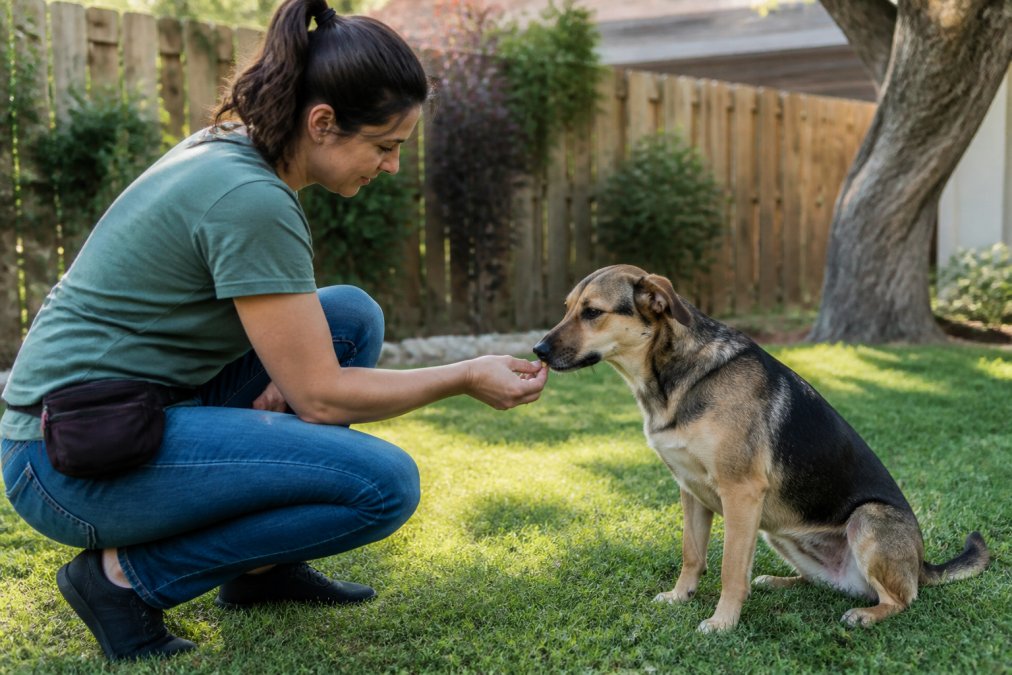
Desensitization gradually exposes a dog to a fear trigger at low enough intensity to avoid a full anxiety response. For a dog afraid of thunderstorms, play thunder sounds at very low volume while the dog is calm, then slowly increase volume over multiple sessions.
Counter-conditioning pairs the trigger with something positive, typically a high-value treat. The goal is changing the emotional association from "thunder means danger" to "thunder means chicken treats." The two techniques work best together.
Common mistakes include moving too fast through intensity levels, practicing only when the dog is already anxious, using insufficiently high-value treats, and skipping sessions during good behavior.
Integrating Professional Training With Your Home Routine
Professional training does not replace home practice, it provides a framework making your practice more effective. A certified professional dog trainer or veterinary behaviorist can assess your dog's specific triggers, rule out medical causes, and design a tailored desensitization protocol.
Work with a trainer every one to two weeks, practice assigned exercises at home three to five times weekly in short five-to-ten-minute sessions, and track responses in a simple log. Noting which triggers, intensities, and treat types produce the best results helps refine the approach faster.
For severe anxiety, a veterinary behaviorist can assess whether pharmaceutical support is appropriate alongside natural methods. The goal is using whatever combination produces the best outcome for your dog. As outlined by the American College of Veterinary Behaviorists on anxiety treatment, a multi-modal approach combining behavioral modification with environmental management consistently produces better outcomes than any single intervention.
Knowing how to calm an anxious dog naturally is about stacking these methods intelligently. No single step is a cure. The combination of a safe space, adequate exercise, physical contact, sound environment management, appropriate supplementation, and consistent behavioral training creates a foundation that genuinely shifts a dog's baseline anxiety level over time.
Frequently Asked Questions
What is the best anxiety relief for dogs without medication?
The most effective natural options for helping to calm an anxious dog include regular physical exercise, therapeutic massage, herbal supplements like chamomile and valerian root, and creating a dedicated safe space. Music therapy and pheromone diffusers also show soothing effects for many dogs. For persistent anxiety, combining these approaches with behavioral training tends to produce better results than any single method alone. Always consult your veterinarian before starting herbal supplements.
What are the most common signs of anxiety in dogs?
Common signs of anxiety in dogs include excessive barking or whining, destructive chewing, pacing, trembling, hiding, and accidents indoors despite being house-trained. You may also notice excessive licking, yawning, or lip-licking as stress signals. Dogs with separation anxiety often show these behaviors specifically when left alone. Recognizing these signs early gives you more options for natural calming interventions before the behavior becomes deeply ingrained.
Are herbal supplements like valerian root and chamomile safe for dogs?
Valerian root, chamomile, and passionflower are commonly used natural calming aids for dogs, but safety depends heavily on correct dosage and your dog's health history. Some herbs interact with medications or are unsafe for dogs with liver conditions. Never use human-formulated supplements, as concentrations differ significantly. Always check with your veterinarian before introducing any herbal supplement, and start with the lowest recommended dose to observe your dog's response before adjusting.
How does behavioral training help with dog anxiety?
Behavioral training for anxious dogs works by gradually changing how a dog responds to its anxiety triggers. Desensitization exposes the dog to a stressor at very low intensity, while counter-conditioning pairs that trigger with something positive, like a treat, to build a new emotional response. Over time, cortisol levels during stressful situations drop. Positive reinforcement throughout the process is essential. Many owners see meaningful improvement within a few weeks when training sessions are short, consistent, and free of punishment.
What should I look for in natural calming treats for dogs?
Look for natural calming treats for dogs that list active ingredients clearly, such as tryptophan, chamomile, or melatonin, and avoid artificial additives or fillers. Treats formulated specifically for canine anxiety are preferable to human supplements repurposed for pets. Check that the manufacturer provides batch testing or quality verification. For dogs with food sensitivities, confirm the treat is free from common allergens. Treats work best as part of a broader calming routine, not as a standalone fix.
What is the 3-3-3 rule for dogs with anxiety?
The 3-3-3 rule is a guideline often used for newly adopted dogs: the first 3 days are for decompression, the first 3 weeks are for learning household routines, and the first 3 months are for building trust and feeling settled. For anxious dogs, this framework is a useful reminder that behavioral improvement takes time. Rushing the process or expecting quick results often increases anxiety. Patience, consistency, and a structured environment are the foundations of any effective natural calming approach.
Helping an anxious dog takes consistency, the right tools, and products you can trust to do what they claim. FurEver Finds offers a curated selection of premium calming products, enrichment toys, and comfort essentials, each chosen for ingredient quality and durability. With next-day delivery available for orders placed by 12 PM, you can start building your dog's calming routine without delay. Explore the FurEver Finds range and give your dog the daily comfort they deserve.
This article was written using GrandRanker