


How to Choose Safe Non-Toxic Dog Toys: A 2026 Guide
Table of Contents
- Why Material Safety Matters in Dog Toys
- Safe and Natural Materials for Dog Toys
- Toxic Materials in Dog Toys to Avoid
- How to Identify Toxic Chemicals and Red Flags
- Safety Standards and Certifications to Look For
- How to Clean Dog Toys Safely
- Best Non-Toxic Dog Toy Brands and What to Choose
- DIY Non-Toxic Toy Alternatives and Disposal
Last Updated: August 10, 2026
Why Material Safety Matters in Dog Toys
Safe non-toxic dog toys are essential for protecting your pet's health. Dogs spend significant time chewing and playing with toys, meaning harmful chemicals can enter their bodies through saliva and ingestion. Dogs' mouths are particularly vulnerable because moisture and friction from chewing accelerates the release of chemicals. Many conventional dog toys contain materials that off-gas harmful compounds or leach toxic residues during play. At FurEver Finds, we prioritize sourcing toys made from materials tested for safety and transparency, ensuring playtime strengthens your bond rather than compromising your pet's health. Toxic materials can accumulate in your pet's system over time, potentially causing digestive issues, allergic reactions, or serious health complications. By choosing toys made from verified safe materials, you're investing in preventive health care.
Safe and Natural Materials for Dog Toys
When selecting toys, focus on materials with proven safety records and transparent sourcing.
Food-grade silicone and rubber represent some of the most reliable choices. Food-grade silicone undergoes rigorous safety testing and contains no harmful additives. Natural rubber sourced from rubber trees is biodegradable, durable, and free from synthetic chemicals. Look for toys labeled explicitly as food-grade silicone or natural rubber to ensure you're getting the genuine article, not a cheaper synthetic alternative.
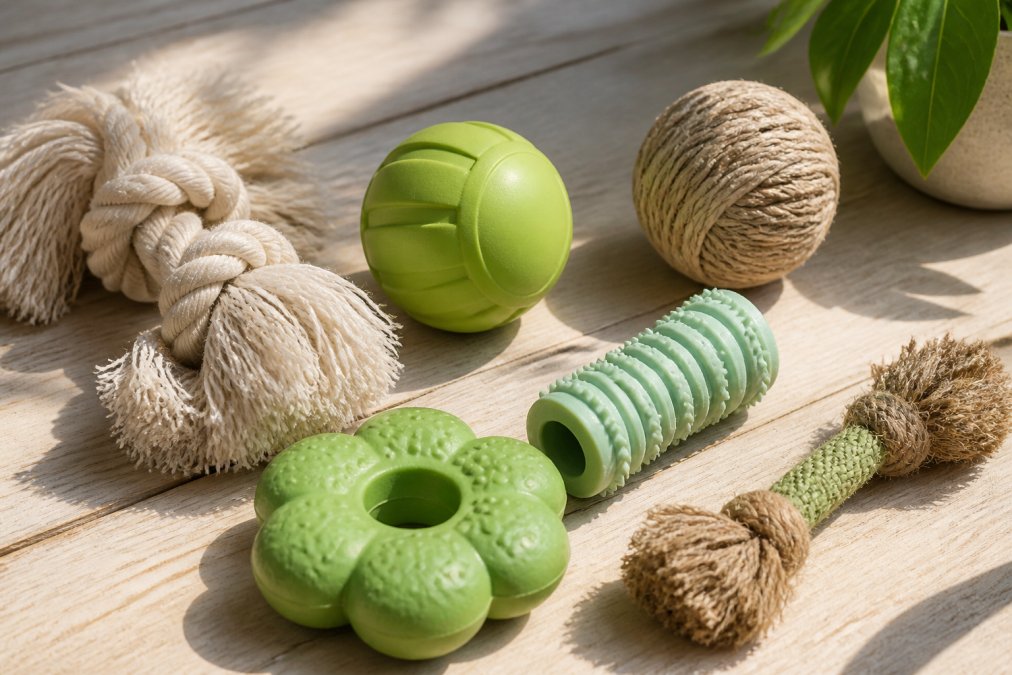
Organic cotton, hemp, and natural fibers provide excellent alternatives for rope toys and soft play items. Organic cotton is grown without synthetic pesticides or fertilizers, eliminating chemical contamination. Hemp fibers are similarly durable and naturally resistant to mold and mildew. These materials are inherently hypoallergenic compared to synthetic alternatives, making them especially suitable for dogs with sensitive skin or allergies. Verify that toys are made from certified organic materials, as certification ensures third-party verification rather than relying on manufacturer claims alone. Even organic cotton can be problematic if dyed with synthetic dyes containing heavy metals. Undyed or naturally dyed options are always safer.
Toxic Materials in Dog Toys to Avoid
Understanding which materials pose health risks is essential when selecting toys.
Phthalates and BPA are chemical additives found in many conventional plastics, including polyvinyl chloride (PVC). Phthalates are known endocrine disruptors that can affect hormonal balance, while BPA is linked to developmental and reproductive issues. Both chemicals leach into saliva during chewing, especially when toys are worn or heated. PVC toys off-gas continuously throughout their lifespan, releasing volatile organic compounds that your dog inhales during play.
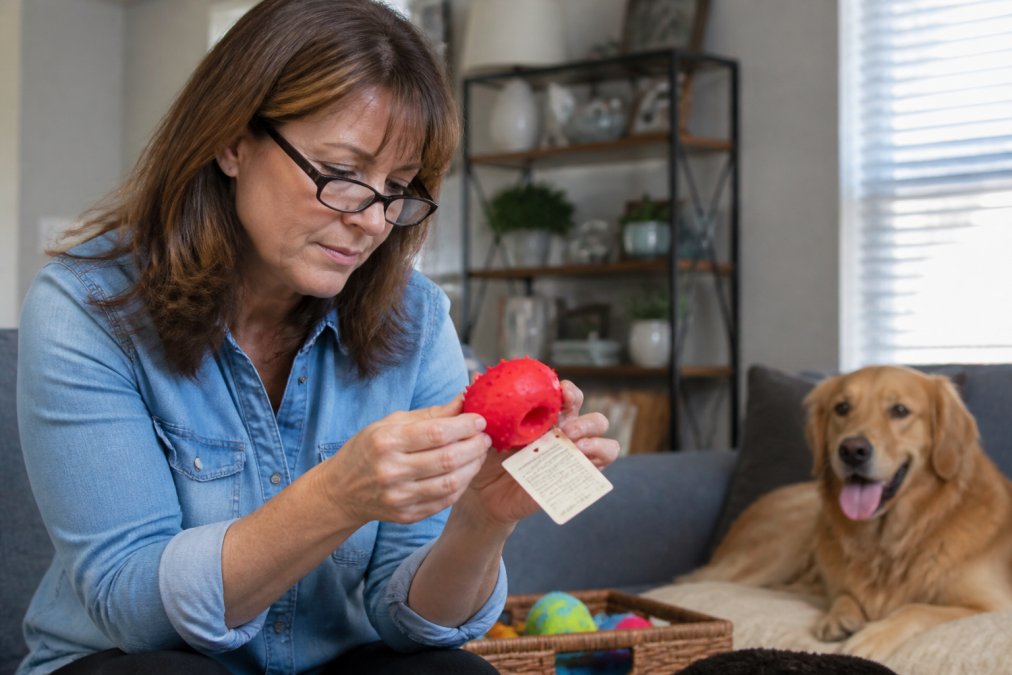
Heavy metals and synthetic dyes represent another serious concern. Some low-quality toys contain paint or dyes contaminated with chromium, arsenic, or lead, heavy metals that accumulate in the body over time. Synthetic dyes often contain azo dyes, which can break down into carcinogenic compounds. Melamine, used in some toy manufacturing, can release formaldehyde when exposed to heat or moisture. Bromine-based flame retardants are sometimes added to meet flammability standards but are neurotoxins that disrupt thyroid function. Avoid toys labeled with vague descriptions like "plastic" or "synthetic rubber" without further specification.
How to Identify Toxic Chemicals and Red Flags
Before bringing a toy home, conduct a practical assessment using your senses and available information.
The sniff test and material transparency offer immediate clues. A strong chemical smell indicates off-gassing, your warning signal. Safe toys made from natural materials or food-grade silicone have minimal odor or smell pleasantly natural. Request material specifications from manufacturers. Reputable brands provide detailed information about what their toys are made from and whether they've been tested for toxic substances. If a company can't or won't provide this information, that's a red flag. Check for certifications and third-party testing. Look for toys tested by independent labs and certified as non-toxic. Ask whether toys have been dyed and, if so, what dyes were used. Natural dyes derived from plants or minerals are safer than synthetic alternatives.
Signs of low-quality or dangerous toys include loose seams, peeling paint or coating, rough edges, and materials that feel flimsy or poorly constructed. Toys that shed fibers, flake paint, or deteriorate quickly are more likely to leach chemicals or present choking hazards. Avoid toys with small decorative elements that could be chewed off and swallowed. Toys filled with plastic pellets or foam are particularly problematic if the toy ruptures. Squeakers and bells should be securely attached and impossible to remove through normal play.
Safety Standards and Certifications to Look For
Several standards and certifications indicate that toys have been tested for safety.
The Consumer Product Safety Commission (CPSC) sets standards for pet products sold in the United States, including requirements for toxic substance testing. Toys meeting CPSC standards have been evaluated for heavy metals, phthalates, and other harmful chemicals. However, CPSC standards are minimum requirements; many safe toys exceed these standards. Third-party certifications from organizations specializing in product safety provide additional assurance. Materials certifications also matter, toys made from certified organic cotton or certified natural rubber have been verified to meet specific environmental and safety standards. Food-grade certifications for silicone indicate that the material meets standards safe enough for human food contact. Ask manufacturers whether their toys have been tested for chemical off-gassing and material leaching. Reputable brands can provide test results or links to third-party testing documentation.
How to Clean Dog Toys Safely
Proper cleaning extends toy lifespan and removes accumulated bacteria and debris.
For toys made from food-grade silicone or natural rubber, hot soapy water works well. Use mild dish soap and warm water, then rinse thoroughly. These materials can also be sanitized in the dishwasher on a hot cycle if labeled dishwasher-safe. Avoid abrasive scrubbers that could damage the surface. Organic cotton and hemp toys can be hand-washed in mild soap and water or machine-washed on a gentle cycle. Air-dry completely to prevent mold growth. Never use bleach or harsh chemicals on natural fiber toys. For toys with rope construction, inspect seams carefully after washing. Avoid high-heat drying methods that could damage materials or cause off-gassing. Line-drying in sunlight is ideal for natural materials. Inspect toys regularly during cleaning, if you notice peeling, deterioration, or damage, remove the toy from rotation immediately.
Best Non-Toxic Dog Toy Brands and What to Choose
FurEver Finds curates premium options that prioritize material safety and durability. Our selection focuses on brands that provide transparency about sourcing and manufacturing.
Durable and non-toxic toys are possible when prioritizing quality materials over price. Toys made from food-grade silicone or natural rubber maintain structural integrity through extended chewing while remaining completely safe. Cheaper toys often fail quickly, requiring replacement and creating more waste. A higher-quality toy that lasts months or years is more economical and safer than repeatedly purchasing low-cost alternatives that degrade rapidly.
Age-specific and interactive toy safety requires matching toy selection to your dog's life stage and play style. Puppies have developing teeth and smaller mouths, requiring appropriately sized toys that are soft enough for tender gums. Senior dogs with worn teeth or dental issues need toys they can engage with without pain. Interactive toys used during supervised play sessions can differ from toys left unsupervised. Consider your dog's actual play habits when selecting toys. A dog that destroys toys quickly needs extremely durable options, while a gentle player can enjoy softer toys.
DIY Non-Toxic Toy Alternatives and Disposal
Creating your own toys from safe materials offers cost-effective alternatives and allows complete control over what touches your dog's mouth.
DIY toy ideas include braiding organic cotton strips into rope toys, freezing organic chicken broth in silicone molds for cooling chew toys, or filling fabric pouches with dried catnip or dried herbs. Knotted rope toys made from organic cotton are simple to create and provide excellent chewing stimulation. Puzzle toys can be made by hiding treats in cardboard boxes or paper bags. When creating DIY toys, ensure all materials are genuinely non-toxic and avoid fabric dyes, synthetic threads, or any materials not intended for direct mouth contact.
Disposal of old toys requires consideration beyond simply throwing them in the trash. Toys made from natural materials like organic cotton, hemp, and natural rubber are biodegradable and can be composted. Silicone toys are recyclable in some communities. Avoid burning toys or exposing them to extreme heat during disposal. If a toy has deteriorated significantly or shows signs of contamination, dispose of it responsibly rather than donating it.
| Material | Safety Level | Durability | Best For | Disposal |
|---|---|---|---|---|
| Food-Grade Silicone | Excellent | Very High | All ages | Recyclable |
| Natural Rubber | Excellent | High | Aggressive chewers | Compostable |
| Organic Cotton | Excellent | Medium | Supervised play | Compostable |
| Hemp Fibers | Excellent | Medium | Gentle players | Compostable |
| Wool | Very Good | Medium | Soft toys | Compostable |
| PVC Plastic | Poor | Low | Avoid | Landfill |
| Synthetic Rubber | Fair | Medium | Not recommended | Landfill |
Choosing safe non-toxic dog toys is one of the most direct ways you can protect your pet's long-term health. Every toy that enters your home represents a choice about what chemicals and materials will contact your dog's mouth multiple times daily. FurEver Finds makes this choice easier by curating premium toys from brands that prioritize material transparency and safety testing. Browse our selection of verified non-toxic toys and give your dog the quality play experience they deserve, backed by confidence in what's actually going into their mouth.
Frequently Asked Questions
What is the safest material for dog toys?
Food-grade silicone, natural rubber, organic cotton, and hemp fibers are among the safest materials for dog toys. These materials are BPA-free, lead-free, and don't off-gas harmful chemicals. Look for toys certified as non-toxic and free from phthalates, formaldehyde, and synthetic dyes. Always check product labels for material transparency and third-party certifications to ensure your dog's safety.
What toxic materials in dog toys should I avoid?
Avoid toys made with PVC (polyvinyl chloride), which can contain phthalates and formaldehyde. Steer clear of products with heavy metals like lead, chromium, and arsenic, and those with synthetic dyes or melamine. Cheap, imported toys often lack proper safety testing. Check for off-gassing odors using the sniff test, and always verify that toys are BPA-free and meet CPSIA standards for lead content.
How do I know if a dog toy is BPA-free and non-toxic?
Check the product label for explicit BPA-free claims and look for certifications from reputable testing organizations. Reputable brands provide material transparency and third-party testing documentation. Use the sniff test, strong chemical odors indicate potential off-gassing. Research the manufacturer's sourcing practices and ask for safety documentation before purchasing. Trusted non-toxic brands typically highlight their certifications prominently on packaging and websites.
Are rubber dog toys toxic?
Natural rubber toys are safe and non-toxic, but synthetic rubber or PVC toys may contain harmful chemicals like phthalates. The key difference is the source: natural rubber comes from rubber trees, while synthetic rubber is petroleum-based and may contain toxic additives. Always verify that rubber toys are labeled as food-grade or natural rubber, BPA-free, and free from chemical off-gassing before giving them to your dog.
This article was written using GrandRanker