


How to Clean Rubber Dog Toys Properly
Table of Contents
- Why Cleaning Rubber Dog Toys Matters
- How Often to Wash Dog Toys
- Supplies You'll Need
- Step-by-Step Process to Clean Rubber Dog Toys Properly
- Can You Put Rubber Dog Toys in the Dishwasher
- How to Disinfect Dog Toys and Prevent Mold
- When to Replace Old Dog Toys
- Conclusion
- Frequently Asked Questions
Last Updated: September 28, 2026
Why Cleaning Rubber Dog Toys Matters
Your dog's toys spend time in their mouth, on dirty floors, and accumulate saliva and food debris daily. Without regular cleaning, rubber dog toys become breeding grounds for bacteria and mold that compromise your pet's health.
Dirty toys introduce harmful microorganisms directly into your dog's mouth and digestive system. This is especially concerning for puppies, senior dogs, and pets with weakened immune systems.
Regular cleaning prevents infections, extends toy durability, and keeps your pet safer.
How Often to Wash Dog Toys
Most pet owners should wash toys at least once per week. Heavy chewers and dogs that play outdoors need cleaning twice weekly or more.
If a toy looks dirty, smells off, or feels sticky, clean it immediately. Saliva buildup and food particles create an ideal environment for bacterial growth within days.
Consider your dog's lifestyle:
- Indoor dogs with light play: Weekly cleaning is sufficient
- Active dogs that play outside: Twice weekly or after outdoor sessions
- Dogs with sensitive stomachs: Clean before each use
- Puppies under 6 months: Twice weekly minimum
Toys used during feeding (treat-dispensing toys, puzzle feeders) need the most frequent attention. Food residue accelerates mold development and bacterial colonization.
Supplies You'll Need
Essential supplies:
- Warm running water
- Mild dish detergent (unscented, pet-safe formula)
- Soft scrub brush or old toothbrush
- Clean cloth or towel
- White vinegar solution (optional but recommended)
Optional but helpful:
- Baking soda for stubborn odors
- Colander or mesh strainer for small toys
- Drying rack or clean surface with airflow
Avoid harsh chemicals, bleach, or abrasive cleaners, which degrade rubber and leave toxic residue. Use gentle, food-safe agents only.
Step-by-Step Process to Clean Rubber Dog Toys Properly
The cleaning process takes about 10 minutes per toy and requires no special equipment. Follow these steps consistently to maintain proper sanitation.
Initial Rinse
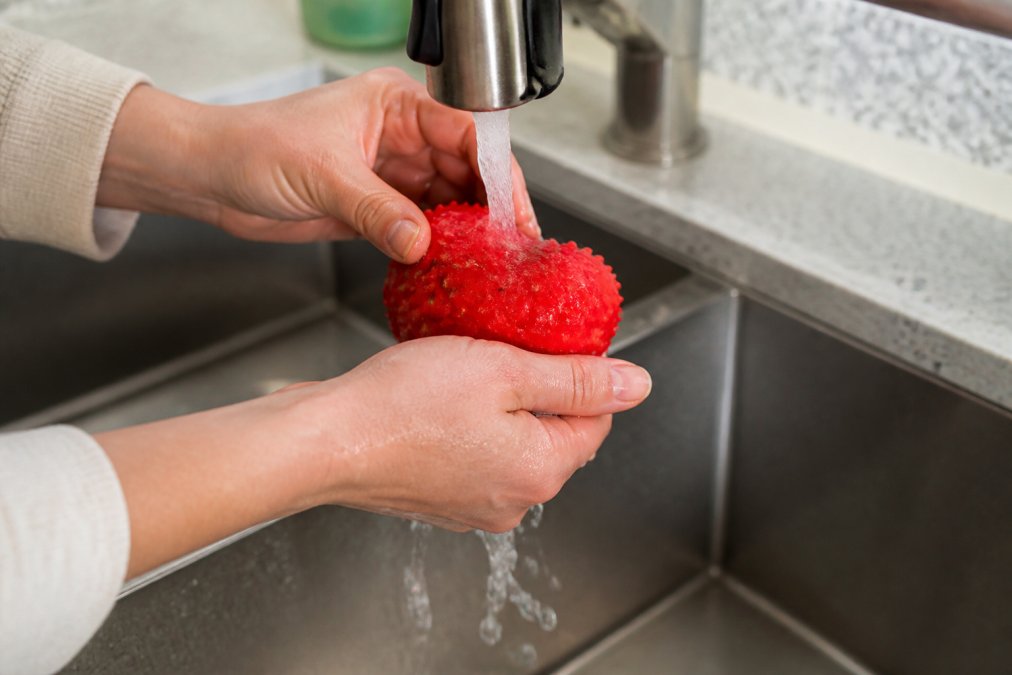
Rinse the toy under warm running water, using your fingers to remove loose debris, dried saliva, and visible dirt. Pay special attention to seams, crevices, and textured surfaces where bacteria hide.
Soak and Scrub
Fill a sink with warm water and add a few drops of mild dish detergent. Submerge the toy for 5-10 minutes, then scrub gently with a soft brush, working into textured areas and crevices. For hollow toys with treat-dispensing mechanisms, clean around the opening and internal ridges to prevent mold.
Final Rinse and Drying
Rinse thoroughly under running water until all soap residue is gone. Air-dry completely on a clean cloth or drying rack in a location with good airflow. For hollow toys, stand them upright to allow water to drain from the center.
Can You Put Rubber Dog Toys in the Dishwasher
Many rubber dog toys are dishwasher safe, but success depends on the toy's material composition and design.
Material Considerations
Natural rubber begins to soften above 140°F and can warp at dishwasher temperatures (150-160°F). Synthetic rubber is more heat-resistant but still degrades with repeated exposure. Check the toy's packaging for "dishwasher safe" labeling; if absent, hand wash instead.
Proper Dishwasher Placement and Settings
Place dishwasher-safe toys on the top rack only. Use a normal or gentle wash cycle with mild detergent, no bleach or harsh chemicals. Never use heat-dry; air-dry instead.
When Hand Washing Is Better
The dishwasher works well for toys with intricate designs, textured surfaces, or multiple crevices where hand scrubbing is difficult. However, hand washing gives you better control and lets you inspect the toy for damage, mold, or material breakdown during cleaning.
Always hand wash toys with treat-dispensing mechanisms or puzzle features. These toys have internal crevices, small chambers, and narrow openings where food bacteria thrives and dishwasher jets cannot reach effectively. Food residue trapped inside these mechanisms accelerates mold growth and bacterial colonization. Hand washing with a small brush or pipe cleaner lets you access these internal spaces and remove trapped food particles that a dishwasher cannot dislodge.
Also hand wash toys showing any signs of material degradation, cracks, brittleness, sticky spots, or color fading. The dishwasher's agitation and heat can worsen existing damage and cause pieces to flake off during the cycle.
Combining Methods for Best Results
Many owners use both methods strategically: hand wash toys with complex designs or food-dispensing features weekly, and run simple solid rubber toys through the dishwasher every 2-3 weeks as a deeper disinfection step. This approach balances convenience with the thorough cleaning that internal crevices require.
How to Disinfect Dog Toys and Prevent Mold
Disinfecting goes beyond basic cleaning. It targets harmful bacteria, mold spores, and biofilm that regular soap and water might miss. The key is understanding which disinfectant method works best for different contamination types and how to verify that no residue remains after treatment.
Vinegar vs. Dish Soap Solutions
White vinegar and mild dish soap work through different mechanisms, making them suited to different scenarios.
White vinegar (5% acetic acid) kills many common mold species including Aspergillus and Penicillium by lowering pH and disrupting fungal cell walls. It's particularly effective against biofilm, the slimy bacterial coating that forms on toys, because acetic acid breaks down the polysaccharide matrix holding biofilm together. Mix equal parts white vinegar and water to create a soaking solution. Soak toys for 15-20 minutes, then scrub gently and rinse thoroughly. Vinegar is completely non-toxic and costs pennies per cleaning.
Mild dish soap works as a surfactant, breaking apart the lipid membranes of bacteria and allowing them to be rinsed away. It's effective for routine cleaning and removing food residue but is less powerful against established mold colonies or biofilm. Dish soap alone is faster for weekly maintenance and works fine for toys showing no visible contamination.
For toys showing mold or musty odors, use the vinegar method. For routine weekly cleaning, either method works. Combining both, soap for debris removal followed by a vinegar soak, provides maximum disinfection but isn't necessary for prevention-focused maintenance.
Never mix vinegar with bleach or other chemicals. The combination creates toxic chlorine gas. Stick to vinegar and water, or dish soap and water, nothing else.
Non-Toxic Residue Testing
A critical safety step most guides skip: verifying that no soap or vinegar residue remains on the toy after cleaning. Residual soap can irritate your dog's mouth and cause stomach upset; residual vinegar can create an unpleasant taste that discourages toy use.
For dish soap residue: After the final rinse, hold the toy under running water and squeeze or compress it gently. If bubbles form, soap remains inside. Continue rinsing until no bubbles appear when you squeeze the toy. For hollow toys, fill them with water, shake vigorously, and pour out. Repeat until the water runs completely clear with no foam.
For vinegar residue: Smell the toy after rinsing. A faint vinegar smell is normal and harmless, but a strong acidic odor means vinegar solution is still present. Rinse again under warm running water for 30-60 seconds. If the smell persists, soak the toy in plain water for 5 minutes, then rinse again. The goal is a neutral smell with no chemical odor.
Taste-test alternative: If you're uncertain, wipe the toy with a damp cloth and touch it to your inner wrist or lips. You should taste nothing.
Addressing Internal Mold in Hollow Toys
Hollow rubber toys are notorious for internal mold growth because moisture gets trapped inside, creating dark, damp conditions where mold thrives. Once mold colonizes the interior, it's nearly impossible to remove completely.
When to Replace Old Dog Toys
Even with perfect cleaning, rubber toys don't last forever. Material degradation happens gradually as rubber breaks down from use, UV exposure, and repeated cleaning.
Replace toys when you notice:
- Visible cracks, tears, or chunks missing
- Persistent mold that returns after cleaning
- Discoloration that won't wash away
- A musty smell that cleaning doesn't eliminate
- Rubber becoming sticky or brittle
- Pieces flaking off during play
Conclusion
Cleaning rubber dog toys properly is one of the easiest ways to protect your pet's health. A simple weekly routine with warm water, mild soap, and a soft brush prevents bacterial growth, mold formation, and material degradation. The investment of 10 minutes per week pays dividends in your dog's wellness and toy longevity.
Frequently Asked Questions
Is Dawn dish soap safe for washing dog toys?
Yes, mild dish detergent like Dawn is safe for cleaning rubber dog toys when used properly. Mix a small amount with warm water to create a cleaning solution. Rinse thoroughly after scrubbing to remove all residue, as leftover soap can irritate your dog's mouth. Always use unscented, gentle formulas without harsh chemicals or dyes to minimize skin irritation risk.
How often should you throw out dog toys?
Replace dog toys when they show significant wear, cracks, or chunks missing. Damaged toys pose choking hazards and harbor bacteria in exposed crevices. Inspect toys weekly during cleaning for signs of degradation, and discard immediately if your dog has ingested pieces or if the toy cannot be properly sanitized.
Can I use vinegar and baking soda to wash dog toys?
White vinegar and baking soda are pet-safe alternatives for disinfecting dog toys. Mix equal parts white vinegar and water for a soaking solution that kills bacteria and prevents mold. Baking soda works as a gentle abrasive scrub. Soak toys for 15-30 minutes, scrub with a soft brush, then rinse thoroughly. This method is effective for sanitization without synthetic chemicals, making it ideal for dogs with sensitive skin.
What's the best way to prevent mold inside hollow rubber toys?
Hollow rubber toys trap moisture and create ideal conditions for mold and bacterial growth. After cleaning, shake out excess water vigorously and stand toys upright to air-dry completely before storing. Store in a dry, well-ventilated area away from humidity. For toys with treat-dispensing mechanisms, use a pipe cleaner or small brush to dry the interior. Consider rotating toys to prevent prolonged moisture buildup and inspect the hollow center weekly during cleaning.