


How to Prepare Your Home for a Puppy: Complete Guide
Table of Contents
- How to Prepare Your Home for a Puppy: A Framework
- Puppy-Proofing Your Home: Room-by-Room Safety
- New Puppy Essentials List: What You Actually Need
- Puppy Crate Training Schedule: Building Routine and Security
- Puppy Proofing Checklist: Your Room-by-Room Action Plan
- How to Calm an Anxious Dog Naturally: Creating a Safe Space
- Special Considerations: Apartments, Multi-Pet Homes, and Smart Home Setup
- Your Puppy's First Week: Routine and Adjustment
How to Prepare Your Home for a Puppy: A Framework
Bringing a puppy home is exciting, but the first week determines everything that follows. A puppy's early environment shapes their confidence, safety, and ability to settle into your space. How you prepare your home matters far more than most new owners realize, it's the difference between a smooth transition and weeks of chaos, accidents, and stress.
The framework is straightforward: identify hazards, establish zones, stock essentials, and create routine. This guide covers exactly what you need, where to place it, and why it matters.
The best preparation happens before your puppy arrives. Once they're home, you're reacting. Before they arrive, you're building the foundation they'll depend on. A well-prepared home reduces anxiety for both you and your new companion, prevents destructive behavior, and accelerates housebreaking and crate training.
Puppy-Proofing Your Home: Room-by-Room Safety
Puppy-proofing is not optional, it's the baseline for keeping your dog alive and your home intact. Puppies explore with their mouths. They chew electrical cords, swallow toxic plants, and ingest cleaning products without hesitation. Your job is to remove temptation before curiosity becomes an emergency.
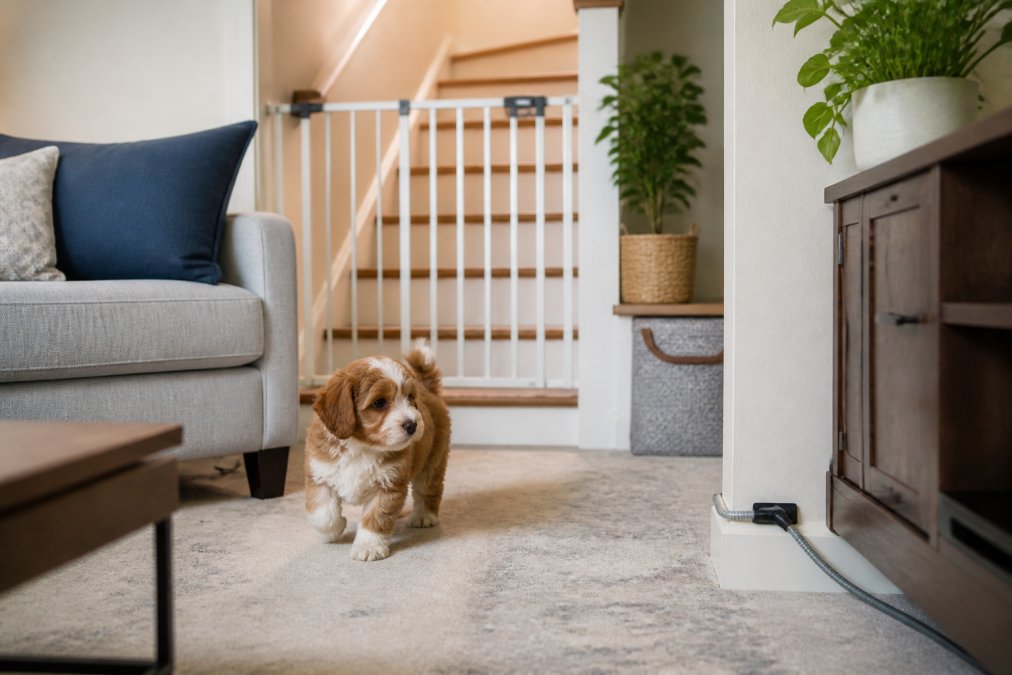
Kitchen and Dining Areas
The kitchen is the most dangerous room in your home for a puppy. Secure all cleaning supplies, bleach, and dish soap in high cabinets with childproof locks. Electrical cords for appliances should be taped to walls or run through protective tubing. Secure trash cans inside cabinets or use a tall bin with a locking lid. A single piece of chocolate, avocado, or xylitol-sweetened food can poison your puppy.
Keep all human medications out of reach in high cabinets, never on countertops. Ibuprofen, acetaminophen, prescription drugs, and even iron supplements are deadly to dogs. Set up a designated feeding station away from foot traffic using stainless steel or ceramic bowls on a mat. This defines the zone and supports housebreaking.
Living Spaces and Bedrooms
Secure dangling electrical cords from lamps, phone chargers, and entertainment systems. Remove toxic houseplants like lilies, sago palms, philodendrons, and dieffenbachias. If you're unsure whether a plant is safe, move it out of reach entirely.
Anchor furniture that could topple using furniture straps to secure tall pieces to the wall. Block access to small spaces where puppies can get stuck. Remove small objects from floors: coins, buttons, hair ties, rubber bands, and toys with small parts. Walk your floors on your hands and knees to spot what you'd normally miss.
Outdoor Areas and Fencing
Check fencing for gaps, broken boards, and weak points before your puppy arrives. Fencing should be at least four feet tall for small breeds, five to six feet for larger breeds. Bury fencing at least six inches underground or use L-shaped barriers to prevent digging under the fence.
Remove toxic plants from your yard, including cocoa mulch and landscaping plants like foxglove and yew. Secure garden tools, pesticides, fertilizers, and antifreeze in a locked shed, antifreeze tastes sweet to dogs and is extremely toxic even in small amounts.
Create a designated potty area in a corner away from your main play area. Puppies learn faster when they consistently use the same spot, which also helps with housebreaking.
New Puppy Essentials List: What You Actually Need
You don't need everything pet stores suggest. Focus on items that directly support crate training, housebreaking, feeding, and safety.
Sleeping and Crate Setup
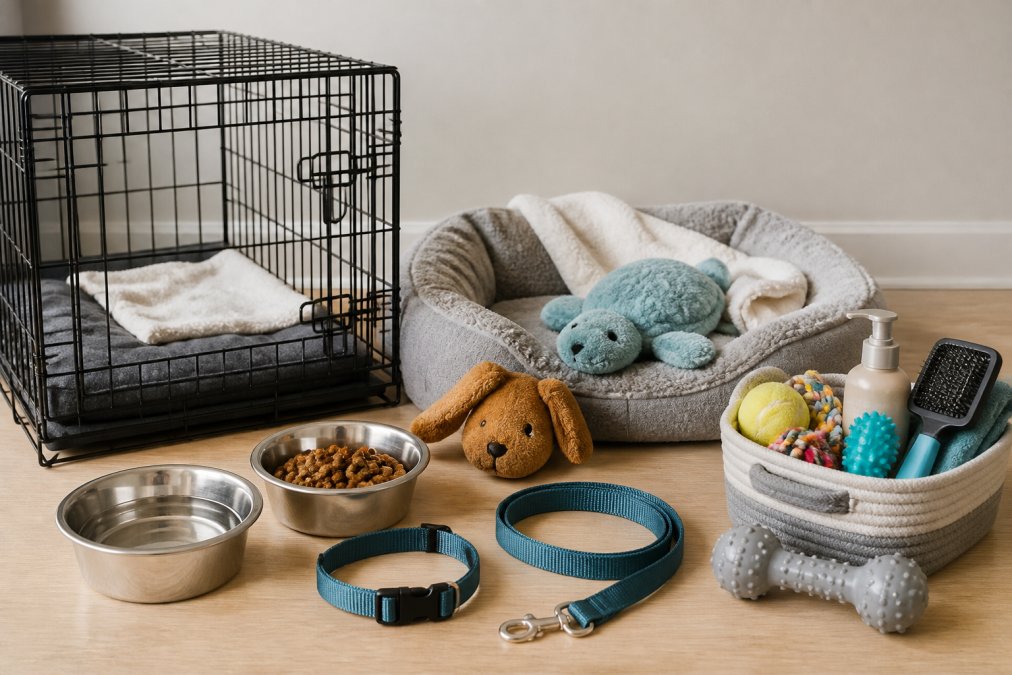
A crate is your most important tool. It's not punishment, it's a denning space where puppies naturally feel secure. The crate should be large enough for your puppy to stand, turn around, and lie down comfortably, but not so large that they can eliminate in one corner and sleep in another. Size matters: a crate too large defeats the housebreaking purpose, while one too small causes anxiety. Many crates come with dividers to adjust size as your puppy grows.
Line the crate with washable bedding: a pad, blanket, or specially designed crate mat. Avoid cedar and pine shavings, which are toxic. Place the crate in a family area, not isolated in a basement or garage. A crate in your bedroom for the first weeks helps with nighttime settling.
An exercise pen (playpen) is useful for supervised play areas when you can't watch them directly but they don't need crate confinement.
Feeding and Hydration Stations
Choose stainless steel or ceramic bowls, puppies chew plastic. Avoid raised feeders for large-breed puppies, as they increase bloat risk. Set up a consistent feeding schedule: puppies typically eat three to four times daily until four months old, then twice daily. Use the same bowls, location, and times to support housebreaking.
Fresh water should be available throughout the day, but remove the water bowl two hours before bedtime to reduce nighttime accidents. Stock high-quality puppy food appropriate for your puppy's age and breed. If you need to change brands, transition over seven to ten days by gradually mixing the new food with the old.
Toys, Enrichment, and Chew Items
Provide a variety of appropriate chew toys to satisfy your puppy's natural urge to chew and soothe teething pain: rubber toys, rope toys, and puzzle toys that dispense treats. Avoid toys with small parts, tennis balls that shed fuzz, and rawhide chews that can splinter.
Puzzle toys and treat-dispensing toys keep puppies mentally stimulated, reducing destructive behavior. Rotate toys every few days to maintain novelty. Provide toys that encourage play: balls, frisbees, and tug toys. A tired puppy is a well-behaved puppy.
Puppy Crate Training Schedule: Building Routine and Security
Start with short crate sessions, five to ten minutes, while you're home and present. Leave the door open initially and toss treats inside to make the crate a positive space. Never use it as punishment.
Gradually increase time in the crate. By the end of week one, your puppy should be comfortable staying in the crate for 30 minutes while you're nearby. By week two, extend to one to two hours. The rule of thumb: puppies can hold their bladder for one hour per month of age.
Establish a schedule. Puppies should go outside immediately after waking, after eating, after playing, and before bedtime. This predictability teaches them where and when elimination is appropriate. Most puppies can be reliably housebroken by four to six months with consistent routine.
Never use the crate as punishment. If your puppy has an accident, clean it thoroughly with an enzyme cleaner. The scent of urine encourages repeated accidents in the same spot.
Puppy Proofing Checklist: Your Room-by-Room Action Plan
Use this checklist to ensure your home is safe before your puppy arrives.
| Area | Task | Status |
|---|---|---|
| Kitchen | Secure cleaning supplies in locked cabinet | ☐ |
| Kitchen | Protect electrical cords with tubing | ☐ |
| Kitchen | Lock trash can or move to cabinet | ☐ |
| Kitchen | Set up feeding station with mat | ☐ |
| Living Room | Remove or secure toxic plants | ☐ |
| Living Room | Anchor tall furniture to walls | ☐ |
| Living Room | Secure dangling cords | ☐ |
| Living Room | Remove small objects from floors | ☐ |
| Bedrooms | Pick up items from floor | ☐ |
| Bedrooms | Secure cords and cables | ☐ |
| Bathrooms | Lock cabinets with medications | ☐ |
| Bathrooms | Secure trash can | ☐ |
| Yard | Inspect fencing for gaps | ☐ |
| Yard | Remove toxic plants and mulch | ☐ |
| Yard | Secure garden tools and chemicals | ☐ |
| Yard | Designate potty area | ☐ |
How to Calm an Anxious Dog Naturally: Creating a Safe Space
Puppies experience separation anxiety when first separated from their littermates. A safe space reduces this anxiety and accelerates adjustment. The crate itself becomes this safe space when introduced correctly. Add a blanket over three sides to create a den-like atmosphere, leaving the front open so your puppy can see out but feels enclosed.
Maintain a calm household during the first weeks. Loud noises, sudden movements, and excessive activity overwhelm puppies. Keep the environment quiet and predictable. Soft background music can help mask household sounds.
Avoid excessive handling during the first few days. Your puppy needs time to decompress. Limit interactions to necessary activities: feeding, potty breaks, and brief play sessions.
Use positive reinforcement consistently. When your puppy settles in the crate without fussing, reward with treats and praise. When they're calm during handling, reward immediately.
Special Considerations: Apartments, Multi-Pet Homes, and Smart Home Setup
Not all homes are the same. Apartment living, existing pets, and modern technology create specific challenges.
Apartment-Specific Puppy Prep
Apartment living limits outdoor space and increases noise sensitivity. Create a dedicated potty area on your balcony or use puppy pads initially. Many apartment dwellers use a combination: outdoor potty breaks when possible, indoor pads for quick relief.
Manage noise carefully by introducing sounds gradually and positively, pairing them with treats. Use white noise or calming music to mask building sounds and prevent reactive barking.
Coordinate with neighbors about noise expectations. A brief conversation helps them understand the adjustment period is temporary.
Introducing a Puppy to Other Pets
Keep your puppy in a crate or exercise pen initially so your existing pet can investigate without direct contact. Feed them on opposite sides of a closed door for the first few days to create positive association.
Supervise all interactions closely. Even friendly pets can accidentally injure a fragile puppy. Maintain your existing pet's routine and attention, a common mistake is focusing entirely on the puppy while neglecting the established pet, which creates resentment.
Budget-Friendly vs. Premium Setups
You don't need expensive products to raise a healthy puppy. The essentials, crate, food, bowls, and basic toys, are affordable. Premium products offer convenience and durability, not necessity.
The real investment is time, not money. Consistent training, supervision, and routine matter infinitely more than product quality. A puppy raised with attention and structure in a basic setup outperforms a neglected puppy surrounded by expensive gear.
FurEver Finds offers curated options at various price points, balancing quality and value so you're not paying for unnecessary features while still getting items that work and last through the puppy phase.
Your Puppy's First Week: Routine and Adjustment
The first week sets the tone for everything that follows. Establish a schedule immediately: wake time, meal times, potty breaks, play sessions, and sleep time should follow the same pattern every day. Puppies thrive on predictability.
A typical day for a young puppy includes: wake in crate, immediate potty break, breakfast, play, potty break, nap in crate, potty break, lunch, play, potty break, training session, dinner, evening play, final potty break, and bedtime in crate.
Schedule a wellness check with your veterinarian within the first few days. Keep visitors to a minimum during the first week, your puppy is overwhelmed by new environment, new people, and separation from littermates.
Start basic training immediately. Teaching "sit" or "come" during the first week establishes that training is normal and rewarding. Use high-value treats and keep sessions to five minutes maximum.
Preparing your home for a puppy requires planning, but the effort pays dividends in the first weeks and months. A well-prepared space reduces stress, accelerates learning, and keeps your puppy safe. FurEver Finds has curated premium puppy essentials, from durable crates to enrichment toys to cozy bedding, designed to make this transition smoother. Their thoughtfully selected products are built to last through the puppy phase and beyond, with next-day delivery so you can get everything in place before your puppy arrives. Start with the essentials, establish routine, and adjust based on what you learn about your individual puppy. The first week is hard. The first month gets easier. By month three, you'll have a settled, confident companion.
Frequently Asked Questions
What is the 3-3-3 rule for puppies?
The 3-3-3 rule describes a puppy's adjustment timeline after arriving home. In the first 3 days, puppies are overwhelmed and may hide or act withdrawn. The next 3 weeks involve learning your household routines and building trust. By 3 months, most puppies have bonded with their family and settled into their new home. Understanding this timeline helps you be patient during the adjustment period and avoid expecting immediate obedience or comfort.
What are the most important items to buy before bringing a puppy home?
Essential items include a crate for safe sleeping and housebreaking, food and water bowls, age-appropriate puppy food, a collar and leash, identification tags and microchip, chew toys, bedding, grooming supplies, and cleaning products (enzyme cleaners for accidents). You'll also want a first-aid kit and contact information for your veterinarian. Prioritize safety items like baby gates and cordless covers before comfort items. FurEver Finds offers a curated selection of these essentials to make shopping easier.
How do I puppy-proof my living room and kitchen?
Remove toxic plants, secure electrical cords behind furniture or cord covers, store cleaning supplies and medications in locked cabinets, and pick up small objects that could be choking hazards. Use baby gates to restrict access to certain areas. Keep food and trash secured in closed containers. Remove or cover any sharp furniture edges. In the kitchen, keep countertops clear and use a puppy-safe zone with an exercise pen if needed. Check your space at puppy eye-level to spot hazards you might miss from standing height.
Can I leave my 9-week-old puppy home alone?
Nine-week-old puppies can hold their bladder for about 3-4 hours, so leaving them alone for longer risks accidents and increases anxiety. Brief absences of 1-2 hours are manageable, but puppies this age need frequent potty breaks and socialization. Leaving them in a crate with appropriate toys and a safe space reduces stress. Many owners arrange midday dog walkers or use puppy daycare for longer workdays. Gradually building alone time helps prevent separation anxiety as your puppy grows.
How do I calm an anxious dog naturally without medication?
Create a safe, quiet space with familiar bedding and toys where your puppy can retreat. Use positive reinforcement training to build confidence. Maintain a consistent routine so your puppy knows what to expect. Provide calming toys like puzzle feeders and chew items to redirect nervous energy. Soft background music or white noise can soothe anxiety. Exercise helps burn excess energy that fuels anxiety. Avoid over-comforting during anxious moments, as this can reinforce fearful behavior. Gradual exposure to new situations builds resilience.
What supplies do I need for puppy crate training?
You'll need a crate sized appropriately for your puppy's current size with room to stand, turn, and lie down. Include soft bedding, a water bowl or bottle, and safe chew toys. Keep the crate in a family area so your puppy doesn't feel isolated. Use positive reinforcement by rewarding calm behavior inside the crate. Never use it as punishment. Start with short periods and gradually increase time as your puppy adjusts. An exercise pen attached to the crate provides a potty zone during longer confinement periods.
What toxic plants should I remove before my puppy arrives?
Common toxic plants include lilies, sago palms, azaleas, dieffenbachia, philodendrons, and oleander. Puppies may chew or ingest leaves, flowers, or roots. Remove these plants entirely or place them in rooms your puppy cannot access. Check hanging plants and windowsill decorations too. If unsure about a plant's toxicity, consult your veterinarian or the ASPCA Animal Poison Control Center. Safe alternatives include spider plants, Boston ferns, and African violets. When in doubt, remove any plant your puppy shows interest in chewing.
How often should a young puppy go outside for potty training?
Young puppies (8-12 weeks) need potty breaks every 2-3 hours, plus after meals, naps, and playtime. Most need to go out first thing in the morning, before bed, and several times throughout the day. A general rule is that puppies can hold their bladder for one hour per month of age, plus one (so a 3-month-old can hold it for about 4 hours). Establish a consistent schedule with designated potty zones using puppy pads or outdoor spots. Reward successful elimination with praise and treats to reinforce positive behavior.
This article was written using GrandRanker