


How to Spot High Quality Pet Furniture
Table of Contents
- What Makes High Quality Pet Furniture Different
- Inspect Structural Integrity and Base Stability
- Evaluate Durable Fabrics for Pet Furniture
- Check for Non-Toxic Pet Furniture Materials
- Assess Weight Capacity and Size Considerations
- Verify Cleaning, Maintenance, and Repairability
- Match Pet Behavior and Texture Preferences to Furniture
- Conclusion
Last Updated: August 8, 2026
What Makes High Quality Pet Furniture Different
High quality pet furniture combines durability, safety, and comfort in ways that budget alternatives cannot match. The difference is visible in construction, tangible in materials, and measurable in longevity.
Pet owners who understand what separates quality pieces from disposable ones end up with furniture that serves their animals for years, not months. Most pet furniture fails for predictable reasons: weak frames that collapse under jumping, fabrics that stain permanently, or materials that off-gas harmful chemicals. Quality pet furniture addresses these problems through solid wood or high-grade plywood frames, upholstery-grade fabrics engineered for stain and scratch resistance, and reinforced joinery that distributes weight evenly. High quality pieces won't wobble, squeak, or gradually collapse under stress.
Safety matters equally. Quality pet furniture uses non-toxic materials throughout, in foam, adhesives, dyes, and finishes, because pets spend hours with their faces pressed directly into these materials.
Inspect Structural Integrity and Base Stability
The frame reveals quality immediately. Run your hands along joints and the underside of any piece you're considering. You should feel solid wood or plywood, not thin particle board that flexes under pressure and warps under moisture and weight.
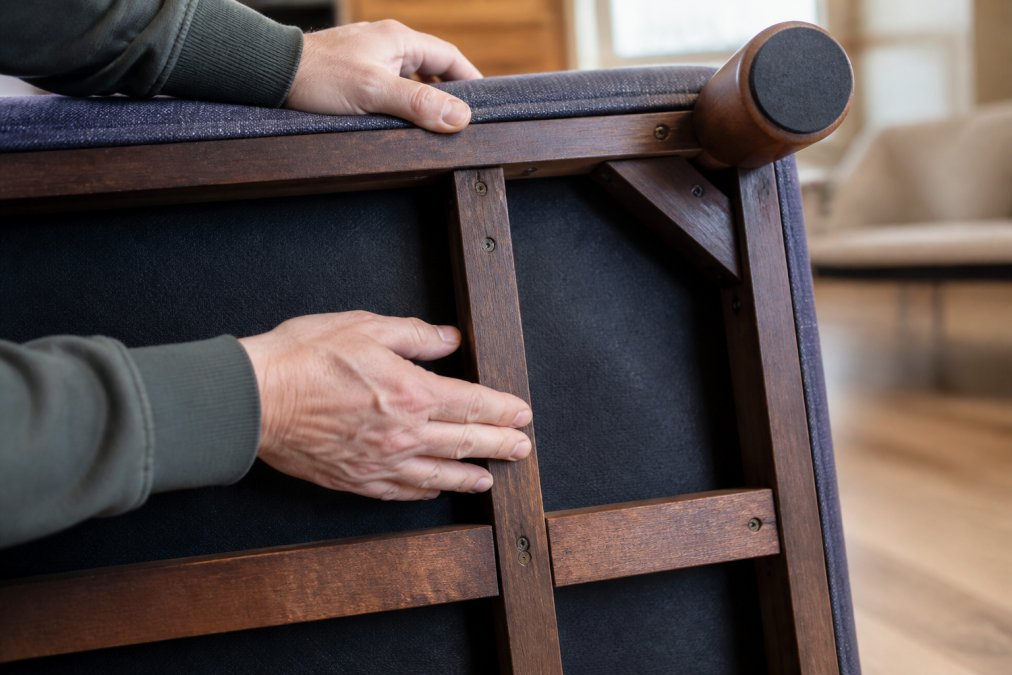
Check corners and stress points where legs meet the frame, where armrests attach, and where the back meets the seat. Quality construction uses mortise-and-tenon joinery or heavy-duty dowels with reinforcement, not screws or staples that loosen over time. Press down hard on different parts, it should feel solid and immovable, not flex or creak.
Base stability is critical, especially for cat furniture. A wobbly cat tree can topple when a cat jumps or climbs. Look for wide, weighted bases that won't tip even under dynamic movement. The base should be wider than the furniture's footprint itself.
Weight capacity should account for dynamic forces. A jumping dog creates impact far greater than their static weight. If a sofa is rated for 200 pounds, that's the maximum static load, not what it handles when a 60-pound dog repeatedly launches onto it.
Look for reinforced corner blocks and cross-bracing underneath. These prevent the frame from racking (twisting out of square) over time. You should feel substantial internal structure when running your hand along the underside.
Evaluate Durable Fabrics for Pet Furniture
Standard upholstery designed for humans isn't engineered for pet use: constant scratching, jumping, rolling, and occasional accidents.
High quality pet furniture uses performance fabrics specifically designed for durability and stain resistance. Look for fabrics with high abrasion resistance ratings, measured by the Martindale test, which simulates rubbing and wear. A quality fabric should have a Martindale rating of at least 15,000 cycles; 30,000 or higher is excellent.
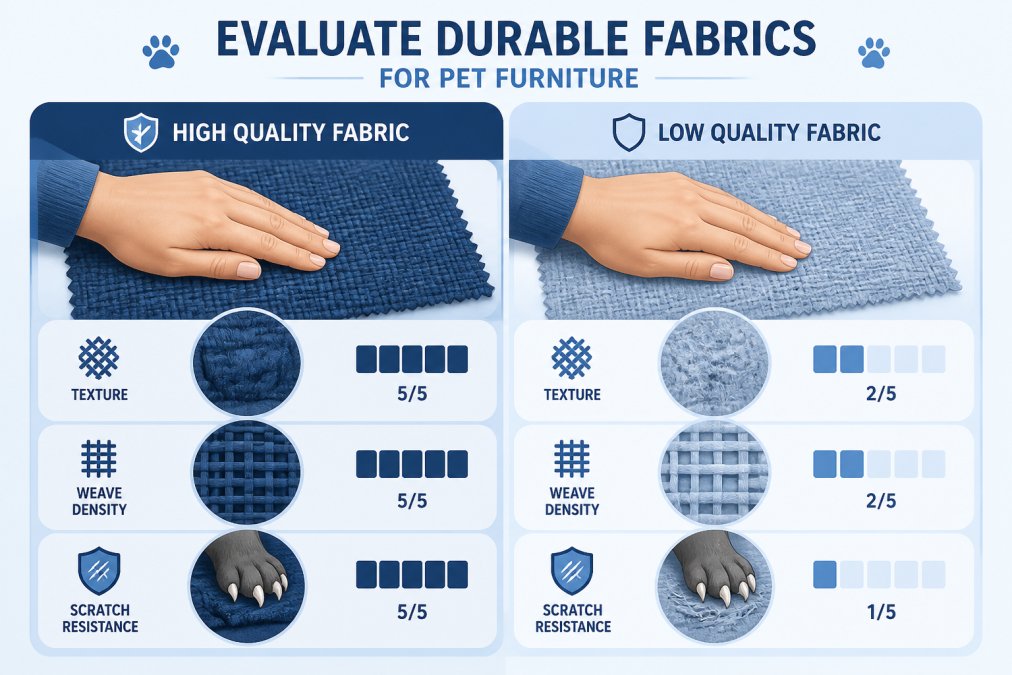
Stain resistance is separate from durability. Many quality fabrics use solution-dyed fibers, where color is built into the fiber itself rather than applied to the surface. This means stains are less likely to set permanently. Check whether the fabric has been treated with stain-resistant finish like Scotchgard, which creates a barrier that repels liquids long enough for you to blot them up.
Weave density affects scratch resistance. Tightly woven fabrics resist scratching better than loose weaves. Run your fingernail gently across a sample, if it snags easily or pulls threads, the weave is too loose for a pet household. Quality fabrics feel slightly stiff because of tight weave and protective finish.
Avoid velvet, microsuede, and plush fabrics for pet furniture. They're magnets for pet hair, show scratches immediately, and are nearly impossible to clean. Opt instead for performance fabrics like solution-dyed polyester, tight-weave microfiber, or blended fabrics specifically marketed as pet-friendly.
Leather is a legitimate choice if you want durability. Full-grain leather improves with age and pet use. However, it requires regular conditioning and is expensive. Bonded leather should be avoided; it peels and fails quickly.
Check for Non-Toxic Pet Furniture Materials
Your pet spends hours breathing near, lying on, and occasionally chewing on furniture. Non-toxic materials are essential for your pet's health.
Start with the foam. Low-quality furniture uses cheap foam that off-gases volatile organic compounds (VOCs) for weeks or months after purchase. Quality pet furniture uses CFC-free foam or plant-based alternatives. CFC-free foam means the foam was produced without chlorofluorocarbon propellants that harm the ozone layer and off-gas into your home.
Check the adhesives used to bond fabrics and foam to the frame. Cheap furniture uses solvent-based adhesives that off-gas formaldehyde. Quality manufacturers use water-based or low-VOC adhesives. Ask the manufacturer directly if you can't find this information.
Look for furniture that uses non-toxic dyes and water-based or natural finishes rather than heavy chemical stains and varnishes. Some quality manufacturers specifically state that their pieces are free from heavy metals, phthalates, and flame retardants. These certifications signal that the company prioritizes safety.
Check whether the furniture carries certifications like GREENGUARD Gold, which indicates low chemical emissions, or has been tested by third-party labs for heavy metals and toxins. The stuffing should be hypoallergenic if possible, as some pets have sensitivities to certain materials.
Assess Weight Capacity and Size Considerations
Weight capacity reflects how the furniture was engineered. A quality piece has a realistic capacity that accounts for your pet's actual use patterns, not just theoretical static load.
For a dog bed, the stated capacity should be at least 20 pounds more than your dog's weight to account for jumping, rolling, and concentrated pressure from lying in one spot for hours. A 60-pound dog should have a bed rated for at least 80-100 pounds.
For cat furniture like trees and condos, weight capacity matters less for total weight than for individual platforms. Platforms should be rated for at least 30-40 pounds even if your cat weighs 10 pounds, accounting for impact forces.
Size should be proportional to your pet's size. A cat tree that's too tall for the platform size will be unstable. A dog bed that's too small forces uncomfortable positioning. Quality manufacturers provide detailed dimensions and suggest the ideal pet size for each piece.
Consider vertical space if you have multiple pets or cats that like to climb. Quality cat furniture maximizes usable space with multiple levels and perches. For wall placement, check that the design accounts for this, some pieces need space all around to maintain structural integrity.
Verify Cleaning, Maintenance, and Repairability
How easy is the furniture to clean? Quality pieces are designed with cleaning in mind.
Look for removable, washable covers. The best pet furniture has slipcovers that unzip and go straight into the washing machine. This signals the manufacturer expects the piece to last long enough to need regular cleaning. Budget furniture often has glued-on covers that can't be removed, making stains permanent.
Check whether the fabric can be spot-cleaned with standard pet-safe cleaners. Some performance fabrics are specifically treated to work with common cleaning solutions.
Repairability shows where quality truly matters. Can you order replacement parts? Can legs be replaced if they break? Can you buy additional cushions or foam inserts? Quality manufacturers design pieces with longevity in mind, making replacement parts available and reasonably priced.
Ask about warranty coverage. Quality pet furniture typically comes with at least a 1-2 year warranty covering manufacturing defects. Some high-end manufacturers offer repair services, replacing worn fabric, re-foaming cushions, or fixing structural issues, which extends the furniture's life significantly.
Match Pet Behavior and Texture Preferences to Furniture
Different pets have different needs, and quality furniture is designed with specific behaviors in mind.
Dogs that dig or scratch need durable, tightly woven fabrics and reinforced seams. Cats that scratch need vertical surfaces and materials that withstand repeated claw contact. Some quality manufacturers offer furniture with sisal rope wrapping or specialized scratch-resistant panels.
Texture preferences matter. Some dogs prefer soft surfaces while others like firmer support. Quality pet furniture comes in different firmness levels and fabric textures. Dogs with joint pain benefit from orthopedic foam with memory-foam properties, which distributes weight evenly and reduces pressure points.
Consider your pet's size and weight distribution. Large dogs benefit from furniture with good base stability and supportive foam that won't compress excessively. Quality manufacturers design different pieces for different size ranges.
A destructive dog needs heavy-duty construction and durable fabrics. An anxious dog might benefit from enclosed spaces or raised beds that provide security. Senior pets need orthopedic support, easier access (lower heights, ramps, or steps), and materials that won't aggravate joint issues.
Choosing high quality pet furniture means inspecting the frame, testing stability, examining fabrics, and asking manufacturers detailed questions about materials and construction. The difference between furniture that lasts a year and furniture that lasts a decade comes down to these details.
At FurEver Finds, we've curated a selection of premium pet furniture that meets these standards, pieces engineered for durability, safety, and your pet's comfort. When you're ready to invest in furniture that will serve your pet well, look for the markers of quality outlined here. Your pet deserves pieces built to support their health and happiness. Browse our thoughtfully selected collection and experience the difference that genuine quality makes in your pet's daily comfort and your home's longevity.
Frequently Asked Questions
What are the most important things to check when buying high quality pet furniture?
Focus on three core areas: structural integrity (solid wood frame, sturdy joints, stable base), fabric durability (high-performance upholstery grade, stain-resistant weave, appropriate for your pet's behavior), and non-toxic materials (no harmful chemicals or off-gassing). Check weight capacity against your pet's size, inspect seams and stitching, and verify the furniture can be cleaned or repaired if damaged. These factors determine how long the furniture will last and how safe it is for your pet.
How do I know if durable fabrics for pet furniture will actually hold up to my pet?
Look for upholstery-grade fabrics with high thread count and tight weave density, which resist tearing and staining better than standard fabrics. Pet-friendly options include solution-dyed performance fabrics and microfiber, which are designed to withstand claws, accidents, and frequent cleaning. Ask the manufacturer for durability ratings, check if the fabric is rated for high-traffic use, and verify the seams are double-stitched. Test the fabric's resistance by running your hand against the weave, quality fabrics feel sturdy and don't pill or fray easily.
What certifications should I look for in non-toxic pet furniture materials?
Look for third-party certifications like CertiPUR-US (for foam), OEKO-TEX (for textiles), or Greenguard Gold (for low chemical emissions). Check if the furniture uses solid wood or plywood rather than particle board, which may contain formaldehyde. Manufacturers should disclose their materials clearly and avoid synthetic dyes or flame retardants. Ask about off-gassing and request documentation of non-toxic claims. Reputable brands provide safety data sheets and are transparent about what chemicals, if any, are present in their products.
How do I balance pet furniture aesthetics with durability and my home decor?
High quality pet furniture doesn't require you to sacrifice style. Choose neutral colors and classic designs that complement your decor while offering stain-resistant, durable fabrics. Look for modular designs that fit your space, and prioritize pieces with removable, washable covers in neutral tones. Measure your space carefully to ensure the furniture integrates seamlessly, and select styles that match your home's design language. Quality construction and beautiful finishes go hand in hand, premium pet furniture is designed to be both functional and visually appealing.
This article was written using GrandRanker