


How to Verify Pet Product Safety Certifications
Table of Contents
- Why Verifying Pet Product Safety Certifications Matters
- Understanding CPSC Pet Product Regulations
- ASTM International Pet Safety Standards Explained
- Step-by-Step: How to Verify Pet Product Safety Certifications
- How to Check for Pet Product Recalls
- Common Red Flags in Pet Product Safety Claims
- Safety Differences by Pet Product Category
- Conclusion
Last Updated: August 13, 2026
Why Verifying Pet Product Safety Certifications Matters
Your pet depends on you to make smart choices about the products they use daily. A toy that looks safe might contain toxic materials. A collar marketed as "durable" could break during a crucial moment. Pet product safety claims are everywhere, but verification is rare. Most pet owners buy based on brand reputation or price without understanding what safety certifications mean or whether they're legitimate. This guide explains how to verify pet product safety certifications so you can shop with confidence, protecting your companion's health and wellbeing.
Unsafe pet products can cause choking hazards, chemical poisoning, mechanical injuries, and long-term health problems. The pet industry operates with fewer mandatory safety standards than human consumer products. When you learn to verify certifications, you're protecting your pet and supporting manufacturers who prioritize quality and accountability.
Understanding CPSC Pet Product Regulations
The Consumer Product Safety Commission establishes federal safety regulations for many pet products sold in the United States. However, the regulatory landscape is fragmented. Not all pet products fall under CPSC jurisdiction equally, and some categories have specific rules while others remain loosely regulated.
Pet toys are subject to mechanical hazard testing requirements. Products intended for pets must not contain lead or other prohibited materials above specified limits. Pet bedding and furniture must comply with flammability standards. Collars and leashes have durability and material requirements. The complication: rules vary by product type, and manufacturers often self-certify compliance rather than submitting to independent third-party testing.
A product labeled "CPSC compliant" doesn't automatically mean it's been tested by an independent laboratory. Many manufacturers test internally and declare conformity themselves. This is legal but creates risk, without third-party verification, you're trusting the manufacturer's word alone.
The CPSC maintains a public database where consumers can search for recalled products. But many unsafe products never reach the recall stage because they're sold through small retailers or online marketplaces with minimal oversight. Your own verification process matters more than relying on regulatory agencies to catch every problem.
ASTM International Pet Safety Standards Explained
ASTM International develops voluntary consensus standards for product safety, including several that apply to pet products. Unlike mandatory regulations, ASTM standards are optional, manufacturers choose whether to follow them. However, products certified to ASTM standards have undergone rigorous third-party testing and are generally safer than uncertified alternatives.
ASTM F963 covers safety standards for toy products and applies to many pet toys. This standard requires mechanical testing, choking hazard assessment, and material safety verification. Products tested to F963 have been evaluated by accredited laboratories using standardized procedures.
The key distinction is that ASTM standards require third-party testing. A manufacturer cannot simply declare their product meets ASTM standards. An accredited, independent laboratory must test the product and verify compliance. This creates accountability. If a certified product later proves unsafe, both the manufacturer and the testing laboratory face potential liability.
Many pet products carry no ASTM certification at all. This doesn't automatically mean they're unsafe, but it does mean they haven't undergone standardized independent testing. When shopping for pet products, prioritize items with ASTM certification marks or equivalent third-party testing evidence.
Step-by-Step: How to Verify Pet Product Safety Certifications
Learning to verify pet product safety certifications takes about 10-15 minutes per product once you know the process.
Step 1: Identify the Certification Mark
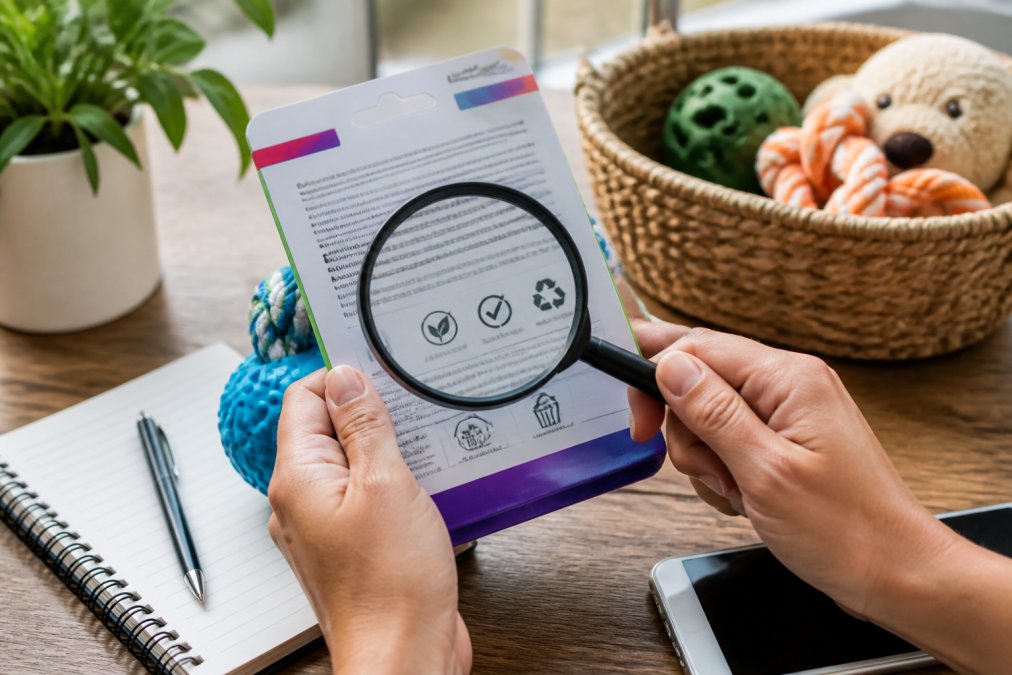
Examine the product packaging carefully. Look for certification marks on the label, tag, or packaging. Common certification marks include the ASTM logo, which shows a stylized "A" inside a circle. You might also see marks from UL (Underwriters Laboratories) or other third-party certifiers.
The certification mark should include the organization's name and often a reference number or standard designation (like "ASTM F963"). Don't confuse marketing claims with actual certifications. A package that says "tested for safety" or "safety approved" without a specific certification mark is making an unverifiable claim. A legitimate certification mark comes from a recognized testing organization and includes specific standard information.
Step 2: Research the Certifying Organization
Once you've identified a certification mark, verify that the organization is legitimate and accredited. ASTM International, UL, and major testing laboratories are well-established and widely recognized. Smaller or unfamiliar testing organizations require additional verification.
Visit the certifying organization's website directly. Search for the product or manufacturer to confirm the certification. Legitimate testing organizations maintain searchable databases of certified products. If you can't find the product listed on the certifier's own database, the certification mark may be fraudulent.
Check whether the certifying organization is accredited. Accreditation means an independent body has verified that the organization meets standards for testing competence and reliability. Be skeptical of certifications from organizations you've never heard of. Legitimate certifications always name the specific organization that performed the testing.
Step 3: Look for Third-Party Testing Evidence
Beyond certification marks, look for evidence that third-party testing actually occurred. Legitimate manufacturers provide transparency about testing. Check the product packaging, the company website, and product documentation for testing reports or summaries.
Some manufacturers publish full test reports showing specific test results, dates, and the testing laboratory's name. Other manufacturers provide summary information indicating which standards the product was tested against. Contact the manufacturer directly if you can't find testing information. A legitimate company will provide documentation of testing or explain why a product doesn't carry third-party certification.
Testing conducted within the last 2-3 years is more relevant than older testing, as manufacturing processes and material sourcing can change.
Step 4: Verify Against the Certification Database
Most major certifying organizations maintain online databases where you can search for certified products. Go to the certifying organization's website and locate their product database. Search for your product by name or manufacturer. If the product appears in the database with current certification status, the claim is verified.
Some databases provide detailed information including the specific standard the product was tested against, the date of certification, and the testing laboratory. If you can't access the database directly, contact the certifying organization. Most will verify certification status if you provide the product name and manufacturer.
How to Check for Pet Product Recalls
Even certified products can be recalled if problems emerge after they reach the market. The CPSC maintains a searchable database of recalled consumer products, including pet items.
Visit the CPSC website and use their recall search function. Enter the product name, manufacturer, or product type. The database shows all active recalls with details about the hazard, the date of recall, and affected product batches. If your specific product appears in the recall database, do not use it.
Many retailers also maintain recall information. Some e-commerce platforms automatically remove recalled products from their inventory, but not all do. Your own verification is necessary.
Sign up for CPSC recall alerts if you purchase pet products regularly. The agency offers email notifications for new recalls in specific product categories.

Manufacturer websites often post their own recall announcements. If you've purchased a product from a specific brand, check their website periodically or sign up for their email notifications.
Common Red Flags in Pet Product Safety Claims
Certain language and marketing patterns indicate that a product may not have undergone genuine safety testing.
Products described as "tested for safety" without naming the testing organization are making an unverifiable claim. Legitimate certification specifies which organization performed testing and which standard the product meets. Vague language is a warning sign.
Claims like "all natural," "non-toxic," or "safe for pets" are marketing statements, not certifications. These terms have no legal definition in the pet product industry. Actual safety certification comes from third-party testing against specific standards, not marketing language.
Products priced significantly lower than competitors often skip safety testing to reduce costs. Extremely cheap products frequently come from manufacturers with minimal quality assurance.
Imported products from manufacturers without verifiable testing records present higher risk. Check whether imported products carry recognized certification marks and whether the manufacturer is listed in certification databases.
Products sold only through unknown online marketplaces without established brand presence may be counterfeit or untested. Established retailers curate their selection to include products with verified safety credentials.
Safety Differences by Pet Product Category
Different pet product categories have different safety priorities.
Pet toys require mechanical testing to prevent choking hazards and structural failure. Toys should be certified to ASTM F963 or equivalent standards. Soft toys should resist tearing and not shed fibers. Hard toys should not have sharp edges or points.
Pet food and treat packaging must comply with FDA regulations regarding material safety. The packaging material should not leach chemicals into food.
Pet bedding and furniture must meet flammability standards. Products should be labeled with their flame-resistance rating or certification.
Collars, leashes, and harnesses require durability testing to ensure they won't break during use. Quick-release mechanisms should function reliably.
Pet grooming products, including shampoos and treatments, should be tested for skin safety and non-toxicity.
Water and food bowls should be made from food-safe materials that don't contain harmful chemicals. Plastic bowls should be BPA-free and designed for food contact.
Understanding these category-specific requirements helps you prioritize which certifications matter most for each purchase.
Conclusion
Verifying pet product safety certifications protects your pet from preventable harm and supports manufacturers who prioritize quality. The process involves identifying legitimate certification marks, researching the certifying organizations, checking for third-party testing evidence, and verifying against official databases. It takes minimal time but delivers significant peace of mind.
At FurEver Finds, we understand that pet parents want products they can trust. Every item in our curated selection is thoughtfully chosen for quality you can trust, ensuring your pet receives the care they truly deserve. Start your safer shopping today with FurEver Finds and give your pet the protection they deserve.
| Verification Step | Action | Time Required |
|---|---|---|
| Identify certification mark | Examine packaging for ASTM, UL, or other logos | 2 minutes |
| Research certifying organization | Visit their website and verify accreditation | 3 minutes |
| Look for testing evidence | Check manufacturer documentation or contact them | 3-5 minutes |
| Verify in database | Search the certifier's product database | 2 minutes |
| Check for recalls | Search CPSC database by product name | 2 minutes |
Frequently Asked Questions
What government agencies regulate pet product safety?
The Consumer Product Safety Commission (CPSC) oversees most pet product safety in the United States. The CPSC sets federal safety regulations, mandates third-party testing for certain products, and maintains a public database of product recalls. For food and treats, the FDA also plays a role. Always verify that products meet CPSC standards and check their official recall database before purchasing.
How do I know if a pet toy is safety tested?
Look for certification marks on the packaging or product label, such as ASTM International certifications, Center for Pet Safety seals, or third-party testing badges. Reputable manufacturers include testing certificates or links to test reports on their websites. Check the product packaging for statements like 'independently tested' or 'third-party certified,' and verify these claims by researching the certifying organization.
How can I check if a pet product has been recalled?
Visit the CPSC's official website and use their searchable recall database by product name, brand, or category. You can also sign up for recall alerts by email. For pet-specific recalls, check the Center for Pet Safety website. Always search before purchasing and periodically check products you already own, as recalls can be issued months after a product hits shelves.
What does ASTM certification mean for pet products?
ASTM International sets voluntary safety standards for pet products, including durability, toxicological safety, and mechanical testing requirements. Products bearing ASTM certification have undergone independent evaluation and met specific safety performance criteria. However, ASTM certification is not mandatory for all pet products, so its absence doesn't automatically mean a product is unsafe, but its presence is a strong safety indicator.
This article was written using GrandRanker