


Non-Toxic Dog Toys for Puppy Safety: A 2026 Guide
Table of Contents
- What Makes a Dog Toy Non-Toxic and Safe for Puppies
- Materials to Avoid in Dog Toys
- How to Identify Toxic Dog Toys and What to Look For
- Safe Chew Toys for Puppies: Top Recommendations
- Puppy Teething Safety Tips and Best Practices
- Durability, Quality Standards, and Third-Party Testing
- Supervised Play and Hazard Prevention
- Conclusion
Last Updated: August 6, 2026
What Makes a Dog Toy Non-Toxic and Safe for Puppies
A non-toxic dog toy is made from materials that won't poison or harm your puppy if chewed or ingested. The key is the absence of harmful chemicals like BPA, phthalates, and synthetic dyes that can leach into your puppy's system during play. At FurEver Finds, we prioritize toys selected for quality.
Puppies explore the world through their mouths, and their developing immune systems need protection from chemical exposure. Natural rubber, organic cotton, and food-grade silicone are the gold standard because they're durable, digestible if accidentally ingested, and free from toxic residues.
The difference between genuinely safe toys and those that merely appear safe comes down to third-party testing and material transparency. Look for toys where the maker openly shares material sourcing, manufacturing practices, and test results. This transparency signals confidence in safety standards.
Puppies' toy needs shift with developmental stages. Young puppies with baby teeth need softer, pliable toys that won't damage emerging teeth. As permanent teeth come in, puppies can handle slightly firmer options. A truly non-toxic toy matches your puppy's age and chewing intensity.
Materials to Avoid in Dog Toys
Synthetic dyes and heavy metals are common culprits in cheap toys. Industrial-grade colorants aren't food-safe and can cause gastrointestinal upset. Lead, cadmium, and other heavy metals occasionally appear in imported toys with poor quality control.
BPA and phthalates are industrial chemicals that make plastics flexible. BPA mimics hormones and disrupts endocrine function. Phthalates have been linked to reproductive and developmental issues in animals. If a toy's label doesn't explicitly say "BPA-free" and "phthalate-free," assume it may contain them.
Foam-based toys with loose stuffing pose physical hazards even if materials aren't toxic. Puppies can ingest foam chunks that cause intestinal blockages, a serious condition requiring surgery. Reserve plush toys for calm sessions with supervision.
Certain adhesives and glues used to assemble toys can be toxic. Quality toy makers use food-grade adhesives or mechanical fastening methods. A strong chemical smell signals you should pass.
Latex and unprocessed natural rubber can cause allergic reactions in sensitive puppies. Reputable manufacturers vulcanize or cure their rubber to remove allergens. This is why KONG's proprietary rubber and GoughNuts' processed natural rubber are safer than generic latex toys.
Recycled plastics of unknown origin are risky because you don't know what chemicals were in the original product. If packaging doesn't specify food-grade or toy-grade recycled plastic, it likely isn't suitable for puppies.
How to Identify Toxic Dog Toys and What to Look For
Start by reading the label carefully. Legitimate manufacturers list materials, country of origin, and safety certifications. Vague descriptions like "rubber" or "plastic" without specifying type are warning signs.
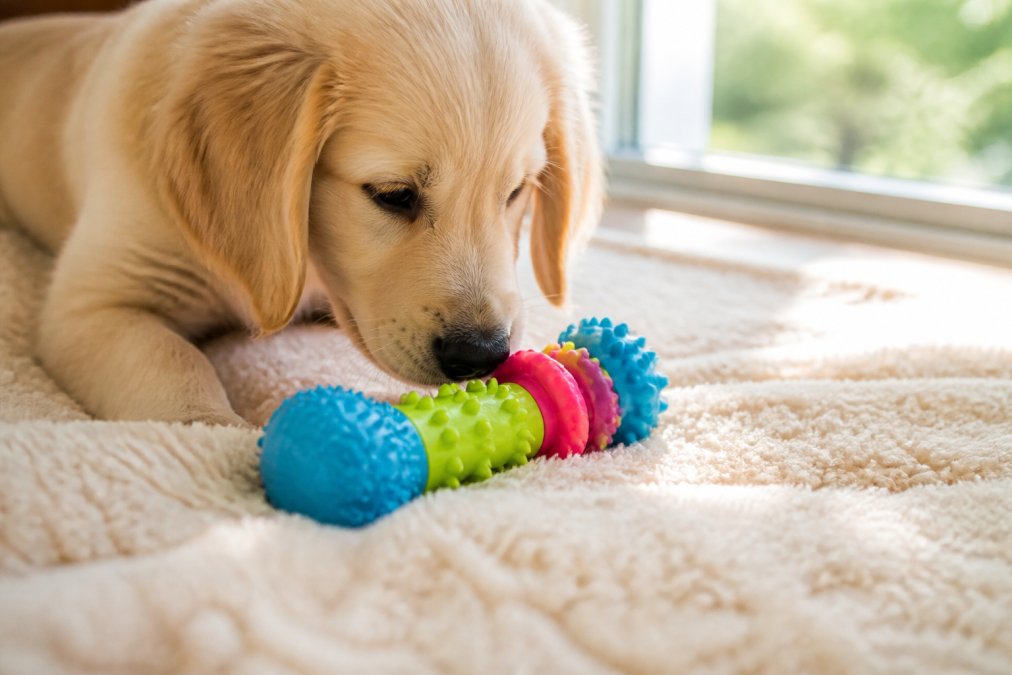
Check for third-party testing certifications. Look for mentions of testing by organizations that verify safety standards. Some makers provide test reports publicly, this is the gold standard for transparency.
Smell the toy before giving it to your puppy. A strong chemical odor indicates off-gassing of solvents. Quality toys may have a slight rubber or natural scent, but nothing harsh or industrial.
Examine construction carefully. Seams should be tight and even. Glued or welded joints should be smooth with no rough edges. Press the toy firmly, it should resist puncture and maintain its shape.
Look for toys designed specifically for puppies. Puppy-specific toys account for the fact that baby teeth are sharper but weaker than permanent teeth. Adult dog toys can be too hard and damage emerging teeth.
Research the brand's reputation. Read detailed reviews from other puppy owners about durability, safety, and adverse reactions. Consistent praise for quality and safety is more trustworthy than mixed reviews.
Request material safety data if not publicly available. Reputable manufacturers will provide documentation showing their materials have been tested and approved for pet contact. Refusal to share information is a red flag.
Safe Chew Toys for Puppies: Top Recommendations
Natural Rubber Options
KONG Puppy Toy is a classic choice for teething puppies. Made from KONG's proprietary natural rubber formula engineered to be softer than adult versions, it's designed for developing teeth. The hollow center can be stuffed with treats, kibble, or wet food and frozen for extended play. The toy is dishwasher-safe for easy cleaning. Very aggressive chewers may eventually destroy it, though most puppies get weeks or months of use.
GoughNuts Original Ring offers extreme durability. Made from 100% natural rubber, it includes a patented safety indicator, a red inner core that becomes visible if the toy is compromised. This feature gives you peace of mind: if you see red, it's time to replace the toy. GoughNuts backs the toy with a lifetime replacement guarantee, reflecting their confidence in the product.
Treat-Dispensing and Interactive Toys
West Paw Zogoflex Toppl represents safety, durability, and mental enrichment. Made from proprietary Zogoflex material that's BPA-free, phthalate-free, and latex-free, this puzzle toy can be filled with treats or kibble and frozen for extended play. The interlocking design allows you to combine different sizes as your puppy grows. It's dishwasher-safe, made in the USA, and backed by a guarantee against dog damage.
Planet Dog Orbee-Tuff Snoop offers interactive treat-dispensing in a squishy, translucent package. Made from durable, non-toxic Orbee-Tuff TPE material free of BPA, lead, and phthalates, it has a deep crevice designed to conceal treats. The toy is infused with natural mint oil and made in the USA. Supervision is required, it's best for puppies needing mental engagement during supervised play rather than independent chewing.
Eco-Friendly and Sustainable Choices
Simple Ecology Upcycled Canvas Dog Bone appeals to environmentally conscious owners. Made from 100% upcycled organic cotton canvas and stuffed with upcycled organic cotton, it's completely microplastic-free and compostable at end of life. The toy is handmade, machine washable, and GOTS-certified. It's best suited for puppies who enjoy soft play rather than intense gnawing.
Puppy Teething Safety Tips and Best Practices
Teething typically begins around 3-4 weeks of age and continues until about 6-7 months when permanent teeth fully emerge. During this period, your puppy's gums are sore and inflamed, and chewing provides relief. The right toys soothe discomfort while protecting your furniture and your puppy's health.
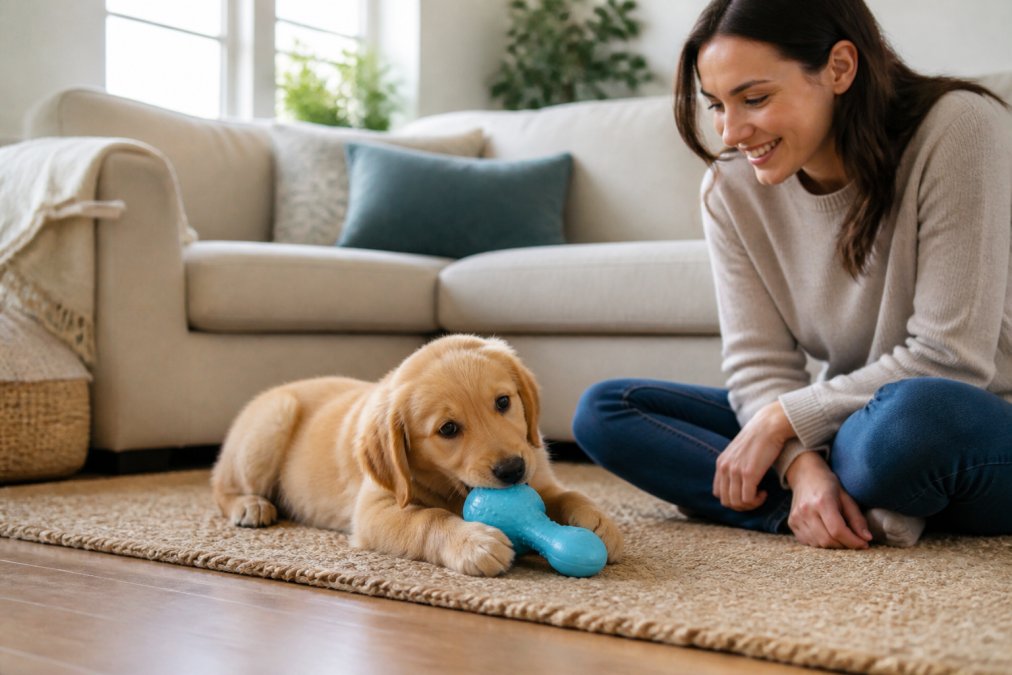
Offer a variety of textures and densities. Some puppies prefer soft, pliable toys that compress under tooth pressure, while others like firmer options. Having multiple options lets your puppy self-select based on what feels best for their sore gums. Rotate toys regularly to maintain novelty and engagement.
Chill toys in the refrigerator (not the freezer) for 15-20 minutes before play. The cold numbs sore gums and reduces inflammation. Never freeze toys solid, as this can damage teeth.
Supervise chewing sessions, especially with new toys. Watch for signs of distress, excessive drooling, or difficulty eating. If your puppy seems to be ingesting large pieces, remove the toy immediately.
Establish a rotation schedule. Puppies get bored with the same toys, and constant access reduces their novelty value. Rotate toys every few days to keep teething engagement high and extend the life of each toy.
Monitor for signs of allergic reactions or sensitivities. Excessive itching, vomiting, or diarrhea can indicate an allergy. If you notice these signs after introducing a new toy, remove it and consult your veterinarian.
Don't rely solely on toys for teething relief. Wet washcloths frozen and offered as chew objects provide texture variation. Some puppies also benefit from soft, damp rope toys (supervised only). The goal is providing multiple outlets for the natural teething urge.
Durability, Quality Standards, and Third-Party Testing
Durability and safety are intertwined. A toy that falls apart quickly becomes a choking hazard and a waste of money. Quality construction means your puppy gets sustained use and you avoid the risk of ingesting broken pieces.
Reputable manufacturers subject their toys to rigorous testing protocols. Look for toys tested for tensile strength, puncture resistance, and material composition. Some makers conduct accelerated wear testing that simulates months of chewing in controlled laboratory conditions.
Third-party testing by independent laboratories is the gold standard. Organizations like the American Society for Testing and Materials (ASTM) establish standards for pet product safety. Toys tested by ASTM for heavy metals, chemical leaching, and structural integrity have been verified by neutral experts.
Material composition transparency matters. Toys made from named, identifiable materials (natural rubber, organic cotton, food-grade silicone) are preferable to vague descriptions. When you can trace a toy's materials back to their source, you have more confidence in safety.
Check the warranty or guarantee. Many quality manufacturers offer replacement guarantees if a toy fails prematurely. GoughNuts' lifetime replacement guarantee and West Paw's damage guarantee reflect confidence in durability.
Read independent reviews from veterinarians and certified animal behaviorists. Their assessments carry weight because they're based on professional experience and understanding of puppy development.
Supervised Play and Hazard Prevention
Supervision is essential. Even the safest toy can become a hazard if your puppy ingests large pieces. Supervise all toy interactions, especially with new toys or during the first few play sessions.
Watch for warning signs during play. Excessive drooling, gagging, or difficulty swallowing can indicate your puppy is struggling with the toy. Vomiting or loss of appetite within hours of play can signal a blockage or toxic reaction. Contact your veterinarian immediately if you notice these signs.
Rotate toys to prevent boredom and overuse. A toy your puppy gnaws on constantly will wear down faster. Cycling toys keeps them fresher and extends their lifespan.
Establish play boundaries. If your puppy becomes overly aggressive or fixated on destroying a toy, remove it and redirect to calmer play. Teaching your puppy to have a healthy relationship with toys is part of good training.
Remove toys with visible damage immediately. A toy with a torn seam, puncture, or loose pieces is a choking hazard. Don't wait for it to fall apart completely.
Keep toys away from other pets temporarily if you have multiple dogs. Separate spaces prevent fights and ensure each puppy gets safe, supervised play time.
Avoid toys with small detachable parts, buttons, or decorative elements. Puppies will find and remove these, creating choking hazards.
Never leave a puppy unsupervised with a toy overnight or for extended periods. Crate your puppy or store toys where they can't access them.
Durability vs. Safety Considerations
The tension between durability and safety is real. Some very hard toys are extremely durable but can damage puppy teeth. Softer toys may be gentler on teeth but break down faster, creating choking hazards. Match toy durability to your puppy's age and chewing intensity.
Young puppies with baby teeth need softer, more forgiving options. A toy that's too hard can chip or damage emerging teeth. As permanent teeth fully erupt around 6-7 months, you can introduce slightly firmer options. By 12 months, most puppies can handle standard-durability toys.
Aggressive chewers require more durable toys, but durability shouldn't compromise safety. Toys with safety indicators (like GoughNuts' red core) signal when a toy has been compromised and should be replaced.
The best approach is matching toy type to play style. Puppies who chew gently benefit from softer toys. Puppies who chew intensely need durable options that won't break into dangerous pieces. FurEver Finds carries options across this spectrum.
Consider rotating between different toy types. A soft toy for supervised cuddle play, a durable rubber toy for independent chewing, and an interactive puzzle toy for mental enrichment gives your puppy variety while minimizing risk.
Choosing non-toxic dog toys for your puppy is one of the most important safety decisions you'll make as a new pet owner. The materials your puppy chews on become part of their daily life, and they matter. FurEver Finds curates a selection of premium, thoughtfully tested toys that prioritize your puppy's safety without compromising on durability or engagement. When you shop with FurEver Finds, you're choosing toys that have been vetted for quality, materials that won't harm your puppy, and options that support healthy development through every stage of puppyhood. With next-day delivery on orders placed by 12 PM, you can get the right toys to your puppy quickly and with confidence.
| Toy Type | Best For | Key Safety Features | Durability |
|---|---|---|---|
| Natural Rubber (KONG Puppy) | Teething relief and treat stuffing | Soft formula for baby teeth, no BPA/phthalates | Moderate |
| Treat-Dispensing Puzzle (West Paw Zogoflex) | Mental enrichment and slow feeding | Non-toxic material, tested for safety, freezer-safe | High |
| Interactive Toy (Planet Dog Snoop) | Supervised play and engagement | BPA/phthalate-free, made in USA | Moderate |
| Ultra-Durable Ring (GoughNuts) | Aggressive chewers | Safety indicator, natural rubber, lifetime guarantee | Very High |
| Eco-Friendly (Simple Ecology Canvas) | Gentle play and cuddling | Organic cotton, compostable, microplastic-free | Low (soft play only) |
Frequently Asked Questions
What materials should I avoid in non-toxic dog toys for puppies?
Avoid toys containing BPA, phthalates, lead, and heavy metals. Steer clear of toys with synthetic dyes, PVC, and low-quality plastics that may leach chemicals. Also avoid toys with small parts that can detach and become choking hazards. Always check product labels for certifications confirming the absence of these harmful substances. Look for toys made from natural rubber, organic cotton, or materials specifically labeled as phthalate-free and BPA-free.
How do I identify toxic dog toys before buying?
Check for third-party testing certifications and safety labels on packaging. Research the manufacturer's transparency about material sourcing and chemical testing. Avoid toys with strong chemical odors or that feel overly plasticky. Look for products with safety guarantees or lifetime warranties, which indicate manufacturer confidence. Read customer reviews mentioning durability and safety. Visit the brand's website to verify certifications like GOTS (Global Organic Textile Standard) or statements confirming BPA and phthalate-free materials.
Are rubber dog toys safe for teething puppies?
Yes, natural rubber toys are among the safest options for teething puppies. Natural rubber is non-toxic, pliable for developing teeth, and promotes healthy chewing habits. Look specifically for toys made from 100% natural rubber or proprietary formulas designed for puppies. Avoid synthetic rubber or toys with added chemicals. Natural rubber toys help soothe sore gums and can be stuffed with treats for mental enrichment. Always supervise play and ensure the toy is appropriately sized for your puppy to prevent choking hazards.
What should I do if my puppy destroys toys quickly?
Choose toys made from ultra-durable materials like reinforced natural rubber with safety indicators that show wear. Select toys backed by lifetime guarantees or replacement warranties. Rotate toys to maintain interest and reduce aggressive chewing. Supervise play sessions and remove toys if they show signs of deterioration. Provide appropriate chew outlets like treat-dispensing toys that engage puppies mentally. If your puppy is an aggressive chewer, avoid plush toys and focus on engineered chew toys designed for heavy chewers. Consider consulting your veterinarian if destructive chewing seems excessive.
This article was written using GrandRanker