


Why Does My Dog Chew Furniture When Left Alone?
Table of Contents
- Why Your Dog Chews Furniture When Left Alone
- The Difference Between Boredom and Anxiety
- Separation Anxiety in Dogs: When Chewing Is a Panic Response
- Puppy Teething and Developmental Chewing
- How to Identify the Root Cause of Destructive Chewing
- The Chew-Proof Home Audit: Environmental Management
- Durable Chew Toys for Aggressive Chewers
- Dog Enrichment Activities That Tire Out Body and Brain
- Technology-Based Monitoring and Post-Chewing Repair
- Frequently Asked Questions
Last Updated: September 18, 2026
Why Your Dog Chews Furniture When Left Alone
Your dog is not being spiteful. Most destructive chewing starts within 30 minutes of you leaving, and that timing matters. This guide from FurEver Finds breaks down why does my dog chew furniture when left alone, and what to do about it.
The Difference Between Boredom and Anxiety
Boredom chewing is casual; anxiety chewing is frantic. A bored dog chews because nothing else is happening, while a dog with separation anxiety in dogs chews because panic takes over. Here is how to tell them apart:
- Boredom: scattered damage, calm dog when you return
- Anxiety: focused damage at doors or windows, frantic greeting
- Boredom: chews when alone for long stretches
- Anxiety: chews within minutes of you leaving
Separation Anxiety in Dogs: When Chewing Is a Panic Response
Separation anxiety is a distress response triggered by being left alone. Affected dogs drool, pace, and scratch at exit points, and chewing becomes self-soothing. It is a panic problem, not a training problem.
Stress Signals to Watch For
Watch for these signs, ideally on camera:
- Pacing before you leave
- Whining or barking shortly after departure
- Drooling or house soiling
- Scratching at doors and window frames
- Destroying items that smell like you
If you see several of these, talk to your vet. A veterinary consultation can rule out medical causes and guide next steps. Severe cases may need a dog behaviorist.
Puppy Teething and Developmental Chewing
Puppies chew because their gums hurt, with teething peaking between four and six months. This is normal, not defiance, puppies explore with their mouths, and sore gums make chewing feel good.
What helps:
- Frozen washcloths for sore gums
- Soft chew toys made for puppies
- Short, supervised chew sessions
- Consistent redirection to approved items
How to Identify the Root Cause of Destructive Chewing
Start with a camera. Record the first hour after you leave and review the footage in slow motion if your app allows it; most phones and pet cameras timestamp motion events. Then ask these questions in order:
- When does the chewing start? The first 10-15 minutes points to anxiety. Chewing 30-60 minutes in, after your dog has settled and re-aroused, points to boredom or excess energy. Chewing triggered by a specific event (garbage truck, neighbor's dog, school bus) points to a territorial or sound-reactive component.
- Where does it happen? Damage clustered at doors, windows, and crates suggests escape attempts or confinement distress. Damage spread across the room suggests exploratory or play chewing. Damage focused on items that smell like you, shoes, pillows, worn clothing, suggests comfort-seeking or attachment.
- What does your dog's body language look like? On camera, look for lip licking, yawning, pacing, whale eye, tucked tail, or repeated position changes. Those are stress signals. A dog who is loose, playful, and tossing a pillow is not panicking, that dog is under-stimulated.
- What is the dog's age and breed background? Puppies under about 6 months are almost always teething or exploring. Adolescents (roughly 6-18 months) chew for enrichment and because they are still learning household rules. Adults who suddenly start chewing usually have a change, schedule, household member, move, new pet, behind it.
Breed-Specific Chewing Tendencies
Most guides treat every dog the same, which is a mistake. Working and sporting breeds were developed for carrying, tugging, retrieving, or gripping, and those drives do not disappear when the job does.
- Retrievers and spaniels often chew because they are mouth-oriented by design. They need retrieve games, fetch, and toys they can carry, not just a puzzle feeder.
- Herding breeds (Border Collies, Australian Shepherds, heelers) often chew when they are under-worked mentally. A long walk is not enough. They need training tasks, trick work, or structured problem-solving.
- Terriers and scent hounds chew when they cannot dig, hunt, or sniff. Snuffle mats, scatter feeding, and nose-work games target that drive directly.
- Guardian breeds (Great Pyrenees, mastiffs) may chew more when left alone because their job is to watch the property. A window with a view, or a camera with two-way audio, can reduce that pressure.
- Toy and companion breeds are not immune. They often chew for comfort, especially if they were bred for lap time and are now left for long stretches.
Rule Out Medical Causes First
Before building a training plan, rule out pain and medical triggers. Dental disease, broken teeth, gum inflammation, gastrointestinal upset, and allergies can all drive chewing, and a dog with an upset stomach may chew and swallow non-food items, a pattern called pica, which is medical, not a training issue.
The Chew-Proof Home Audit: Environmental Management
Environmental management means changing the space so your dog cannot reach the wrong things, the fastest fix available.
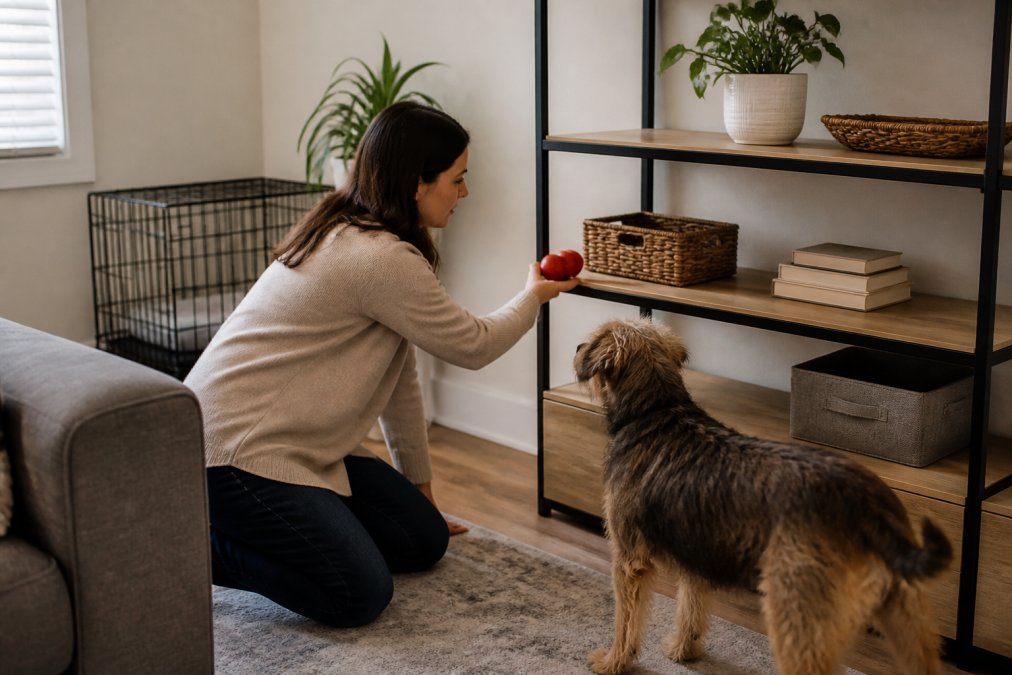
Walk through every room and check:
- Cords and cables tucked away or covered
- Trash cans with locking lids
- Shoes and remotes behind closed doors
- Coffee tables cleared of tempting items
- Baby gates blocking off problem rooms
- A crate training setup for safe alone time
Durable Chew Toys for Aggressive Chewers
Not all toys survive a determined chewer. Match the toy to the job.
| Toy Type | Best For | Durability |
|---|---|---|
| Rope tug toys | Interactive play, teething | High |
| Puzzle feeders | Boredom, mental work | Medium |
| Plush comfort toys | Anxious dogs, solo time | Low to medium |
| Dense rubber chews | Power chewers | High |
A few solid picks from our own shelves:
- Dog Tug Rope Toy ($56.99): tough rope that handles tugging and chewing, and helps clean teeth
- ChewPal CuddleBuddy ($46.99): a plush squeaky toy that helps ease alone-time stress
- Interactive Puzzle Ball ($26.99): dispenses treats slowly to fight boredom
Dog Enrichment Activities That Tire Out Body and Brain
Dog enrichment activities do more than burn energy, they give your dog a job. A tired dog chews less; a mentally tired dog chews even less. What works:

- Snuffle mats and scatter feeding
- Puzzle feeders at mealtime
- Frozen stuffed toys
- Short training sessions for impulse control
- New smells on daily walks
- Interactive play with you, not just solo toys
Technology-Based Monitoring and Post-Chewing Repair
A camera changes everything. You cannot fix a problem you never see, and most owners are guessing about what happens after the door closes.
Choosing and Using a Pet Camera
Look for four features when you shop:
- Live video with a wide field of view so you can see the whole room, not just one corner.
- Two-way audio so you can interrupt a chewing episode in real time and redirect your dog to an approved toy.
- Motion alerts so you know when chewing starts, not just that it happened.
- Local or cloud recording so you can review the first 30 minutes after you leave, when most anxiety-driven chewing occurs.
A stationary camera at dog height near the damage zone beats a wide shot from across the room. A moving camera with smartphone control lets you follow your dog room to room, but the trade-off is battery life and a narrower field of view.
The Chew-Proof Home Audit
Walk through every room and check:
- Cords and cables tucked away, covered, or run through rigid conduit
- Trash cans with locking lids, or moved behind a closed door
- Shoes, remotes, and headphones behind closed doors or in a closet
- Coffee tables cleared of tempting items
- Baby gates blocking off problem rooms
- A crate training setup for safe alone time
- Bookshelves and media consoles anchored to the wall
- Houseplants moved out of reach (some are toxic if chewed)
- Medication, supplements, and batteries locked away
Then audit by material, because dogs do not chew all furniture equally:
- Wood furniture (table legs, chair rungs, baseboards) is the most common target; splinters cause mouth injuries and intestinal damage, so wrap legs with a bitter deterrent or block access entirely.
- Upholstered fabric (sofa cushions, mattress corners) is a risk because foam and stuffing are the most common foreign bodies vets remove. If your dog shreds and swallows fabric, remove the furniture or cover it with a fitted, chew-resistant throw.
- Leather is less commonly swallowed but expensive to repair. A dog who targets leather is often mouthing for texture, so a dense rubber chew can substitute.
- Wicker and rattan shred into long strands that can wrap around the intestine. Treat these as high-risk and remove them from access.
- Cords and cables are the highest-risk category, a dog who chews a live cord can be electrocuted. Unplug and coil anything your dog can reach before you leave.
Post-Chewing Recovery: What to Do After the Damage
What you do in the first hour after finding damage matters more than most owners realize.
- Remove and replace chewed cords immediately. Do not leave a frayed cord in reach.
- Pick up and dispose of all loose pieces, including stuffing and splinters.
- Sand rough wood edges so your dog does not re-chew the splintered spot.
- Patch upholstery before your dog re-chews the same area. A patch that smells like the original fabric is more likely to be re-targeted, so clean it with an enzymatic cleaner first.
- Apply a deterrent spray to furniture legs during training. Deterrent sprays work best as a temporary barrier while you build a replacement behavior, they are not a standalone fix.
Frequently Asked Questions
How do I stop my dog from chewing on furniture when left alone?
Start by identifying the cause. If it's boredom, increase daily exercise and add dog enrichment activities like puzzle feeders. If it's separation anxiety in dogs, practice short absences and build up gradually using desensitization. Manage the environment with a chew-proof home audit, provide durable chew toys for aggressive chewers, and reward calm behavior with positive reinforcement. For severe cases, a veterinary consultation or certified dog behaviorist can build a targeted behavioral modification plan.
Is chewing furniture a sign of separation anxiety in dogs?
It can be. Destructive chewing linked to separation anxiety typically happens within the first 30 minutes of you leaving, focuses on door frames, window sills, or your personal items, and comes with other stress signals like pacing, whining, drooling, or house soiling. Boredom chewing is more random and often targets furniture cushions or table legs. A pet camera can help you tell the difference by showing what happens right after you leave.
At what age do dogs stop chewing on furniture?
Most puppies stop teething-related chewing between 6 and 12 months as adult teeth settle in. But age alone doesn't end the habit. Dogs who chew from boredom or anxiety keep going well into adulthood. Habit formation plays a big role, so consistent routine, appropriate chew toys, and mental stimulation matter more than waiting for a birthday. If an adult dog suddenly starts chewing, rule out anxiety or a medical issue with your vet.
What are the best durable chew toys for aggressive chewers?
Look for toys built from tough, pet-safe materials that stand up to repeated chewing. Rope toys like the Dog Tug Rope Toy clean teeth while absorbing tugging and chewing. Plush options such as the ChewPal CuddleBuddy offer a softer outlet for dogs who also need comfort. For solo time, the Interactive Puzzle Ball dispenses treats slowly, keeping your dog busy and reducing destructive chewing. Rotate toys every few days to keep them interesting.
Chewing when left alone is stressful for you and your dog. The good news is that it is fixable with the right tools and a clear plan. FurEver Finds curates premium pet essentials built for exactly this problem, from durable chew toys to puzzle feeders and monitoring gear. Every item is selected for quality you can trust, with next-day delivery on orders placed by 12 PM. Get started with FurEver Finds and give your dog a calmer, happier home.