


Best Indestructible Toys for Teething Puppies
Table of Contents
- Understanding Puppy Teething Timeline and Behavior
- What Makes Indestructible Toys for Teething Puppies Different
- How to Stop Puppy from Chewing Furniture and Redirect to Safe Toys
- Safe Chew Toys for Teething Puppies: Top Durable Options
- Recognizing Wear and Tear: When to Replace Your Puppy's Toys
- Transitioning from Teething Toys to Adult Chew Toys
- Frequently Asked Questions
Last Updated: September 30, 2026
Understanding Puppy Teething Timeline and Behavior
Puppies begin teething around 3 to 4 weeks of age, and the process typically lasts until they're about 6 to 7 months old. During this phase, their baby teeth fall out and permanent teeth push through, creating significant discomfort in their gums. This natural developmental stage drives intense chewing behavior as puppies instinctively seek relief from sore, tender gums.
The teething phase isn't just uncomfortable for puppies, it's when destructive chewing peaks. A teething puppy may gnaw on furniture, shoes, or electrical cords with surprising intensity. Understanding this timeline helps you prepare with the right tools before problem behaviors take hold.
Different puppy breeds experience teething differently. Larger breeds often have more pronounced chewing intensity because they develop faster and have stronger jaw muscles. Smaller breeds may have a less aggressive chewing pattern but can still cause damage relative to their size. Recognizing your puppy's individual chewing profile helps you select toys that match their specific needs.
Gum relief is the primary driver of chewing during this phase. Puppies aren't being destructive to misbehave, they're seeking soothing textures to ease the pressure and pain. Providing appropriate outlets for this natural behavior prevents frustration and reduces the likelihood of furniture damage.
What Makes Indestructible Toys for Teething Puppies Different
The best indestructible toys for teething puppies are engineered to withstand intense jaw pressure while providing the specific textures puppies need for gum relief. Standard toys often splinter, tear, or break apart within days, creating choking hazards and frustration for both puppy and owner.
Indestructible toys differ in three critical ways: material density, design durability, and safety engineering. They're built from hard rubber, reinforced nylon, or similar materials that resist splintering even under aggressive chewing. The construction accounts for the full force of a growing puppy's bite without degrading into small pieces.
Materials That Resist Heavy Chewing
Hard rubber stands as one of the most reliable materials for aggressive chewers. It maintains structural integrity under sustained pressure and resists breaking apart into dangerous fragments. Quality hard rubber toys often feature textured surfaces that provide varied sensations for gum stimulation.
Reinforced nylon offers another durable option, particularly for puppies with moderate to heavy chewing intensity. Non-splintering nylon withstands repeated gnawing without creating sharp edges or splinter risks. The material's density allows it to absorb impact from powerful jaw pressure while remaining safe for ingestion if small pieces do separate.
Rope toys made from braided, pet-safe fibers provide interactive play opportunities alongside chew resistance. Unlike cheap rope toys that fray immediately, quality rope construction maintains integrity through vigorous tugging and chewing. The rope's texture naturally helps clean teeth while offering varied tactile stimulation.
Foam and softer materials have limited value for aggressive chewers during the teething phase. These materials compress and tear easily, breaking down into pieces that pose ingestion risks. They work better for light chewers or as supplementary toys rather than primary teething solutions.
Safety Considerations for Aggressive Chewers
Choking hazard assessment is non-negotiable when selecting toys for teething puppies. Any toy that breaks into pieces smaller than your puppy's throat diameter presents serious risk. Inspect toys regularly for wear and tear, and remove any toy showing signs of deterioration before it becomes dangerous.
Ingestion risk extends beyond choking. Puppies that swallow toy fragments may experience intestinal blockages requiring emergency veterinary care. This is why material selection matters, toys that splinter or break apart create ongoing hazard throughout the teething phase.
Toxicity concerns should guide your material choices. Ensure any toy meets safety standards and contains no harmful chemicals, dyes, or additives. At FurEver Finds, we prioritize toys made from pet-safe materials that won't harm your puppy even with extended contact and chewing.

Supervised play guidelines protect your puppy during the most vulnerable teething months. Never leave your puppy unsupervised with a new toy, especially during the early teething phase when they're still learning appropriate chewing behavior. Monitoring helps you catch problems early and adjust toy selections based on your puppy's individual chewing intensity.
How to Stop Puppy from Chewing Furniture and Redirect to Safe Toys
Redirecting chewing behavior starts with making appropriate toys more attractive than furniture. When you catch your puppy chewing something inappropriate, calmly interrupt the behavior and immediately offer a durable chew toy instead. Praise enthusiastically when they shift their attention to the approved toy.
Environmental management prevents many chewing problems before they start. Restrict your puppy's access to high-value chewing targets like furniture legs, baseboards, and electrical cords. Use baby gates to confine your puppy to puppy-proofed spaces where the primary available chewing options are appropriate toys.
Rotation prevents boredom that drives destructive chewing. Rather than leaving all toys available simultaneously, rotate toys every few days. This keeps chewing stimulation fresh and maintains your puppy's interest in approved toys rather than seeking alternative outlets like furniture.
Consistency matters more than any single technique. Every family member must respond the same way to chewing behavior, redirecting to appropriate toys and providing positive reinforcement. Inconsistent responses confuse puppies and slow the learning process.
Exercise reduces excess energy that fuels destructive chewing. Puppies with adequate physical activity and mental stimulation are less likely to develop problem chewing behaviors. Daily play sessions, short training exercises, and interactive toys all contribute to a tired puppy that settles down to chew appropriately.
Safe Chew Toys for Teething Puppies: Top Durable Options
The Dog Tug Rope Toy from FurEver Finds combines durability with interactive play value. Made from pet-safe materials, this rope toy withstands tugging, pulling, and chewing while providing natural teeth cleaning through its textured fibers. The toy suits puppies and adult dogs alike, offering hours of play whether your puppy engages in solo chewing or interactive tug-of-war games with you. At $56.99, it represents a premium option for puppies with aggressive chewing intensity.
Bully sticks offer a natural chewing alternative for puppies seeking sustained chewing sessions. The 6 Inch Medium Size Bully Sticks from FurEver Finds provide high-protein, low-fat chewing that promotes dental health while satisfying natural chewing instincts. These sustainably sourced treats contain zero chemicals or additives, making them a safe choice for teething puppies. A 25-count bulk package at $69.58 provides extended supply for consistent chewing opportunities throughout the teething phase.

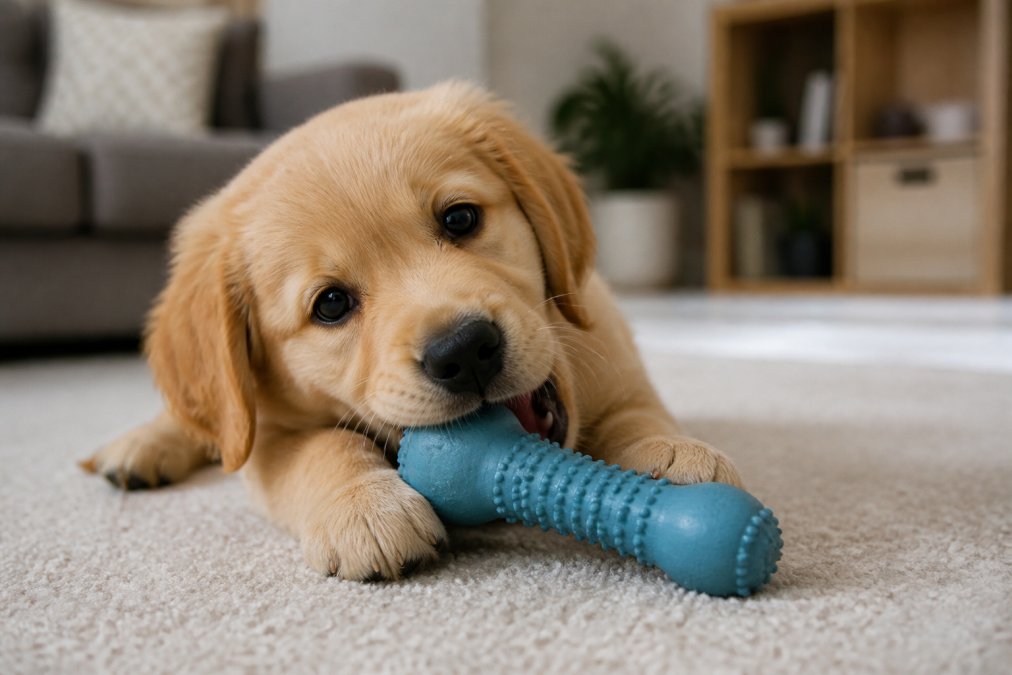
Hard rubber toys designed specifically for teething puppies offer textured surfaces that soothe inflamed gums. These toys often feature ridges and bumps that provide varied tactile stimulation while resisting splintering under aggressive chewing pressure.
Nylon chew toys engineered for heavy chewing maintain structural integrity through the most intense teething phases.
Interactive vs. Solo Play Toys
Interactive toys like rope toys encourage bonding between you and your puppy while providing chewing satisfaction. Games of tug-of-war during the teething phase teach appropriate play boundaries while giving your puppy an outlet for chewing intensity. These toys work best when you actively participate in play sessions.
Choosing the Right Size Toy for Your Puppy
Size-appropriate toys prevent choking risks and ensure optimal chewing satisfaction. A toy should be large enough that your puppy can't fit it entirely in their mouth, but small enough for comfortable holding and chewing. For most puppies during the teething phase, toys between 3 and 6 inches work well, though this varies by breed and individual size.
Recognizing Wear and Tear: When to Replace Your Puppy's Toys
Regular inspection prevents dangerous situations where worn toys become choking hazards. Check toys daily for signs of deterioration including cracks, splintering, loose fibers, or pieces beginning to separate. Any visible damage warrants immediate toy replacement.
Transitioning from Teething Toys to Adult Chew Toys
| Toy Type | Best For | Durability | Interactive |
|---|---|---|---|
| Hard rubber toys | Aggressive chewers | Excellent | Solo play |
| Rope toys | Bonding and play | Very good | Interactive |
| Bully sticks | Sustained chewing | Good (single use) | Solo play |
| Nylon toys | Heavy chewing | Excellent | Solo play |
Key Takeaway
Warning
Frequently Asked Questions
What materials are safest for indestructible toys for teething puppies?
Hard rubber, nylon, and natural rope are the most durable and safest materials for teething puppies. These resist aggressive chewing without splintering or breaking apart. Avoid materials that crack easily or shed fibers, as these pose choking hazards. Look for toys labeled as non-toxic and puppy-safe. The Dog Tug Rope Toy from FurEver Finds uses durable, pet-safe rope construction designed to withstand heavy chewing while supporting dental health through natural fiber cleaning action.
How do I know if a toy is appropriate for my puppy's chewing intensity?
Assess your puppy's chewing behavior by observing how quickly they destroy toys. Heavy chewers need toys made from ultra-durable materials like reinforced nylon or hard rubber that resist punctures and tearing. Size matters too: toys should be large enough that your puppy cannot fit the entire toy in their mouth, preventing ingestion risks. Supervise play initially to gauge wear and tear, then choose toys rated for your puppy's age and size. Replace any toy showing signs of damage immediately.
Can I use DIY frozen toys for teething relief?
Yes, frozen toys offer natural gum relief during the teething phase. Wet a rope toy or cloth, freeze it, and offer it to your puppy for 10-15 minutes under supervision. The cold soothes inflamed gums similar to how puppies naturally seek relief. However, DIY options should supplement, not replace, durable commercial toys designed for safety. Always supervise frozen toy play to prevent your puppy from ingesting ice chips or toy fragments. Rotate between commercial and DIY options for variety and continuous soothing relief.
How long do indestructible toys typically last?
Quality indestructible toys last several months to over a year depending on chewing intensity and material density. Heavy chewers may wear through toys faster, while moderate chewers enjoy longer-lasting use. Inspect toys weekly for splinters, tears, or loose fibers, signs of wear and tear that mean replacement is needed. Toys with lifetime guarantees offer better value for aggressive chewers. Regular rotation between multiple toys extends the lifespan of each by reducing constant pressure on a single toy.