


Best Natural Ingredients for Homemade Dog Treats
Table of Contents
- Why Natural Ingredients for Homemade Dog Treats Matter
- Safe Ingredients for Homemade Dog Treats
- Ingredients to Avoid in Dog Treats
- Homemade Dog Treats for Sensitive Stomachs
- How to Store Homemade Dog Treats
- How Many Treats to Give and What to Watch For
- Frequently Asked Questions
Last Updated: October 20, 2026
Why Natural Ingredients for Homemade Dog Treats Matter
The best natural ingredients for homemade dog treats are the ones you can name, pronounce, and picture growing or cooking, and that simple standard is what we mean by the best natural ingredients for homemade dog treats. That simple test matters more than any label claim, because when you bake at home you control every gram that goes into your dog's bowl. Commercial treats are convenient, but the ingredient panel often runs long. Homemade versions typically run five to seven items. The trade-off is real: you spend an afternoon in the kitchen, and you accept responsibility for getting the recipe right. Below, we'll show you exactly which ingredients earn a place in the bowl, which ones belong nowhere near it, and how to build a treat routine your dog's stomach can handle.
Safe Ingredients for Homemade Dog Treats
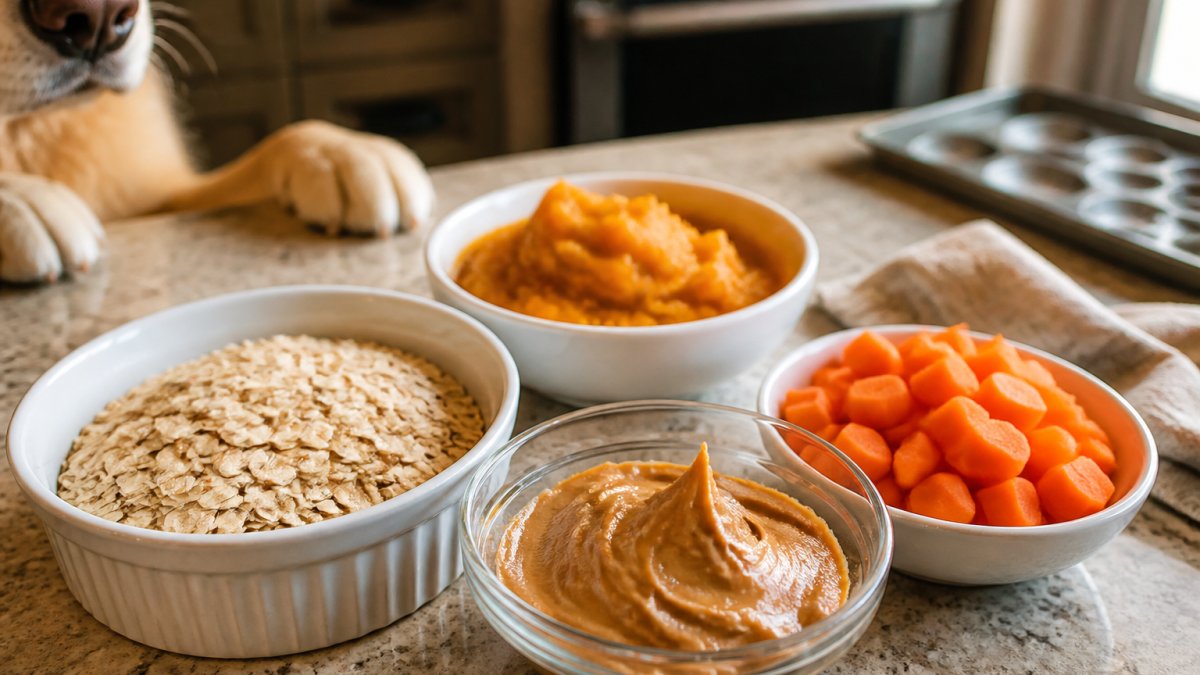
Safe ingredients for homemade dog treats fall into three groups: proteins that build the dough, binders that hold it together, and flavor boosters that make your dog actually want it. Keep each group simple and you will rarely go wrong.
Proteins: Chicken, Turkey, and Eggs
Plain cooked chicken and turkey are the safest proteins for most dogs, provided you skip skin, seasoning, and bone. Poach or bake the meat, shred it, and let it cool before mixing. Eggs work as both protein and binder; a single beaten egg can hold a batch of oat-based dough together without any added fat. A common mistake is reaching for deli meat as a shortcut. Deli slices are usually salt-heavy and often contain preservatives, so cook your own or use plain canned chicken packed in water.
Binders and Grains: Oats, Brown Rice, and Pumpkin
Oats, brown rice, and plain canned pumpkin are the workhorses of homemade dog treats. Rolled oats are cheap, widely tolerated, and grind easily into flour for a finer texture. Brown rice adds bulk and works well in softer, chewier treats. Pumpkin puree is the standout: it adds moisture, fiber, and a flavor most dogs love, and it does all three without sugar. Buy plain pumpkin, never pumpkin pie filling, which is sweetened and spiced.
Flavor Boosters: Peanut Butter, Carrots, and Apples
Peanut butter, carrots, and apples turn a plain dough into something your dog will sit for. Peanut butter binds and flavors at once, but read the label first: some brands sweeten with xylitol, which is dangerous for dogs. Carrots add crunch and color, and apples add natural sweetness when grated or diced fine. Remove every apple seed and core piece before they go anywhere near the bowl.
| Ingredient | Role | Best For | Watch Out For |
|---|---|---|---|
| Chicken or turkey | Protein base | High-value training treats | Skin, bone, seasoning |
| Eggs | Protein and binder | Holding dough together | Shell fragments |
| Rolled oats | Binder and bulk | Firm baked biscuits | Overly dry dough |
| Plain pumpkin | Moisture and fiber | Soft chews | Pie filling with spices |
| Peanut butter | Flavor and binder | Almost any recipe | Xylitol on the label |
| Carrots and apples | Crunch and sweetness | Variety and texture | Seeds, core, large chunks |
Ingredients to Avoid in Dog Treats
Ingredients to avoid in dog treats include chocolate, xylitol, grapes and raisins, onions and garlic, macadamia nuts, and alcohol. Each of these is linked to serious harm in dogs, and none belongs in a homemade recipe even in small amounts. Xylitol deserves special attention because it hides in sugar-free peanut butter and chewing gum, and dogs absorb it very differently than people do. The FDA consumer guidance on xylitol and pet safety explains why even small exposures warrant a call to your veterinarian. Chocolate contains theobromine, which dogs metabolize slowly (Chocolate poisoning). Grapes and raisins have been associated with kidney injury. Onions and garlic damage red blood cells over time. If you suspect your dog ate any of these, contact your vet or a pet poison hotline immediately rather than waiting for symptoms.
Homemade Dog Treats for Sensitive Stomachs
Homemade dog treats for sensitive stomachs work best when you start with one protein and one binder, then add nothing else for the first week. Bland and boring is the point. Plain boiled chicken with white rice, or a simple oat-and-pumpkin biscuit, gives you a clean baseline. If your dog does well, add a single new ingredient and watch for three to five days before adding another. This one-at-a-time approach is how you isolate what works and what does not. Keep the fat content low; rich treats can trigger loose stools even in dogs without a diagnosed sensitivity.
How to Store Homemade Dog Treats
How to store homemade dog treats depends on moisture. Dry, baked biscuits keep in an airtight container at room temperature for about a week. Soft chews and dough-based treats belong in the refrigerator and typically hold for three to five days. For longer storage, freeze in single-serving portions and thaw only what you will use. Label every container with the date you baked it, because homemade treats carry no preservatives and their shelf life is genuinely short. If a treat smells off, looks damp, or has visible mold, throw it out. A dog's nose is not a food safety test.
How Many Treats to Give and What to Watch For
Treats should make up no more than about a tenth of your dog's daily calories, which means a small biscuit or two per session for most dogs. Training sessions burn through treats quickly, so break each one into pea-sized pieces. Size matters more than count. Watch for changes in stool, itching, gas, or appetite in the days after you introduce a new recipe; those are the signals that tell you to pull back. Rotate recipes every few weeks so your dog gets variety without your kitchen turning into a production line.
For everything outside the kitchen, from durable enrichment toys to cozy resting spots, FurEver Finds curates products we would give our own dogs. Every item is selected for quality, and orders placed by 12 PM ship next-day.
Baking for your dog is an act of trust, and it only works when the ingredients earn it. Start with a short list, introduce changes slowly, and let your dog's digestion tell you what to keep. When you need the rest of the setup, FurEver Finds has you covered with thoughtfully selected pet essentials, fast next-day delivery on orders placed by 12 PM, and products chosen to support your dog's health and daily comfort. Get started with FurEver Finds and build a treat routine your dog will look forward to every single day.
Frequently Asked Questions
What natural ingredients are safe for homemade dog treats?
Cooked chicken, turkey, and eggs are safe proteins. Oats, brown rice, and plain pumpkin make good binders. Carrots, apples (no seeds or core), and plain peanut butter (xylitol-free) add flavor. Always introduce one new ingredient at a time and watch for digestive upset. Avoid onions, garlic, grapes, raisins, chocolate, and anything containing xylitol, as these are toxic to dogs.
What ingredients should I avoid in dog treats?
Never use onions, garlic, grapes, raisins, chocolate, macadamia nuts, or anything sweetened with xylitol, which is highly toxic to dogs. Skip added salt, sugar, and artificial preservatives. Also avoid raw dough containing yeast, since it can expand in the stomach. Check peanut butter labels carefully, because some brands now include xylitol as a sweetener.
Can homemade dog treats help dogs with sensitive stomachs?
Yes, when made with gentle ingredients. Plain pumpkin, white rice, cooked chicken, and oats are easy on digestion. Keep recipes simple with few ingredients so you can identify triggers. Introduce new treats slowly and in small amounts. If your dog has chronic stomach issues, talk to your vet before changing their diet, since treats should not replace a vet-recommended food plan.
Do homemade dog treats need to be refrigerated?
Most homemade treats should be refrigerated. Treats with meat, eggs, or moisture last about 3-5 days in the fridge. Dry baked treats can stay in an airtight container at room temperature for up to a week. For longer storage, freeze treats for up to 2-3 months and thaw only what you need. Label containers with the date you made them.