


Homemade Dog Treats for Sensitive Stomachs
Table of Contents
- Why Homemade Treats Matter for Dogs with Sensitive Stomachs
- Dog Treat Ingredients to Avoid
- Easy 3-Ingredient Dog Treats That Your Dog Will Love
- Preparation and Baking Instructions
- How to Store Homemade Dog Treats
- Benefits of Homemade Versus Store-Bought Treats
- Transitioning Your Dog to New Homemade Treats
- Conclusion
- Frequently Asked Questions
Last Updated: September 3, 2026
Why Homemade Treats Matter for Dogs with Sensitive Stomachs
Making homemade dog treats gives you complete control over every ingredient your dog consumes. Store-bought treats often contain fillers, artificial preservatives, and common allergens that trigger digestive upset. When your dog has a sensitive stomach, knowing exactly what goes into each treat becomes essential.
Dogs with food sensitivities benefit from a bland diet built on whole, recognizable ingredients. Many pet owners discover that chronic vomiting, diarrhea, or digestive discomfort disappears once they eliminate mystery ingredients and focus on nutrient-dense, easily digestible options. Homemade treats let you work with your veterinarian to identify safe foods and build treats around those specific ingredients.
A dog eating treats made from pure pumpkin puree, rolled oats, and ground turkey knows exactly what's in their mouth, no hidden additives, no cross-contamination from shared manufacturing equipment. At FurEver Finds, we've compiled this complete guide to making homemade dog treats for sensitive stomachs, including recipes, storage methods, and practical tips you can implement today.
Dog Treat Ingredients to Avoid
Certain ingredients are universal triggers for dogs with digestive sensitivities and should never appear in homemade treats.
Xylitol is toxic to dogs and appears in many "sugar-free" peanut butters (aspca.org). Even small amounts cause rapid insulin release and liver damage (peer-reviewed research). Always verify peanut butter contains only peanuts and salt.
Chocolate, grapes, raisins, onions, and garlic are well-documented toxins that damage dogs' digestive and nervous systems (vet.cornell.edu). These should never appear in any dog treat.
High-fat meats and fatty broths trigger pancreatitis and severe gastrointestinal distress in sensitive dogs. Stick to lean proteins like ground turkey, chicken breast, and fish, trimming all visible fat before cooking.
Dairy products cause problems for many dogs. Cheese, milk, and yogurt often trigger bloating and diarrhea. Most sensitive-stomach dogs do better without any dairy.
Corn, wheat, and soy frequently cause allergic reactions and digestive upset. Replace them with oat flour or sweet potato.
Artificial colors, flavors, and preservatives add nothing but risk. BHA, BHT, and ethoxyquin are preservatives commonly found in low-quality treats. Homemade treats avoid these entirely.
Easy 3-Ingredient Dog Treats That Your Dog Will Love
Simple recipes work best for sensitive stomachs. These three core recipes use bland ingredients that rarely trigger digestive upset. Each recipe makes approximately 20-30 treats.
Pumpkin and Oatmeal Bites
Pure pumpkin puree is gentle on digestion, high in fiber, and helps regulate bowel movements. Rolled oats provide sustained energy without wheat or corn.
Ingredients:
- 1 cup pure pumpkin puree (not pumpkin pie filling)
- 1 cup rolled oats
- 1 egg
Instructions:
- Preheat your oven to 350°F.
- Mix pumpkin puree, rolled oats, and one beaten egg in a bowl until fully combined.
- Add a tablespoon of water if the mixture is too dry.
- Spoon small portions onto a baking sheet lined with parchment paper and flatten slightly.
- Bake for 15-20 minutes until the edges firm up but the centers remain slightly soft.
- Cool completely on the baking sheet before transferring to storage.
These treats have a soft, cake-like texture that dogs with sensitive stomachs tolerate well. The fiber content helps maintain digestive health, and many dogs with occasional loose stools show improvement within days.
Sweet Potato Chews
Sweet potato chews are naturally sweet and provide excellent digestibility for dogs prone to gastrointestinal upset. Sweet potato is a hypoallergenic carbohydrate that rarely triggers sensitivities.
Ingredients:
- 2 medium sweet potatoes
- Optional: 1 tablespoon of all-natural peanut butter (xylitol-free)
Instructions:
- Wash and peel sweet potatoes.
- Cut into strips approximately ½ inch thick and 3-4 inches long.
- Arrange on a baking sheet lined with parchment paper.
- Bake at 250°F for 45-60 minutes until completely dried and slightly chewy.
- Cool entirely before serving.
Dehydrated sweet potato chews last longer than baked treats and require no refrigeration. Dogs chew these slowly, providing mental enrichment and natural teeth cleaning without problematic ingredients.
Ground Turkey and Rice Cookies
Ground turkey provides lean protein essential for muscle maintenance, while white rice is one of the most digestible carbohydrates available.
Ingredients:
- ½ pound lean ground turkey
- ¾ cup cooked white rice (cooled)
- ¼ cup oat flour
- 1 egg
Instructions:
- Preheat oven to 375°F.
- Brown the ground turkey in a skillet over medium heat, breaking it into small pieces.
- Drain any excess fat completely, this step is critical for sensitive stomachs.
- Mix cooled turkey with cooked white rice, oat flour, and one beaten egg.
- Scoop tablespoon-sized portions onto a baking sheet lined with parchment paper and flatten slightly.
- Bake for 12-15 minutes until golden and firm.
- Cool completely before storing.
These cookies mimic the bland diet veterinarians recommend for dogs recovering from digestive upset.
Preparation and Baking Instructions
Success with homemade dog treats depends on consistent technique and attention to temperature.
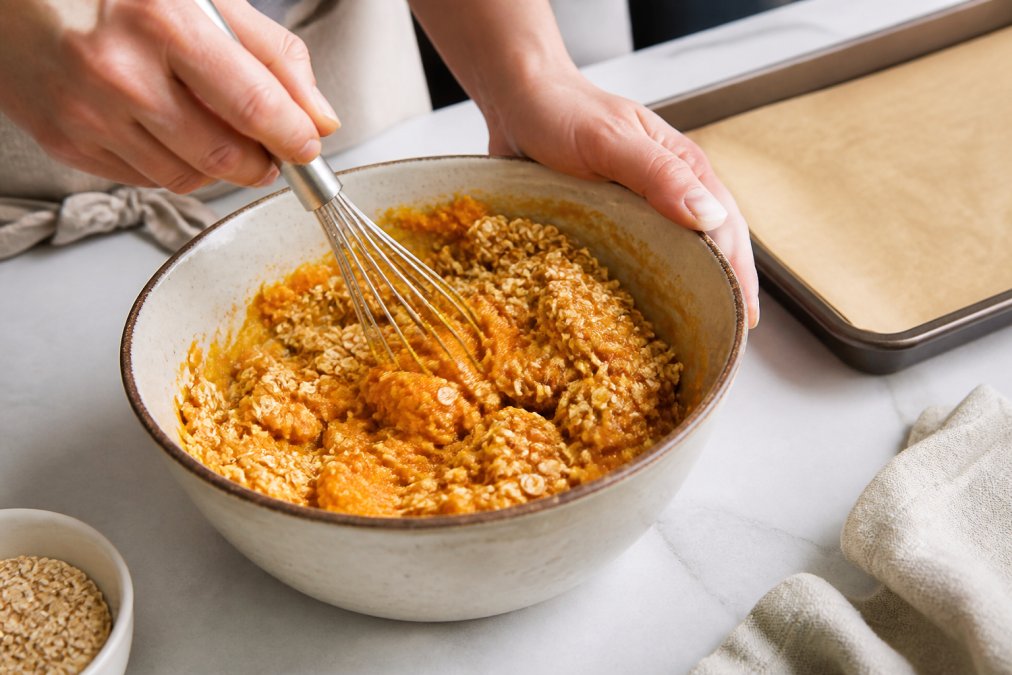
Measure ingredients accurately using a kitchen scale for best results. Mix ingredients thoroughly until fully combined, lumps of pumpkin or unincorporated oats create uneven texture and inconsistent baking. Whisk wet and dry ingredients separately, then combine gently to avoid overmixing.
Baking temperature directly affects digestibility. Lower temperatures (250-350°F) cook treats more gently, preserving nutritional content and creating a softer final product. Higher temperatures (375°F and above) create firmer treats but can damage heat-sensitive nutrients. Follow recipe temperatures precisely.
Start checking treats 2-3 minutes before the recipe's stated time. For pumpkin and oatmeal bites, look for slightly firm edges while the center remains soft. For ground turkey and rice cookies, they should be golden brown and firm to the touch. For sweet potato chews, they should be completely dried and slightly flexible.
Cool treats completely on the baking sheet before moving them. Treats continue to firm up as they cool, and moving them while warm can cause them to fall apart. Use parchment paper rather than greasing sheets, greasing adds fat that can upset sensitive stomachs.
How to Store Homemade Dog Treats
Proper storage determines whether your treats remain safe and nutritious. Homemade treats lack preservatives, so storage conditions matter more than with commercial options.
Store cooled treats in airtight glass or food-grade plastic containers with tight-sealing lids. Exposure to air causes treats to dry out excessively and allows mold spores to settle on the surface.
Room temperature storage works for most homemade dog treats. Keep containers in a cool, dry location away from direct sunlight and heat sources. Treats stored this way typically last 5-7 days before developing mold.
Refrigeration extends shelf life to 2-3 weeks. Transfer cooled treats to airtight containers and place them on a shelf away from raw meat or other potential contaminants.
Freezing preserves treats for 2-3 months. Portion treats into meal-sized quantities using freezer bags or containers before freezing. Label each container with the date and treat type. Thaw frozen treats in the refrigerator overnight before serving.
Check treats before serving, even if they're within the safe storage window. Discard any treats showing visible mold, off-odors, or unusual discoloration.
Benefits of Homemade Versus Store-Bought Treats
Store-bought treats often contain mystery ingredients and fillers. "Meat by-products" and "animal fat" are vague terms hiding low-quality protein sources and potentially rancid fats. Homemade treats eliminate this uncertainty entirely.
Commercial treats use preservatives to achieve long shelf lives. BHA, BHT, and ethoxyquin are synthetic preservatives linked to allergic reactions and digestive upset. Even natural preservatives like rosemary extract can trigger sensitivities in some dogs. Homemade treats need no preservatives because you consume them within days.
Customization is impossible with commercial treats. With homemade treats, you substitute ingredients instantly if your dog reacts to chicken. This flexibility lets you work with your veterinarian to identify safe foods and build treats around them specifically.
Digestibility improves dramatically with homemade treats. Store-bought treats often contain multiple ingredients, making it difficult to identify which ones trigger problems. Homemade treats use 3-4 simple ingredients, so if a problem develops, you can pinpoint the cause immediately.
Quality control happens entirely in your kitchen. You verify that ingredients are fresh, that raw meat is properly cooked, and that treats cool and store correctly.
Transitioning Your Dog to New Homemade Treats
Introducing new treats too quickly can trigger the same digestive upset you're trying to prevent. A gradual transition allows your dog's digestive system to adapt.
Start with small portions on day one, offer just one or two small treats as part of your dog's regular meal routine. Watch for any signs of digestive upset over the next 24 hours.

Increase portions gradually over 7-10 days. If day one goes well, offer slightly more treats on day two. By day seven, you can offer normal portions as occasional treats between meals.
Monitor your dog's stool consistency throughout the transition. Soft stools or diarrhea indicate the transition is happening too quickly. Return to smaller portions and extend the transition period by another week.
Introduce one new treat recipe at a time. If you make multiple recipes simultaneously, you won't know which one caused problems if digestive upset develops.
Keep your dog's regular meals unchanged during the transition. New treats are additions to their diet, not replacements for their regular food.
Watch for positive changes as well. Many dogs show improvement in coat quality, energy levels, and overall digestive health within 2-3 weeks of switching to homemade treats.
Conclusion
Making homemade dog treats for sensitive stomachs puts you in control of your dog's nutrition and eliminates the guesswork of commercial options. The three recipes in this guide use only bland, easily digestible ingredients that rarely trigger problems.
Dogs with sensitive stomachs deserve treats made with intention and care. Store-bought options simply can't match the quality, digestibility, and customization of homemade treats. When you combine these recipes with proper storage and a gradual transition period, you create a treat routine that supports digestive health.
At FurEver Finds, we believe that quality treats are just one part of comprehensive pet care. Beyond homemade nutrition, interactive feeding tools like the Interactive Puzzle Ball encourage slow eating and healthy digestion by making mealtime engaging rather than rushed. For dogs with sensitive stomachs, slow feeding prevents the rapid eating that often triggers digestive upset.

Start with one recipe this week. Make a small batch, introduce it gradually to your dog, and observe how their digestive health responds. Your sensitive-stomach dog deserves nutrition you can trust, and homemade treats deliver exactly that.
Frequently Asked Questions
Q: What ingredients should be avoided in homemade dog treats for sensitive stomachs?
A: Avoid xylitol (toxic to dogs), chocolate, grapes, raisins, onions, garlic, and excessive salt or sugar. Skip artificial preservatives, corn syrup, and wheat gluten if your dog has grain sensitivities. For dogs with digestive issues, steer clear of high-fat ingredients, dairy, and foods your vet has flagged. Stick to bland, easily digestible options like pure pumpkin puree, lean protein, and oat flour.
Q: How long do homemade dog treats stay fresh without preservatives?
A: Homemade dog treats without preservatives typically stay fresh for 7-10 days in an airtight container at room temperature. Refrigerated treats last 2-3 weeks, while frozen treats can last 3 months. Always check for mold or off odors before serving. Store in airtight containers away from moisture to extend shelf life and maintain freshness for your dog's safety.
Q: Are pumpkin and oatmeal good for dogs with sensitive stomachs?
A: Yes, pumpkin and oatmeal are excellent for digestive health in dogs with sensitive stomachs. Pure pumpkin puree is bland, nutrient-dense, and helps soothe gastrointestinal upset. Rolled oats are gentle on the stomach and provide fiber without being harsh. Both ingredients support a bland diet that aids digestibility. Always use plain versions without added sugar or spices, and introduce them gradually to avoid stomach upset.
Q: What are some simple 3-ingredient dog treat recipes?
A: Try pumpkin puree, rolled oats, and a touch of all-natural peanut butter (xylitol-free). Another option: mashed sweet potato, ground turkey, and rice flour. A third combination: pure pumpkin puree, oat flour, and lean chicken. Mix, form into shapes on a baking sheet with parchment paper, and bake at 350°F for 15-20 minutes. These recipes are hypoallergenic, easy to make, and ideal for dogs with food sensitivities.
Making homemade dog treats for sensitive stomachs requires commitment, but the payoff in your dog's health and comfort justifies the effort. Begin with FurEver Finds' recommended recipes and interactive feeding solutions to create a complete nutrition strategy that supports digestive wellness every single day.
This article was written using GrandRanker