


Benefits of Enrichment Toys for Dogs: A Complete Guide
Table of Contents
- What Enrichment Toys Do for Your Dog's Well-Being
- Mental Stimulation for Dogs and Cognitive Function
- How Enrichment Toys Reduce Stress, Anxiety, and Destructive Behaviors
- How to Choose the Right Enrichment Toy for Your Dog
- How Long Should a Dog Play with Enrichment Toys Daily
- Budget-Friendly and DIY Enrichment Ideas
- Troubleshooting Common Enrichment Toy Challenges
- Frequently Asked Questions
Last Updated: August 31, 2026
What Enrichment Toys Do for Your Dog's Well-Being
Enrichment toys are essential tools that improve your dog's physical health, emotional stability, and behavior.
When dogs engage with enrichment toys, their brain activates in problem-solving and foraging modes. This mental stimulation triggers neurotransmitters that promote relaxation and reduce stress hormones. A dog working through a puzzle feeder for 20 minutes experiences measurable shifts in their nervous system, slower heart rate, deeper breathing, and parasympathetic activation that creates lasting calm (peer-reviewed research).
A mentally engaged dog is significantly less likely to engage in destructive chewing, excessive barking, or behavioral problems. Enrichment toys also support physical health by encouraging natural canine behaviors like sniffing, licking, and chewing, which clean teeth, strengthen jaw muscles, and support healthy digestion. The real goal is creating an environment where your dog's natural instincts are satisfied in controlled, healthy ways.
Mental Stimulation for Dogs and Cognitive Function
Mental stimulation through enrichment toys directly strengthens your dog's cognitive function and problem-solving skills. When dogs engage with puzzle feeders, sniff games, or interactive toys, they activate neural pathways that improve memory, focus, and decision-making ability.
A dog working to extract a treat from a puzzle toy must use trial-and-error, pattern recognition, and spatial reasoning. Over time, this builds cognitive reserve and creates a more resilient brain that ages more slowly. Dogs with regular mental enrichment show fewer signs of cognitive decline in their senior years.
Dogs descended from wolves that spend 8-10 hours daily foraging and problem-solving (the NIH). Modern dogs confined to homes with food served in bowls experience severe cognitive understimulation. Enrichment toys bridge that gap by creating foraging scenarios and puzzle-solving challenges aligned with how their brains evolved.
The Interactive Puzzle Ball from FurEver Finds exemplifies this approach. By dispensing treats as your dog rolls and manipulates it, the toy transforms a 30-second bowl meal into a 15-minute cognitive workout with dramatic downstream effects on behavior, focus, and stress levels.

A common mistake is rotating toys too frequently. Dogs need consistency to master enrichment challenges. Stick with the same enrichment toys for at least 2-3 weeks before introducing new ones to allow deeper problem-solving and cognitive growth.
How Enrichment Toys Reduce Stress, Anxiety, and Destructive Behaviors
Enrichment toys function as stress-reduction tools by channeling anxious energy into focused, calming activity. When a dog with separation anxiety engages with a challenging enrichment toy, their attention narrows and their parasympathetic nervous system activates, triggering relaxation.
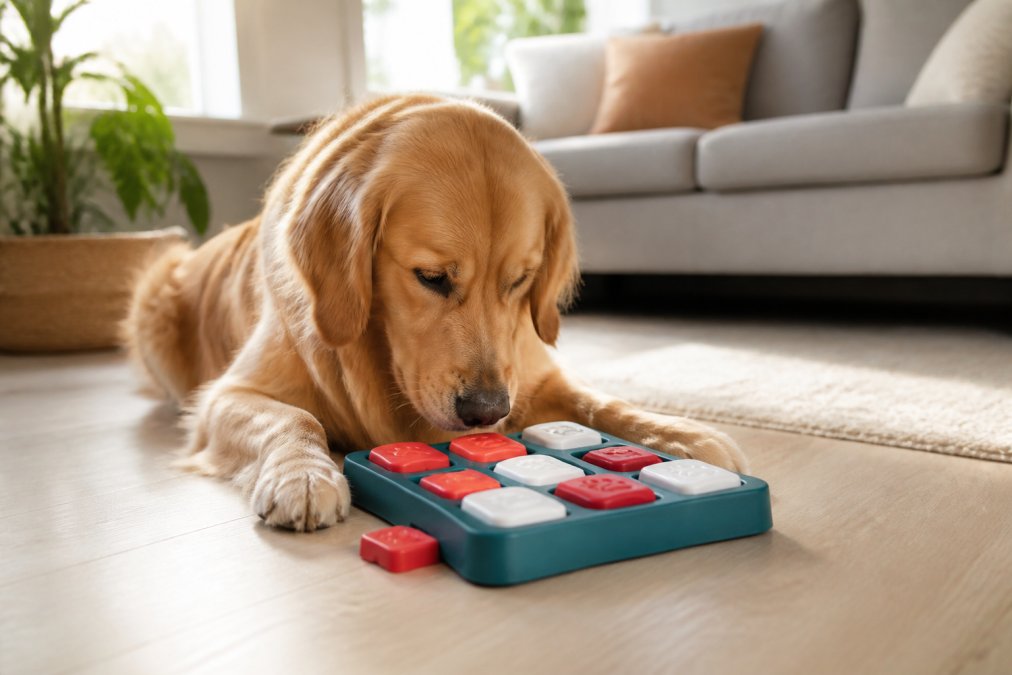
Destructive behaviors like excessive chewing, digging, or scratching are symptoms of boredom or anxiety, not defiance. Enrichment toys address both root causes simultaneously by providing mental engagement and a calming behavioral outlet.
The ChewPal CuddleBuddy from FurEver Finds serves this dual purpose. The plush texture satisfies the natural chewing drive while the squeaker provides auditory feedback that keeps attention focused. Dogs redirect destructive energy toward a toy designed to withstand it, and this behavioral redirection becomes habitual.

Obsessive-compulsive behaviors like spinning, tail chasing, or excessive licking often emerge from anxiety. Enrichment toys interrupt these cycles by providing alternative, healthy behaviors. A dog engaged in sniffing games cannot simultaneously engage in obsessive repetitive behaviors.
Introduce enrichment toys during moments of emerging anxiety or boredom, not after destructive behavior escalates. If your dog becomes destructive around 3 PM, introduce enrichment at 2:45 PM, before anxiety peaks. This preventive approach is far more effective than reactive toy-offering.
How to Choose the Right Enrichment Toy for Your Dog
Selecting the right enrichment toy requires matching the toy's challenge level to your dog's cognitive ability and matching the toy type to your dog's primary behavioral need.
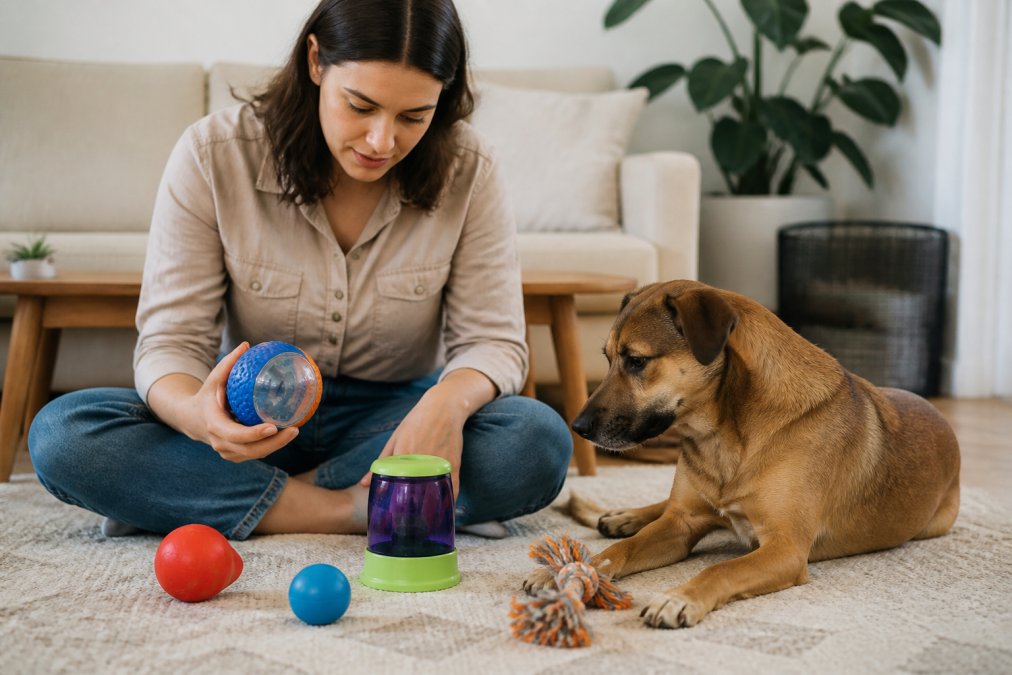
Start by identifying your dog's primary enrichment need: mental stimulation, stress reduction, destructive behavior prevention, or physical exercise.
For mental stimulation, puzzle feeders work best. The Puzzle Food Leaking Ball from FurEver Finds forces your dog to manipulate the toy to access treats. Start with easier puzzles and progress to harder ones as your dog masters each level.
For stress reduction and anxiety management, toys that encourage repetitive, soothing behaviors work better, lick mats, sniff toys, and soft plush toys with squeakers provide calming sensory input.
For destructive behavior prevention, durability matters most. The Dog Tug Rope Toy from FurEver Finds is designed for aggressive chewers with reinforced construction that withstands sustained chewing.

Consider your dog's age. Puppies benefit from softer toys that won't damage developing teeth. Adult dogs can handle more challenging puzzles and tougher materials. Senior dogs prefer lower-impact enrichment like sniff games and gentle lick mats.
Material matters too. Dogs with sensitive stomachs shouldn't use toys with small pieces that could be ingested. Dogs with allergies need hypoallergenic materials. Size is critical, your dog should hold it comfortably in their mouth without it being so small they could swallow it whole.
How Long Should a Dog Play with Enrichment Toys Daily
The ideal duration depends on your dog's age, energy level, and the type of enrichment toy.
For mental stimulation toys like puzzle feeders, 15-30 minutes daily is optimal (avsab.org). Most dogs show peak cognitive focus for about 20 minutes before attention wanes.
For stress-reduction toys like sniff mats or lick mats, 20-45 minutes daily is appropriate. These encourage slower, meditative engagement without mental exhaustion.
Physical play with toys like the Dog Tug Rope Toy works best in 10-15 minute sessions, 2-3 times daily.
Distribute enrichment throughout the day rather than concentrating it into one session. A dog receiving two 15-minute puzzle sessions plus one 20-minute sniff mat session gets more behavioral benefit than one 50-minute block. Distributed engagement maintains consistent mental stimulation.
Puppies benefit from shorter enrichment sessions, 10-15 minutes maximum, due to limited attention spans. Senior dogs similarly benefit from shorter, lower-intensity sessions. Watch your individual dog's response, if your dog loses interest and walks away, the session is complete.
Budget-Friendly and DIY Enrichment Ideas
Effective enrichment doesn't require expensive purchases. Many of the most effective enrichment activities use household items.
A muffin tin filled with tennis balls creates a simple puzzle. Hide treats under each ball, and your dog must remove them to access treats. Cost: nearly nothing. Cognitive engagement: equivalent to many commercial puzzle toys.
Frozen treat dispensers are powerful enrichment tools. Fill a Kong toy with wet dog food, plain yogurt, or pumpkin puree, then freeze it. A frozen Kong provides 30-60 minutes of engagement. Cost: minimal. Benefit: exceptional stress reduction and mental stimulation.
Sniff mats can be created from old towels. Shred them into strips, layer them in a shallow box, and hide treats throughout. Cost: free. Benefit: activates natural foraging behaviors.
Cardboard boxes filled with crumpled paper and hidden treats become elaborate sniff puzzles. Tape the box closed with small openings your dog can tear. Cost: free. Benefit: satisfies natural destructive drives.
The limitation of DIY enrichment is durability and safety. Homemade toys require supervision and regular inspection. Commercial enrichment toys from FurEver Finds are thoughtfully selected for quality you can trust.
The best approach combines budget-friendly DIY enrichment with occasional premium toys. Use inexpensive sniff mats and frozen treat dispensers for daily enrichment, then rotate in higher-quality puzzle toys like the Interactive Puzzle Ball to maintain novelty and engagement.
Troubleshooting Common Enrichment Toy Challenges
Even well-intentioned enrichment efforts sometimes encounter obstacles.
Toy Frustration and Abandonment
A dog that ignores an enrichment toy usually finds it too difficult. If your dog approaches the puzzle toy, tries once, then walks away, the challenge level is mismatched. Introduce an easier version with larger openings and fewer compartments.
Another cause is novelty fatigue. If you introduce a new toy every few days, your dog never masters any single toy. Stick with the same enrichment toy for at least 2-3 weeks. Mastery creates engagement.
Toys Being Destroyed Too Quickly
If your dog shreds toys within minutes, you're using toys designed for gentle engagement with aggressive chewers. The Dog Tug Rope Toy from FurEver Finds is engineered for powerful chewers with reinforced construction that withstands sustained aggression.
Lack of Interest in Food-Based Enrichment
If your dog ignores puzzle feeders, the reward isn't valuable enough. Use higher-value treats like real meat, cheese, or special training treats rather than regular kibble.
Also verify the toy isn't too difficult. If your dog cannot extract treats after reasonable effort, frustration replaces engagement. Start with easier toys and progress gradually.
Toy Obsession and Overstimulation
Rarely, a dog becomes so obsessed with an enrichment toy that removing it causes anxiety. The solution is controlled access: offer the toy only during designated times, then remove it. Gradually increase removal periods so your dog learns the toy is temporary.
Safety Concerns with Homemade Toys
DIY enrichment carries inherent risks. Small pieces can become choking hazards. If you're uncertain about safety, stick with commercial toys that have undergone safety testing. FurEver Finds products are thoughtfully selected for quality you can trust.
Enrichment toys represent one of the highest-impact investments you can make in your dog's well-being. They reduce behavioral problems, improve cognitive function, and create genuine calm in anxious dogs. The right enrichment toy matched to your dog's needs transforms daily life for both of you. Explore FurEver Finds's curated selection of enrichment toys, including the Interactive Puzzle Ball and Dog Tug Rope Toy, each designed to deliver lasting mental stimulation, stress reduction, and behavioral improvement. Get started with FurEver Finds and watch your dog discover the confidence and contentment that comes from having their natural needs met.
Frequently Asked Questions
What are the primary benefits of enrichment toys for dogs?
Enrichment toys for dogs provide mental stimulation, reduce boredom-related destructive behaviors, and lower stress and anxiety. They encourage species-typical behaviors like foraging, sniffing, and problem-solving, which activates the parasympathetic nervous system and promotes calming behaviors. Regular use also strengthens the bond between you and your dog through interactive play and supports cognitive function and behavioral modification.
How often should you rotate enrichment toys for your dog?
Rotate enrichment toys every 3-7 days to maintain novelty and prevent habituation. Dogs lose interest in the same toys over time, so introducing a familiar toy after a break reignites their curiosity and engagement. For interactive puzzle feeders and treat-dispensing toys, rotate them more frequently, every 2-3 days, to keep mental stimulation fresh and prevent boredom-related destructive chewing.
How do enrichment toys help with dog anxiety and separation anxiety?
Enrichment toys provide mental fatigue and self-soothing mechanisms that reduce anxiety symptoms. Puzzle feeders and interactive toys redirect anxious energy into problem-solving, while chewing toys activate calming behaviors and release endorphins. For separation anxiety specifically, leaving a treat-dispensing toy like the Interactive Puzzle Ball ($26.99) engages your dog's olfactory stimulation and foraging instincts, making your absence less distressing.
Are enrichment toys safe for unsupervised play?
Some enrichment toys are safe for unsupervised play, while others require monitoring. Durable, non-toxic toys like rope toys and puzzle feeders designed for your dog's size are generally safe alone. However, toys with small parts, squeakers, or toys your dog can shred should only be used under supervision to prevent choking or ingestion of fragments. Always inspect toys regularly for damage and remove them if they show wear.
This article was written using GrandRanker