


Treat Dispensing Toys for Aggressive Chewers: 7 Key Benefits
Table of Contents
- Why Treat Dispensing Toys Matter for Aggressive Chewers
- Mental Stimulation and Brain Engagement
- Reducing Destructive Chewing: How to Stop Destructive Chewing in Dogs
- Slow Feeding and Digestive Health Benefits
- Durable Dog Toys for Power Chewers: Material Safety and Selection
- Anxiety Relief and Stress Reduction
- Cleaning, Maintenance, and Supervision Guidelines
- Conclusion
Last Updated: August 28, 2026
Why Treat Dispensing Toys Matter for Aggressive Chewers
Aggressive chewers need purposeful engagement that channels their natural instincts productively. Treat dispensing toys combine mental stimulation, physical activity, and reward in a single tool designed to withstand serious jaw pressure. The difference lies in intention: a basic chew toy offers temporary distraction, while a treat dispensing toy creates an interactive challenge that demands problem-solving and keeps a dog's mind engaged long after novelty wears off. For dogs prone to destructive chewing, this shift from passive to active engagement transforms a destroyed couch into a content, mentally satisfied companion.
Aggressive chewers destroy standard toys within minutes because they lack durability, engagement, and reward mechanisms. Treat dispensing toys address all three.
Mental Stimulation and Brain Engagement
Mental stimulation through interactive play is one of the most underrated benefits of treat dispensing toys for aggressive chewers. When a dog works a treat dispensing toy, they're problem-solving, working toward a goal, and engaging cognitive abilities that mirror natural foraging behavior.
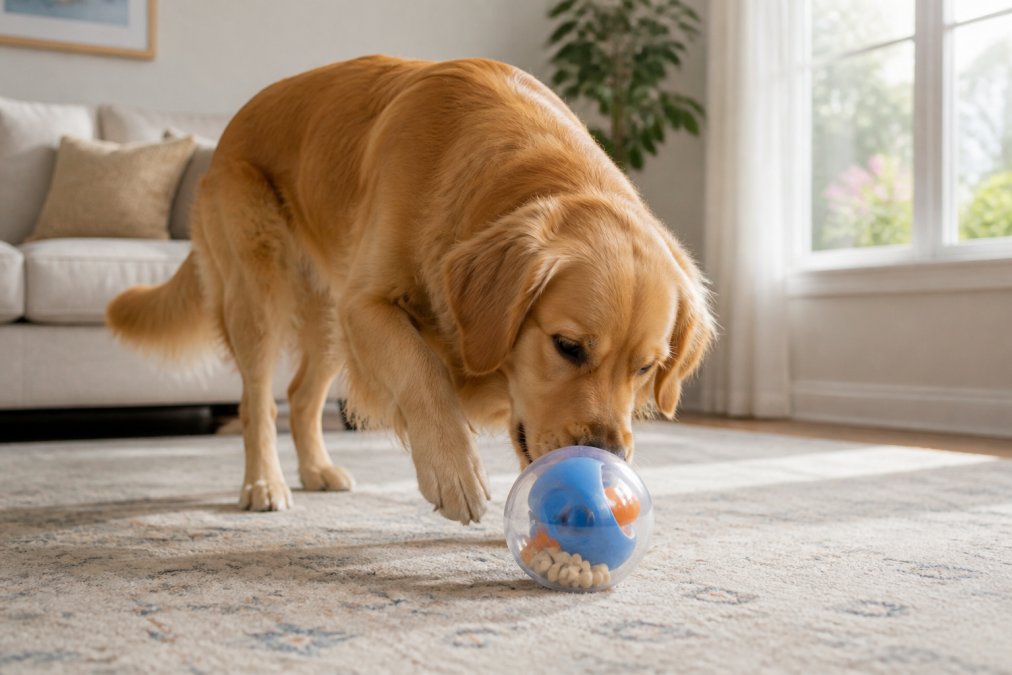
A dog that's mentally stimulated is less likely to redirect energy toward furniture, shoes, or baseboards. The puzzle element taps into natural problem-solving instincts. Instead of mindlessly chewing, your dog thinks, adjusts their approach, and experiences the satisfaction of solving a challenge. This mental work is often more exhausting than physical exercise alone.
The best treat dispensing toys offer graduated difficulty. Early interaction might involve simply rolling the toy to release a treat. As your dog learns, they can work harder to access rewards. This progression keeps the toy interesting over time. The Interactive Puzzle Ball from FurEver Finds releases treats as your dog rolls and manipulates it, providing scalable engagement that grows with your dog's problem-solving skills.

Reducing Destructive Chewing: How to Stop Destructive Chewing in Dogs
Destructive chewing isn't a behavioral problem to punish; it's a sign that your dog's needs aren't being met. Dogs chew for boredom, anxiety, teething, excess energy, or jaw muscle exercise. Stopping destructive chewing starts with understanding the root cause and providing an appropriate outlet.
Treat dispensing toys redirect the chewing impulse toward something productive. Instead of suppressing the behavior, you're channeling it. A dog that would destroy a couch cushion can instead work a durable toy that rewards their effort.
Durability is non-negotiable. Aggressive chewers destroy soft rubber, thin plastic, or toys with weak seams in minutes. When a toy falls apart, your dog either loses interest or swallows pieces that could cause intestinal blockage. You need toys specifically engineered for power chewers.
Supervision is essential during the transition. Watch your dog interact with the toy initially. Does she chew it appropriately or try to tear it apart? Some dogs take to puzzle toys immediately; others need a few sessions to understand the mechanics.
Rotation is key. If your dog has access to the same toy 24/7, it becomes background noise. Introduce treat dispensing toys strategically during times when destructive chewing is most likely. Rotate between 2-3 different toys to maintain novelty and engagement.
Slow Feeding and Digestive Health Benefits
Many aggressive chewers are also fast eaters, creating digestive problems. A dog that gulps food without chewing properly risks bloating, indigestion, and gastric torsion, a serious, potentially fatal condition (vcahospitals.com). Treat dispensing toys force slower consumption, allowing proper chewing and saliva mixing that improves digestion and reduces gastrointestinal upset.
When a dog chews thoroughly, enzymes in their saliva begin breaking down food before it reaches the stomach (peer-reviewed research). This pre-digestion reduces digestive system workload and improves nutrient absorption. For dogs with sensitive stomachs, this slower process can be therapeutic.
Bloating prevention is particularly important for deep-chested breeds prone to gastric dilatation-volvulus (GDV) (aaha.org). While no single tool prevents GDV entirely, slowing food intake and encouraging proper chewing are evidence-based risk reduction strategies. The Interactive Puzzle Ball from FurEver Finds works beautifully for slow feeding. Fill it with kibble or treats, and your dog must roll and manipulate it to access food. What would normally be consumed in under a minute becomes a 10-15 minute activity, supporting digestive health while providing mental and physical engagement.
Durable Dog Toys for Power Chewers: Material Safety and Selection
Not all durable dog toys are created equal. Material selection is where many pet owners make costly mistakes, choosing toys that look durable but fail under serious jaw pressure, or toys made from materials that pose health risks.
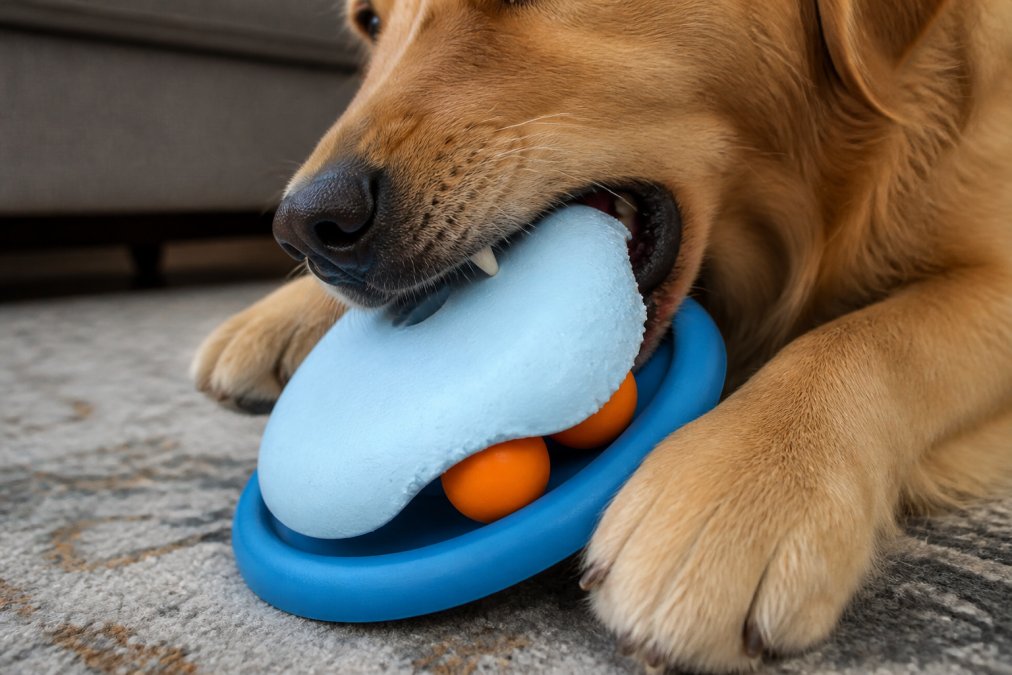
The gold standard for aggressive chewers is natural rubber or food-grade silicone. These materials withstand sustained chewing without breaking apart, splintering, or shedding pieces. Avoid PVC, cheap plastic, or toys with thin walls that can be punctured. When a toy breaks, pieces become foreign objects in your dog's digestive tract, a veterinary emergency costing hundreds or thousands of dollars.
Material safety extends beyond durability. Look for toys made from non-toxic materials. Some cheaper toys contain BPA, phthalates, or heavy metals that leach into your dog's mouth during chewing.
Design matters as much as material. Seams should be reinforced and double-stitched. Edges should be smooth with no sharp points. The toy should have no small parts that could be chewed off and swallowed. For treat dispensing toys, the mechanism releasing treats should withstand repeated manipulation without jamming or breaking.
Graduated difficulty is an underrated feature. A toy that's too easy becomes boring; one that's too hard becomes frustrating. The best toys offer multiple engagement levels. Size matters too, the toy should be large enough that your dog can't fit their entire mouth around it and swallow it whole.
Anxiety Relief and Stress Reduction
Anxiety-driven chewing differs from boredom-driven chewing, but treat dispensing toys address both through focused engagement that redirects anxious energy into productive activity.
A dog experiencing anxiety has pent-up stress with nowhere to go. Destructive chewing becomes an outlet. Treat dispensing toys redirect this energy. Working the toy, problem-solving, and earning rewards activate reward centers in your dog's brain, naturally reducing stress hormones and promoting calm.
The repetitive, focused nature of working a treat dispensing toy has a meditative quality for anxious dogs. For a dog with separation anxiety, the toy provides something to focus on during the stressful period when you leave. It's not a cure for anxiety, but a harm-reduction tool that makes it more manageable.
Consistency is key. Dogs with regular access to treat dispensing toys develop a habit of using them when stressed. Over time, the toy becomes associated with calm, focused behavior rather than panic or destructive impulses.
Environmental stressors like thunderstorms, fireworks, or construction noise often trigger anxiety chewing. Having a treat dispensing toy available during these events gives your dog a productive outlet. The combination of mental engagement, treat rewards, and physical chewing creates a calming effect that significantly reduces stress-related behavior.
Cleaning, Maintenance, and Supervision Guidelines
Treat dispensing toys require proper care to remain safe and effective. A toy not cleaned regularly becomes a breeding ground for bacteria and mold, causing digestive upset or oral infections.
Clean your treat dispensing toy after each use with warm soapy water and a brush to reach crevices. Some toys are dishwasher-safe; check manufacturer instructions. Allow the toy to air dry completely before refilling. Never store a damp toy with treats inside, as moisture promotes mold growth.
Inspect the toy regularly for cracks, loose seams, splintering, or separating pieces. If you notice damage, remove the toy immediately. A compromised toy is a safety risk. It's better to retire a toy early than deal with a veterinary emergency from ingested pieces.
Supervision is essential, especially when first introducing a treat dispensing toy. Watch your dog's interaction with it. Does she chew it appropriately, or try to tear it apart? Some dogs understand the mechanics immediately; others need guidance. If your dog is destroying the toy rather than working it, you need a more durable version or different design.
Rotation prevents habituation. If your dog has constant access to the same toy, it becomes background noise. Introduce treat dispensing toys strategically during times when your dog needs engagement most. Rotate between 2-3 different toys to maintain novelty.
Never leave a treat dispensing toy unsupervised with a dog who has a history of swallowing non-food items. For these dogs, treat dispensing toys should only be used during supervised sessions.
Aggressive chewers thrive when their natural instincts are channeled productively rather than suppressed. Treat dispensing toys aren't a luxury; they're a necessity for dogs with strong jaws and active minds. They provide mental engagement, redirect destructive impulses, support digestive health, and reduce anxiety.
At FurEver Finds, we understand that premium pet products make a real difference in daily life. The Interactive Puzzle Ball, available at FurEver Finds for $26.99, combines durability, safety, and genuine engagement in a single tool. With next-day delivery for orders placed by 12 PM, you can start supporting your dog's mental and physical health today. Your aggressive chewer deserves a toy that keeps up with their intensity and rewards their intelligence.
=== FAQ ANSWERS (audit these too, same rules) ===
[1] Q: Are treat dispensing toys safe for dogs that chew aggressively? A: Yes, when you choose the right toy. Look for treat dispensing toys made from non-toxic rubber or natural materials that have been tested for safety. Aggressive chewers need toys specifically designed for power chewers, thicker walls and reinforced construction prevent pieces from breaking off. Always supervise play, especially during the first few uses, and inspect the toy regularly for damage. Remove it immediately if you notice cracks or loose pieces.
[2] Q: How do treat dispensing toys help with mental stimulation for high energy dogs? A: Treat dispensing toys engage your dog's problem-solving skills and keep their mind active. As your dog rolls, nudges, and manipulates the toy to release treats, they're working through a puzzle that mimics natural foraging behavior. This mental engagement reduces boredom-driven behaviors and can tire out high-energy dogs as effectively as physical exercise. The combination of sensory enrichment and reward creates positive reinforcement that keeps your dog focused and satisfied.
[3] Q: Can treat dispensing toys really stop destructive chewing in dogs? A: They can significantly reduce it. Destructive chewing often stems from boredom, anxiety, or pent-up energy. By providing an appropriate outlet for chewing, one that rewards your dog with treats and mental stimulation, you redirect that energy away from furniture, shoes, and walls. Pairing treat dispensing toys with positive reinforcement teaches your dog which items are safe to chew. However, if destructive chewing is severe or anxiety-related, combine toys with other strategies like exercise and training.
[4] Q: What materials are safest for aggressive chewers? A: The safest materials for aggressive chewers are thick, durable rubber (like natural or food-grade rubber), reinforced nylon, and rubber compounds specifically designed for power chewers. Avoid materials that splinter, crack easily, or contain small parts that can be chewed off and swallowed. Look for toys that are non-toxic. The Interactive Puzzle Ball from FurEver Finds ($26.99) is made from durable, safe rubber and is designed to withstand aggressive chewing while dispensing treats slowly.
Frequently Asked Questions
Are treat dispensing toys safe for dogs that chew aggressively?
Yes, when you choose the right toy. Look for treat dispensing toys made from non-toxic rubber or natural materials that have been tested for safety. Aggressive chewers need toys specifically designed for power chewers, thicker walls and reinforced construction prevent pieces from breaking off. Always supervise play, especially during the first few uses, and inspect the toy regularly for damage. Remove it immediately if you notice cracks or loose pieces.
How do treat dispensing toys help with mental stimulation for high energy dogs?
Treat dispensing toys engage your dog's problem-solving skills and keep their mind active. As your dog rolls, nudges, and manipulates the toy to release treats, they're working through a puzzle that mimics natural foraging behavior. This mental engagement reduces boredom-driven behaviors and can tire out high-energy dogs as effectively as physical exercise. The combination of sensory enrichment and reward creates positive reinforcement that keeps your dog focused and satisfied.
Can treat dispensing toys really stop destructive chewing in dogs?
They can significantly reduce it. Destructive chewing often stems from boredom, anxiety, or pent-up energy. By providing an appropriate outlet for chewing, one that rewards your dog with treats and mental stimulation, you redirect that energy away from furniture, shoes, and walls. Pairing treat dispensing toys with positive reinforcement teaches your dog which items are safe to chew. However, if destructive chewing is severe or anxiety-related, combine toys with other strategies like exercise and training.
What materials are safest for aggressive chewers?
The safest materials for aggressive chewers are thick, durable rubber (like natural or food-grade rubber), reinforced nylon, and rubber compounds specifically designed for power chewers. Avoid materials that splinter, crack easily, or contain small parts that can be chewed off and swallowed. Look for toys that are non-toxic. The Interactive Puzzle Ball from FurEver Finds ($26.99) is made from durable, safe rubber and is designed to withstand aggressive chewing while dispensing treats slowly.
This article was written using GrandRanker