


7 Best Non-Toxic Pet Furniture Brands of 2026
Table of Contents
- What Makes Furniture Non-Toxic and Pet-Friendly?
- Our Top Picks for Non-Toxic Pet Furniture Brands
- FurEver Finds Dog Stairs Ramp: Joint-Friendly Support
- Elevated Dog Cooling Bed: Airflow and Comfort
- WarmNest Cozy Cave: A Self-Warming Retreat
- Understanding Pet-Friendly Furniture Fabrics
- Choosing Safe Non-Toxic Pet Beds for Your Home
- How We Evaluated These Brands
- Frequently Asked Questions
Last Updated: September 8, 2026
What Makes Furniture Non-Toxic and Pet-Friendly?
The best non-toxic pet furniture brands prioritize materials that are safe for your pet to inhale, lick, and sleep on for years. This guide from FurEver Finds cuts through the marketing jargon to show you what actually matters.
Most pet owners focus on durability and style, but the real question is what hides inside the foam, fabric, and adhesives. Non-toxic pet furniture is constructed without harmful chemical additives that can off-gas into your living space and affect indoor air quality.
Understanding VOCs, Formaldehyde, and Chemical Additives
Volatile organic compounds (VOCs) are chemicals that evaporate at room temperature and can contribute to poor indoor air quality (the EPA). Many conventional furniture pieces use adhesives, flame retardants, and finishes that release these compounds, especially during the first few weeks after unboxing.
Formaldehyde-free construction is a key marker of safer furniture. This chemical, often found in pressed wood and certain foams, is a known irritant that can be particularly problematic in enclosed spaces where pets spend hours resting. The Environmental Protection Agency guidance on indoor air quality identifies VOCs as a significant contributor to indoor pollution.
When evaluating materials, look for high-density foam without chemical flame retardants, natural fiber covers, and water-based adhesives. Tightly woven, stain-resistant fabrics that are free from topical chemical treatments offer the best balance of safety and practicality.
Our Top Picks for Non-Toxic Pet Furniture Brands
Our curated collection focuses on furniture that supports joint health, promotes airflow, and uses durable fabrics free from harsh chemical additives.
What sets our picks apart is the emphasis on washable covers and removable components. Cleanability matters because pet dander, saliva, and accidents can turn a cozy bed into a breeding ground for odors and bacteria if the cover can't be stripped and laundered regularly.
Feature Comparison Table
| Product | Price | Key Feature | Best For | Weight Capacity |
|---|---|---|---|---|
| Dog Stairs Ramp for Bed | $377.99 | High-density foam, washable cover | Senior and small dogs | 50 lbs |
| Elevated Dog Cooling Bed | $171.95 | Raised airflow design | Indoor and outdoor use | Multiple sizes |
| WarmNest Cozy Cave | $62.99 | Self-warming insulated interior | Cats and small dogs | Small to medium |
| Elevated Cat Sofa Bed | $171.99 | Sofa-style elevated lounging | Cats who love height | Standard cat sizes |
| Foldable 2-In-1 Dog Stairs | $99.13 | Converts to footstool | Small apartments | Small to medium breeds |
FurEver Finds Dog Stairs Ramp: Joint-Friendly Support
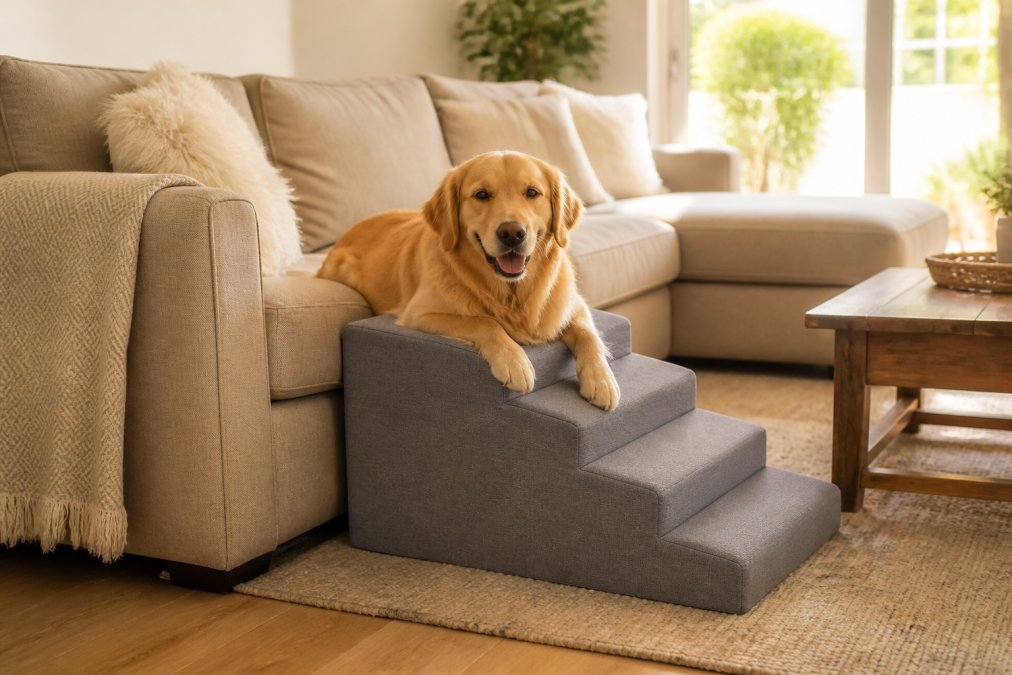
For pets with joint pain or mobility challenges, the Dog Stairs Ramp for Bed is our top recommendation. This ramp uses high-density foam construction that cushions each step, reducing the impact on hips, knees, and spines from jumping off furniture.

The reinforced multi-layer foam structure supports pets up to 50 lbs without sagging, while the textured non-slip surface on each step provides secure footing for aging or injured animals. The zippered, machine-washable cover keeps the ramp hygienic without special cleaning products.
What makes this option particularly safe is the absence of chemical treatments on the fabric cover. The soft, textured material relies on physical weave structure for grip rather than topical coatings, which means fewer chemical additives touching your pet's paws.
Elevated Dog Cooling Bed: Airflow and Comfort
The Elevated Dog Cooling Bed solves a problem that flat beds cannot: heat buildup. By lifting your dog off the ground, air circulates beneath the sleeping surface, helping regulate body temperature during warmer months.

The raised platform also keeps your pet away from hot, damp, or dusty ground surfaces, whether on a patio, in a yard, or inside your home. The durable frame provides stable support, and the easy-to-clean sleeping surface simplifies maintenance.
For dogs with thick coats or breeds prone to overheating, the moisture-wicking properties of the elevated design help prevent skin irritation. This option works well for both indoor and outdoor placement.
WarmNest Cozy Cave: A Self-Warming Retreat
The WarmNest Cozy Cave takes a different approach to comfort, using your pet's own body heat to create a warm, secure environment. The insulated interior traps natural warmth without electricity, consuming no power and producing no electromagnetic fields.

The semi-enclosed tent design appeals to cats and small dogs who instinctually seek protected spaces for sleeping. This security is especially valuable for anxious pets or new adoptions.
Made with ultra-soft plush fabric, the Cozy Cave prioritizes comfort while remaining lightweight and portable. You can move it between rooms easily, giving your pet a consistent, familiar resting spot.
Understanding Pet-Friendly Furniture Fabrics
Pet-friendly furniture fabrics must physically withstand claws, dirt, and moisture while avoiding chemical hazards in your pet's breathing and licking zone. The best non-toxic pet furniture brands achieve both through construction physics rather than chemical after-treatments.
The Mechanics of Abrasion and Puncture Resistance
Fabric durability is measured by the Wyzenbeek abrasion test (double rubs) and the Martindale test (cycles). Standard residential upholstery typically rates 15,000-25,000 double rubs, while heavy-duty commercial fabrics start around 30,000. Pet claws act as repeated point-load stressors, so resistance depends on yarn strength and weave density.
- Tightly woven synthetics (nylon, polyester, olefin): These fibers have high tensile strength and low moisture absorption. A dense plain or basket weave prevents claw tips from finding purchase between yarns. Olefin (polypropylene) is particularly notable because it wicks moisture to the surface for evaporation rather than absorbing it into the fiber core, which reduces odor-causing bacterial growth.
- Natural fibers (cotton, linen, wool): Wool is naturally flame-resistant and has a crimped structure that provides some claw deflection, but it absorbs moisture and requires more maintenance. Cotton and linen are comfortable but abrade faster; they are best used in tightly woven canvas or twill constructions (e.g., 10 oz or heavier duck canvas) where the density compensates for fiber softness.
- Microfiber (split polyester): The ultra-fine filaments create a high surface area that traps dirt at the surface level, making vacuuming effective. However, its plush texture can snag on determined claws, so it is better suited for low-scratch households.
Why Chemical-Free Stain Resistance Is a Structural Problem
Conventional stain-resistant upholstery relies on topically applied fluoropolymers (often PFAS-based) or silicone-based sprays that bond to the fiber surface, creating a low-surface-energy barrier that causes liquids to bead up. These coatings can wear off, shed into household dust, and transfer to your pet's fur and paws, where they may be ingested during grooming.
Non-toxic alternatives achieve liquid resistance through geometry instead of chemistry:
- High-twist yarns: Tightly twisted fibers leave less capillary space for liquid to wick into the fabric core.
- Dense pile construction: A tight loop or cut-pile structure (like a low-profile berber) creates physical channels that direct liquid to sit on the surface momentarily, buying you time to blot it before absorption.
- Solution-dyed acrylic or polyester: Color is embedded in the fiber during extrusion, so cleaning with hydrogen peroxide or dilute vinegar won't fade the fabric, this matters because harsh chemical stain removers are often what push pet owners toward treated fabrics in the first place.
The Hidden Risk of Backing and Lamination
Many performance fabrics are bonded to a polyurethane or PVC backing to create a moisture barrier. While this blocks urine from reaching the foam, PVC backings can contain phthalate plasticizers that off-gas. Look for fabrics with a water-resistant membrane laminated without solvents or a fully washable cover so a backing isn't necessary.
Practical Testing Before You Buy
Before committing to a sofa or bed cover, request a fabric swatch from the manufacturer and perform three checks:
- The water bead test: Place a drop of water on the surface. If it absorbs within 30 seconds, the fabric will soak up accidents quickly. If it beads, note whether that beading comes from the weave density or a visible coating (a coated fabric will feel slightly plasticky or have a sheen).
- The claw drag test: Run a house key or a cat's nail trimmer across the fabric under moderate pressure. A fabric that snags or shows a visible thread pull will not survive a determined claw-sharpener.
- The lint roller test: Press a lint roller onto the fabric and peel it back. If significant fiber pilling comes up, the fabric will shed and degrade faster under repeated pet traffic.
The GREENGUARD Gold Connection
Fabric alone does not determine indoor air quality, the interaction between fabric, foam, and adhesives does. GREENGUARD Gold certification means the entire assembled piece has been tested for over 10,000 chemical emissions, including VOCs, formaldehyde, and phthalates. This is the most useful third-party verification for pet owners because it tests the finished product in a simulated indoor environment.
Choosing Safe Non-Toxic Pet Beds for Your Home
When selecting non-toxic pet beds, start by examining the filling and manufacturing process. High-density foam free from chemical flame retardants provides better support and fewer off-gassing concerns than cheaper alternatives.
Washable covers are non-negotiable for maintaining a hygienic sleeping environment. The American Kennel Club's guidance on pet bedding care emphasizes regular washing to control allergens and bacteria, which means you need a bed that survives frequent laundering.
Consider your pet's behaviors. A senior dog with arthritis needs orthopedic support and low entry points. A cat who loves height needs stable elevated options. A puppy who chews needs durable construction without toxic treatments.
How We Evaluated These Brands
Our evaluation process for non-toxic pet furniture brands goes beyond marketing claims. Because no single federal agency certifies furniture as "pet-safe," we built a verification framework around third-party testing standards and material chemistry.
Step 1: Third-Party Chemical Certification Verification
The most reliable signal of non-toxic construction is independent certification. We prioritize products with one or more of these verifications, verifying them directly through the certifying body's public database rather than trusting the brand's website:
- GREENGUARD Gold (UL Environment): Tests finished products for over 10,000 chemical emissions, with stricter limits for schools and children's environments. This is the gold standard for low-VOC furniture. We check the UL Spot database to confirm the specific model is listed.
- OEKO-TEX Standard 100: Certifies that fabrics, foams, and accessories have been tested for harmful substances, including regulated and unregulated chemicals. The Product Class I rating (baby items) is the strictest and is what we look for on pet furniture covers.
- CertiPUR-US: Specifically validates flexible polyurethane foam is free from ozone depleters, PBDEs, TDCPP, and TCEP flame retardants, mercury, lead, and heavy metals. It also confirms low VOC emissions for indoor use.
- Formaldehyde-free declarations: While not a formal certification, we require written specification from the manufacturer stating that no formaldehyde-based resins are used in any pressed wood or adhesive components.
Step 2: Material Chemistry Review
We examine the bill of materials for each product, focusing on three high-risk components:
- Foam: We require high-density polyurethane foam (1.8 lb/ft³ or higher) that is CertiPUR-US certified. We reject products using conventional flame retardants (chlorinated tris, TDCPP, or PBDEs), which are commonly added to meet California Technical Bulletin 117 requirements. Newer foams meeting TB117-2016 do not require these additives, so there is no safety trade-off.
- Adhesives: We look for water-based or solvent-free adhesives. Conventional solvent-based adhesives release toluene and other VOCs during curing. If a product is assembled with mechanical fasteners or heat-bonding instead of glue, that is a positive mark.
- Fabric treatments: We scrutinize any claim of "waterproof" or "stain-resistant." If the treatment is not explicitly identified as PFAS-free, we flag it. Many treatments rely on C8 or C6 fluorotelomers, which persist in the environment and can accumulate in pet tissue.
Step 3: Physical Testing and Construction Inspection
We physically handle each product to assess:
- Foam density and recovery: We press firmly into the foam and time its return to shape. High-density foam (2.0 lb/ft³ or above) recovers within 2-3 seconds. Slow-recovery foam that stays compressed indicates lower density and faster sagging.
- Seam integrity: We check that all seams are double-stitched or bound, not single-stitched. Pets who knead or dig can pop single seams within weeks.
- Cover zipper quality: We look for zippers that are covered by a fabric flap or recessed, preventing pets from chewing on the metal or plastic pull.
- Weight capacity verification: We compare the manufacturer's stated weight limit against the foam density and platform dimensions. A 50 lb weight limit on a bed with 1.5 lb/ft³ foam is unrealistic; we discount such claims.
Step 4: Cleanability Protocol
We assess whether a cover can be removed, machine-washed in hot water (140°F minimum to kill bacteria and dust mites), and tumble-dried without degrading. We also check whether the foam core is encased in a separate waterproof liner, this protects the foam from urine accidents while avoiding chemical treatment on the outer fabric.
Step 5: End-of-Life Circularity Assessment
This is the evaluation step most other guides miss. Pet furniture has a short lifespan because of wear, accidents, and odor retention. We assess what happens at the end of its useful life:
- Can the cover and foam be separated for recycling? Products with bonded, inseparable layers are destined for landfill.
- Is the foam recyclable? Polyurethane foam can be ground and rebonded into carpet padding or new foam products. We check if the manufacturer participates in a foam recycling program.
- Are materials biodegradable? Natural latex foam, wool, and organic cotton covers can be composted in industrial facilities. Synthetic materials cannot.
- Does the manufacturer offer a take-back program? A growing number of furniture brands accept old products for material recovery. This is a meaningful sustainability signal.
The Bottom Line on Our Criteria
Material safety, construction quality, cleanability, durability, and value remain our five pillars. Each pillar is backed by a specific verification method: a certification database lookup, a material chemistry review, a physical compression test, a hot-water wash protocol, and a disposal pathway check. This framework lets us recommend products with confidence, not because a brand says "non-toxic," but because independent testing bodies and material science support the claim.
Our products are thoughtfully selected to meet safety standards while keeping your pet's health and happiness at the center of every design decision.
Frequently Asked Questions
What furniture brands are non-toxic?
Brands that prioritize non-toxic materials typically use solid wood instead of particleboard, water-based adhesives, and fabrics certified free from volatile organic compounds (VOCs) and formaldehyde. Look for explicit statements about safety standards and third-party testing. For pet furniture, high-density foam wrapped in organic cotton or tightly woven performance fabric is a strong indicator of a safer choice.
What is the least toxic couch material for pets?
The least toxic couch materials for pets are tightly woven natural fibers like organic cotton, linen, or wool, especially when paired with a frame made from solid hardwood. These materials avoid the chemical additives often found in synthetic blends and are less likely to off-gas. For added durability, look for a performance fabric that is stain-resistant without relying on perfluorinated chemicals.
Are stain-resistant fabrics safe for pets?
Not all stain-resistant fabrics are safe. Many traditional treatments use perfluorinated chemicals (PFCs), which can be a concern for indoor air quality. Safer alternatives use water-based or PFC-free finishes. When selecting pet-friendly furniture fabrics, check if the brand specifies a PFC-free treatment. This gives you the cleanability you need without introducing unnecessary chemical additives into your home.
How do I identify non-toxic pet beds?
Start by checking the cover material. Look for organic cotton, hemp, or tightly woven performance fabric that is washable. The filling matters too: high-density foam should be CertiPUR-US certified to ensure it is free from heavy metals and formaldehyde. A non-toxic pet bed will also feature a removable, washable cover, making it easier to maintain a clean sleeping environment for your pet.