


Essential Puppy Supplies for New Owners
Table of Contents
- Essential Puppy Supplies for New Owners: What You Actually Need
- Puppy Crate Training Essentials
- Feeding and Hydration Setup
- Puppy Proofing Checklist: Safety and Confinement
- Best Puppy Enrichment Toys and Chew Options
- Potty Training and Hygiene Supplies
- Grooming and Dental Care Essentials
- Health and Wellness Gear
Last Updated: August 30, 2026
Essential Puppy Supplies for New Owners: What You Actually Need
Bringing a puppy home is exhilarating. It's also overwhelming if you don't know what you actually need versus what's just marketing noise. The reality is that essential puppy supplies for new owners fall into a handful of clear categories, and getting them right from day one makes everything else easier.
At FurEver Finds, we offer a curated selection of premium pet essentials. The difference between a chaotic first month and a smooth transition comes down to having the right gear in place before your puppy arrives. This guide covers what actually matters, organized by function rather than a generic checklist.
Most new owners either buy too much or the wrong things. You'll spend money on toys your puppy ignores while missing critical items like enzyme cleaners or proper confinement tools. The supplies you choose also affect how quickly your puppy learns basic behaviors like house training and crate training. That's not hype, it's how behavioral development works.
Below, we'll walk through the essential categories, explain why each matters, and show you what separates a solid setup from wasted money.
Puppy Crate Training Essentials
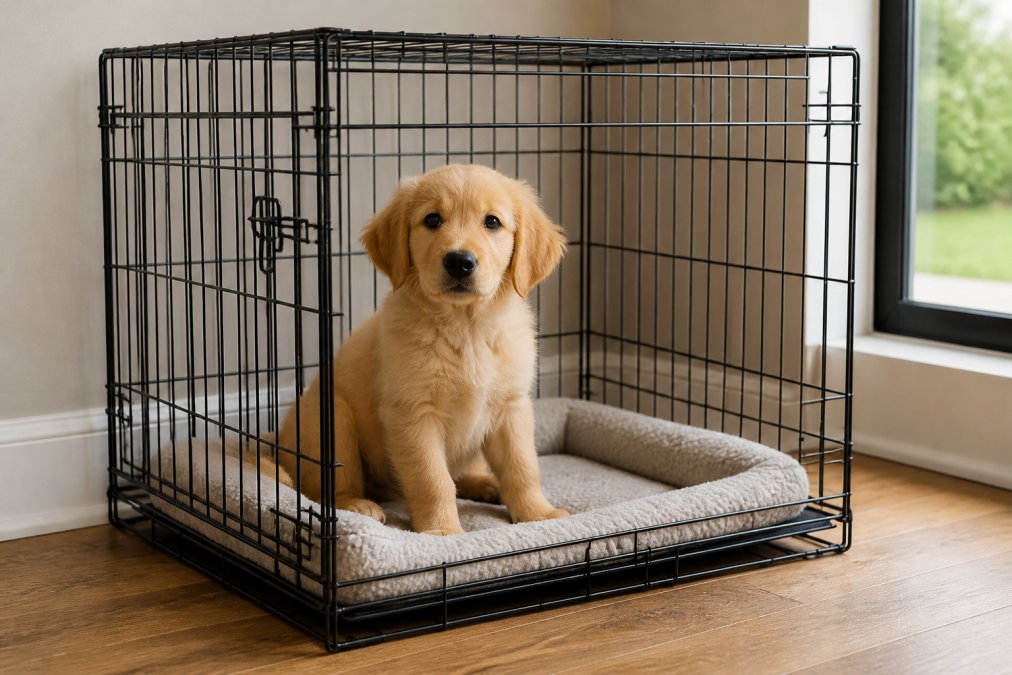
Crate training is one of the most effective tools for house training and giving your puppy a safe space. The crate itself is only part of the equation. Size, bedding, and comfort layers determine whether your puppy views the crate as a den or a punishment box.
Choosing the Right Crate Size
Your puppy shouldn't have so much room that they can potty in one corner and sleep in another. A properly sized crate forces them to hold it, which accelerates house training (avsab.org). The rule is simple: your puppy should be able to stand, turn around, and lie down comfortably, nothing more.
Most puppies grow quickly. A wire crate with a divider panel lets you adjust the interior space as your puppy grows, making it a better investment than a fixed-size plastic crate. If your breed will be large (Labs, German Shepherds), plan for an adult-sized crate with a divider rather than buying multiple crates.
Measure your puppy's current length from nose to rear, add 2-4 inches, and use that as your minimum crate length. For height, measure from the floor to the top of their head when standing. This prevents wasted space while still giving them room to move.
Bedding and Comfort Layers
Puppies don't distinguish between expensive bedding and cheap bedding, they just need something soft that absorbs moisture. A machine-washable orthopedic bed or crate pad is practical because accidents happen. The FurEver Finds Small Quiettime Deluxe Coco Chic Pet Bed is designed to fit standard 24-inch crates, has a removable cover for easy cleaning, and provides the cushioning puppies need during their critical development period.
Layering works better than a single thick pad. Start with a waterproof base layer, add the orthopedic bed, and consider a washable blanket on top. This way, when accidents happen, and they will, you're only washing the top layer while the base stays protected.
Some puppies shred bedding. If yours does, hold off on plush options and use a durable flat mat until they're past the destructive phase, usually around 6-9 months.
Feeding and Hydration Setup
Puppies need frequent meals and constant access to fresh water. The right feeding setup prevents mess, supports proper digestion, and teaches your puppy where eating happens.
Stainless steel bowls are the standard. They're durable, easy to clean, non-porous (so bacteria can't hide), and won't harbor odors like plastic does. A 2-quart bowl works for most puppies; upgrade to larger once they're full-grown. Elevated feeders reduce strain on growing joints and are worth the small investment for larger breeds.
Water should be available throughout the day, but many trainers recommend removing it 2-3 hours before bedtime to support house training (avsab.org). Puppies can't hold it as long as adult dogs, so constant access during the day is non-negotiable.
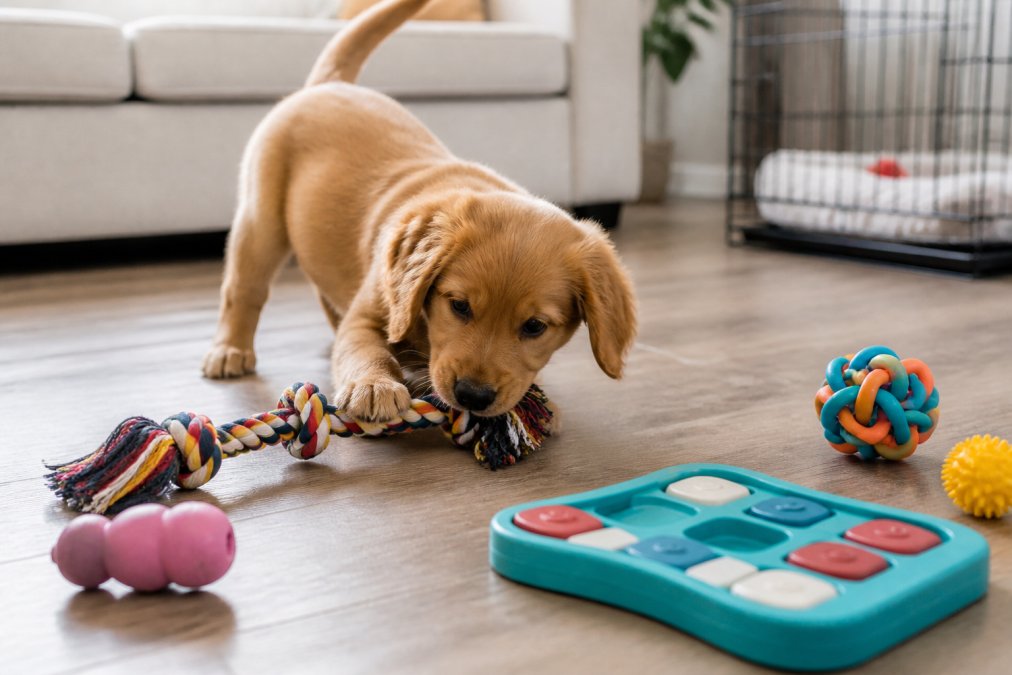
Slow feeders are underrated. A standard bowl lets puppies gulp food, which causes bloating and digestive upset. A slow feeder or puzzle bowl forces them to work for their kibble, slows consumption, and provides mental stimulation. The Interactive Puzzle Ball doubles as both enrichment and a feeding tool, releasing kibble as your puppy plays.

Puppy Proofing Checklist: Safety and Confinement
Puppy-proofing your home prevents accidents and destructive behavior. A puppy explores with their mouth, so anything they can reach, they will chew or swallow.
Start by getting low, literally crouch on the floor and look around from puppy height. Electrical cords, small objects, toxic plants, and loose wires become obvious. Move anything dangerous up or behind barriers.
Baby gates and playpens create safe zones. A puppy doesn't need access to your entire home. Confining them to one or two rooms with puppy-proofed surfaces reduces anxiety and prevents them from getting into trouble when you're not watching.
Remove access to cleaning supplies, medications, chocolate, grapes, onions, and any small objects they could swallow. Puppies don't understand that a sock is indigestible, they just know it's fun to chew.
Collar, Harness, and Leash Gear
A properly fitted collar is essential for ID tags and basic control during early walks. However, a harness distributes pressure across the chest and back rather than concentrating it on the delicate puppy neck, making it safer for young dogs still learning leash manners.
A 4-6 foot standard leash gives you control during walks and training. Retractable leashes look convenient but give puppies too much freedom and can cause injuries if they suddenly lunge. Save the retractable for later, once your puppy has solid leash training.
Fit matters. You should be able to fit one finger between the collar and your puppy's neck. Puppies grow fast, so check the fit weekly and adjust or replace as needed.
ID Tags and Microchip Registration
An ID tag with your current phone number is your first line of defense if your puppy escapes. A microchip is your backup, a permanent identifier implanted under the skin that a veterinarian or shelter can scan.
Microchipping is standard at most first vet visits. The critical step many owners miss is registering the microchip with the manufacturer's database and updating it with your current contact information. A microchip does nothing if your information isn't in the system.
Combine both. A tag gets your puppy home fast if they're lost nearby. A microchip ensures they're returned even if the tag falls off.
Best Puppy Enrichment Toys and Chew Options
Puppies need appropriate outlets for their natural drive to chew and play. The right toys prevent destructive behavior, support healthy teeth development, and provide mental stimulation.
Not all toys are created equal. A flimsy toy that falls apart after two days teaches your puppy nothing except frustration. Durable toys that withstand serious chewing are worth the investment.
Rope toys are classic for a reason. They're durable, interactive, and help clean teeth through friction. The Dog Tug Rope Toy from FurEver Finds is designed specifically for puppies learning to play tug-of-war, which builds confidence and teaches bite inhibition when done correctly with positive reinforcement.

Rubber toys like Kong offer flexibility. Fill them with treats, freeze them, and you've created an extended enrichment activity that keeps puppies occupied. The texture satisfies the chewing urge without being too hard on developing teeth.
Teething Toys and Chew Deterrents
Teething peaks around 4-6 months (aafco.org). Your puppy's gums ache, and they'll chew anything available. Cold teething toys numb sore gums. Wet a rope toy, freeze it, and you've created relief for a fraction of the cost of specialized teething rings.
Chew deterrent sprays discourage puppies from gnawing on furniture and hands. They taste bitter and teach your puppy that certain objects aren't meant for chewing. These work best combined with positive reinforcement, redirect them to an appropriate toy when they start chewing the couch, then reward them for chewing the toy instead.
Avoid toys with small parts that can be swallowed. Puppies don't have the judgment to stop chewing when something starts to come loose. Check toys regularly and retire any that are falling apart.
Potty Training and Hygiene Supplies
House training requires the right tools. Enzyme cleaners, potty pads, and waste bags are non-negotiable.
Enzyme cleaners break down the uric acid in puppy urine. Regular cleaners mask the smell but leave the enzyme signature that tells your puppy "this is a bathroom." An enzymatic cleaner eliminates that signal, which is critical for house training success.
Potty pads are useful for puppies too young to hold it through the night or for apartment dwellers who can't get outside quickly enough. Place them in a designated area and reward your puppy for using them. The goal is to transition to outdoor elimination, but pads bridge the gap during the early weeks.
Waste bags make cleanup easy during walks. The Dog Poop Bags with Dispenser holds 180 bags and attaches to your leash, so you're never caught without one. Leak-proof bags prevent mess and make the experience less unpleasant.

Grooming and Dental Care Essentials
Grooming isn't just about appearance. It's about health, comfort, and teaching your puppy to accept handling.
Start with a soft brush appropriate for your puppy's coat type. Regular brushing removes loose fur, distributes natural oils, and gets your puppy used to being touched. This foundation makes professional grooming easier later.
Puppy shampoo is gentler than human shampoo and won't dry out their skin. Bathe your puppy once a month or as needed, using lukewarm water and a non-slip mat so they don't panic about falling.
Dental care starts young. Puppy toothbrushes and enzymatic toothpaste clean teeth and prevent tartar buildup. Many owners skip this, but dental disease is common in adult dogs and preventable with early care.
Nail trimming is essential. Long nails affect gait and cause pain. If you're uncomfortable trimming nails yourself, your vet or a groomer can do it every 4-6 weeks.
The Cordless Dog Clippers from FurEver Finds are quiet and rechargeable, making home grooming less stressful for puppies sensitive to loud noise.
Health and Wellness Gear
Your puppy's first veterinary checkup is critical. The vet will assess overall health, check for congenital issues, and establish a vaccination schedule. This happens before you buy anything else.
A carrier or travel crate makes vet visits safer. Your puppy shouldn't roam freely in the car. A crash can throw an unsecured puppy, causing serious injury. A secured carrier protects them and keeps you focused on driving.
Flea and tick prevention starts early. Your vet will recommend appropriate products for your puppy's age and weight. These aren't optional, parasites cause serious health problems and spread to other animals.
A first aid kit with puppy-specific supplies is practical. Include bandages, antiseptic wipes, tweezers for splinter removal, and a thermometer. Most puppy injuries are minor, but having supplies on hand means you can address them immediately.
Keep records of vaccinations, deworming, and flea prevention. Your vet provides these, but maintaining your own copies prevents gaps in care if you switch vets.
Getting your puppy off to a strong start requires the right essential puppy supplies for new owners, but not everything on the internet. The supplies covered here address the core needs: safe confinement, proper nutrition, enrichment, house training, grooming, and health monitoring. FurEver Finds has selected each category of products with puppy development in mind, prioritizing durability and safety so your puppy thrives during those critical early months. Start with these essentials, observe what your individual puppy needs, and adjust from there. That approach beats buying everything at once and discovering half of it goes unused.
Frequently Asked Questions
What are the absolute must-have items for a new puppy?
Start with a properly-sized crate, food and water bowls, puppy food, a collar and leash, ID tags, basic toys, bedding, waste bags, and grooming supplies. These cover crate training, feeding, safety, enrichment, and hygiene. Add a veterinary checkup to your first-week checklist and flea and tick prevention products recommended by your vet. Most new owners find that starting with essentials and adding items as you learn your puppy's personality works better than buying everything at once.
How do I choose the right crate size for puppy crate training?
Select a crate where your puppy can stand, turn around, and lie down comfortably, but not so large they can potty in one corner and sleep in another. Most puppies need to move up sizes as they grow, so plan for at least two crates or an adjustable divider panel. A 24-inch crate works for small to medium breeds, while larger breeds may need 36-42 inches. Measure your puppy's expected adult length and add 4-6 inches for proper sizing.
What's the best approach to puppy proofing my home?
Use baby gates to restrict access to unsafe areas, remove toxic plants and chemicals, secure electrical cords, and store small objects out of reach. Install a playpen or use baby gates to create a safe zone where your puppy can't access hazards. Check for gaps under furniture where puppies can get stuck, and remove or secure anything they might chew that isn't a toy. Start with one or two rooms and expand as your puppy develops impulse control and house training progresses.
Which enrichment toys prevent boredom and support healthy teething?
Interactive puzzle toys that release treats, rope toys for tug games, and rubber chew toys designed for teething all work well. Rotate toys every few days to maintain novelty and prevent boredom. The Interactive Puzzle Ball from FurEver Finds keeps puppies mentally engaged while promoting slow feeding and healthy digestion. Rope toys like the Dog Tug Rope Toy help clean teeth naturally during play. Offer variety, puppies have different chewing preferences, and what one puppy loves another might ignore.
When should I start buying supplies for my new puppy?
Begin shopping 1-2 weeks before your puppy arrives. This gives you time to set up the crate, puppy-proof your home, and have food and bowls ready. Coordinate with your breeder or rescue about what food your puppy is currently eating so you can have it on hand. Order items with next-day delivery options like FurEver Finds offers so you're not scrambling if you need something urgently after bringing your puppy home.
What's the difference between budget and premium puppy supplies?
Budget supplies meet basic needs but may wear out faster or require replacement within months. Premium options like FurEver Finds' curated products offer durability, non-toxic materials, and thoughtful design that lasts through multiple puppies or years of use. Premium beds stay supportive longer, toys withstand aggressive chewing, and grooming tools work more smoothly. For items your puppy uses daily, crates, beds, bowls, investing in quality reduces frustration and long-term costs.
Do I need special supplies for different puppy breeds?
Larger breeds need bigger crates, heavier-duty toys, and joint-support bedding earlier than small breeds. Small breeds require smaller bowls and may benefit from elevated feeders to reduce neck strain. Long-haired breeds need more frequent grooming supplies, while short-haired puppies need less. Toy breeds are prone to hypoglycemia, so you may need a slow feeder to encourage proper eating. Consult your vet about breed-specific needs during your first checkup.
This article was written using GrandRanker