


First Week With New Puppy: What to Expect
Table of Contents
- What to Expect the First Week With Your New Puppy
- Preparing Your Home Before Puppy Arrival
- Essential Puppy Supplies Checklist for Day One
- New Puppy Potty Training Tips for the First Week
- Puppy Crate Training Schedule and Sleep Expectations
- How to Calm an Anxious Dog Naturally During Adjustment
- The First 24 Hours: Feeding, Socialization, and Vet Care
- Managing Teething, Biting, and Play Behavior
- Frequently Asked Questions
Last Updated: September 1, 2026
What to Expect the First Week With Your New Puppy
Bringing home a new puppy is exhilarating and overwhelming. The first week sets the tone for everything that follows. Your puppy is experiencing profound stress, separated from littermates, mother, and everything familiar. Your job is to help them feel safe while establishing basic routines that prevent chaos, not to train them into compliance.
During the first week, your puppy will sleep 12-18 hours daily (but never when you want them to), have accidents everywhere, and cry in the crate at 3 a.m (aaha.org). They'll also show glimpses of personality and start bonding with you in ways that make the difficulty worthwhile. This guide covers what to expect and the practical strategies that separate manageable first weeks from chaotic ones.
Preparing Your Home Before Puppy Arrival
The week before your puppy arrives is when you prevent 80% of the problems that plague new owners. Walk through your home at puppy eye level. What do you see? Electrical cords, small objects, cleaning supplies, toxic plants, and gaps under furniture.
Puppy-Proofing Essential Areas
Secure all electrical cords with covers or tape along baseboards. Move cleaning supplies, medications, and toxic substances (chocolate, xylitol, grapes, onions, certain plants) to high shelves or locked cabinets. Block access to areas you don't want them in using baby gates. Remove or secure area rugs and check for gaps under doors where puppies could wedge themselves. Remove tempting chew targets like shoes, books, and furniture legs, a bored puppy will find something to chew, usually something expensive or dangerous.
Setting Up a Crate and Sleep Space
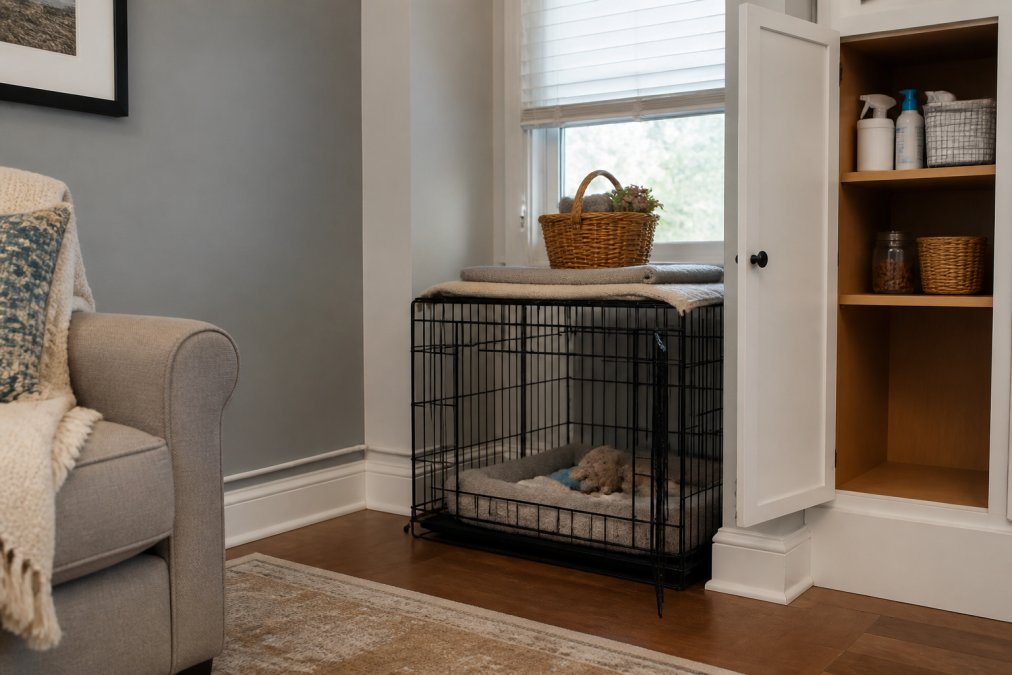
Choose a crate size that allows your puppy to stand, turn around, and lie down comfortably, a 24-inch crate works for most small to medium puppies. Place it in a room where your family spends time; puppies are pack animals and hate isolation. Add a soft bed inside, like the Small Quiettime Deluxe Coco Chic Pet Bed ($23.80 at FurEver Finds), to help puppies associate the crate with rest rather than punishment.
Leave the crate door open initially. Let your puppy explore at their own pace, toss treats inside, and feed meals in or near the crate. Never force a puppy into a crate or use it as punishment. Set up a separate sleeping area near your bed for the first week or two using a playpen, allowing the puppy to see and hear you while maintaining a boundary.
Essential Puppy Supplies Checklist for Day One
You don't need everything on the internet's "must-have" lists. You need essentials that prevent disasters and enable basic care.
Food and water: Stainless steel or ceramic bowls and a water bowl that doesn't tip easily. Use the food your breeder or shelter provided; changing diets suddenly causes digestive upset.
Bedding: A washable bed or blanket for the crate and sleeping area.
Collar, leash, and ID tag: Start with an adjustable collar since puppies grow fast. A standard 6-foot leash for walks and training. An ID tag with your phone number.
Crate: Appropriately sized as discussed above.
Toys for enrichment and chewing: The Dog Tug Rope Toy ($56.99 at FurEver Finds) is durable for supervised play. The Puzzle Food Leaking Ball ($26.99 at FurEver Finds) provides mental stimulation and slows feeding, which aids digestion. Include soft toys, rubber toys, and rope toys for variety.

Cleaning supplies: Enzymatic cleaner specifically designed for pet accidents. Regular cleaners don't break down urine, so the scent remains and attracts repeat accidents to the same spot.
Poop bags: The Dog Poop Bags with Dispenser ($11.74 at FurEver Finds) includes 180 leak-proof bags and a convenient dispenser that attaches to your leash.
Grooming basics: A soft brush, puppy-safe nail clippers, and dog shampoo.
Veterinary records and appointment confirmation: Schedule a wellness exam for within the first week.
New Puppy Potty Training Tips for the First Week
Potty training starts the moment your puppy arrives. A puppy's bladder is tiny and their control is nonexistent. Expecting a young puppy to hold it for more than 2-3 hours is unrealistic (akc.org).
Establishing a Housebreaking Routine
Take your puppy outside frequently: first thing in the morning, after meals (within 15-30 minutes), after naps, after playtime, before bedtime, and every 2-3 hours in between. Choose a designated potty spot and take your puppy to the same area each time. The scent builds up and signals "this is where we go." Stay outside with them without playing or distracting. Use a simple command like "go potty" consistently. When they finish, immediately praise enthusiastically and give a small treat.
Watch for potty signals: sniffing, circling, whining, or heading toward the door. The moment you see these, scoop your puppy up and take them outside. At night, confine your puppy to a crate beside your bed. Most puppies won't soil where they sleep. When they whine, take them out immediately, a puppy whining at 3 a.m. needs a bathroom break, not patience.
Managing Accidents Without Frustration
Accidents happen. They're not misbehavior, they're biology. When you catch an accident in progress, calmly interrupt and take the puppy outside immediately. If you find an accident after the fact, clean it up and move on. Punishing a puppy for something that happened hours ago teaches them nothing except that you're unpredictable and scary.
Use enzymatic cleaner on all accidents. Expect 5-15 accidents per day during the first week. By week two, frequency drops noticeably with consistent routine.
Puppy Crate Training Schedule and Sleep Expectations
The crate is a tool for safety, housebreaking, and giving your puppy a secure space, not a cage or punishment.
Building Positive Associations With the Crate
Never force your puppy into the crate or use it as punishment. Feed all meals in or near the crate. Toss high-value treats inside. Leave the door open and let your puppy nap inside naturally. Only after your puppy is comfortable entering should you close the door briefly, just 30 seconds at first, then open it before they panic. Gradually extend the duration. Use a command like "crate" or "kennel" consistently paired with treats and praise.
Managing Nighttime Whining and Sleep Deprivation
Position the crate beside your bed so your puppy can see and smell you. This reduces anxiety significantly. When your puppy whines, assess whether they need a bathroom break or are just protesting. A puppy who's been out recently is probably protesting, wait a few minutes. Take nighttime potty breaks seriously: go outside, wait for your puppy to go, praise, and return immediately with minimal interaction.
Most puppies can't sleep through the night until 12-16 weeks old (aaha.org). Expect 1-3 nighttime bathroom breaks before that. By week three or four, many puppies start sleeping 5-6 hours. The sleep deprivation is real and temporary. If you have a partner, take shifts.
How to Calm an Anxious Dog Naturally During Adjustment
Your puppy is terrified. They've lost everything familiar. Anxiety during the first week is universal and normal.
Recognizing Separation Anxiety and Stress Signs
Watch for excessive whining, panting, drooling, pacing, destructive behavior, loss of appetite, or aggression. Some puppies hide and refuse to engage. Others become hyperactive. All are anxiety responses.
Creating a Calm Environment and Routine
Consistency is the most powerful anxiety reducer. Feed at the same times. Take potty breaks on schedule. Establish a bedtime routine. Create a quiet space where your puppy can retreat, a crate with a blanket draped over it becomes a den where puppies feel safer.
Minimize loud noises, sudden movements, and chaotic environments during the first week. No parties, no introducing the puppy to ten new people, no trips to busy places. Handle your puppy gently and calmly. Let them come to you. Play soft music or use white noise to mask household sounds that startle puppies.
The First 24 Hours: Feeding, Socialization, and Vet Care
First Meal and Feeding Schedule
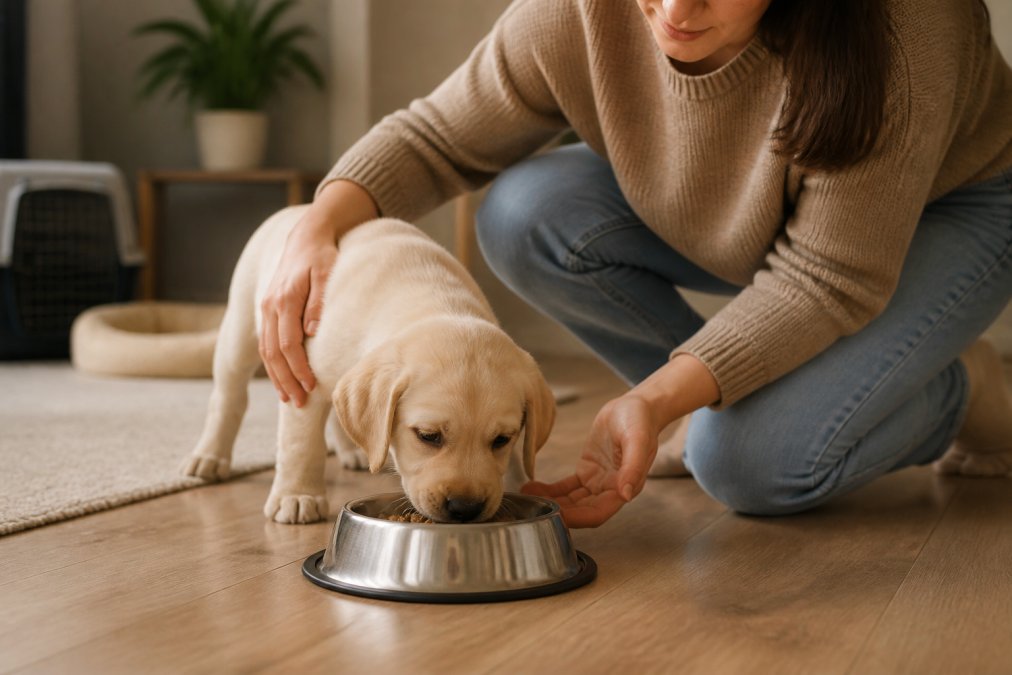
Feed your puppy the same food they were eating before arrival. Changing diets causes diarrhea and digestive upset. Continue the same brand and formula for at least a week. Puppies under 6 months typically eat 3-4 times daily at consistent times: morning, midday, late afternoon, and early evening. Remove uneaten food after 15-20 minutes. Measure portions according to the food bag's guidelines for your puppy's age and expected adult weight. Provide fresh water at all times.
Scheduling Your Veterinary Wellness Exam
Schedule a wellness exam for within the first 3-5 days. This appointment is non-negotiable. Your vet checks for congenital issues, parasites, and confirms vaccination status. Bring vaccination records from the breeder or shelter. Most puppies need a series of shots starting at 6-8 weeks. Ask your vet about the vaccination schedule, deworming protocol, flea/tick prevention, feeding recommendations, expected growth rate, and breed-specific health concerns. Ask about pet insurance, coverage is cheapest when you enroll as a puppy, before any pre-existing conditions develop.
Gentle Socialization and Environmental Exposure
Socialization during the first week is about exposure to your home environment, not meeting other dogs or people. Let your puppy hear normal household sounds: the vacuum, dishwasher, microwave, doorbell, phone. Walk your puppy slowly through different rooms and let them explore surfaces: hardwood, tile, carpet, grass. Introduce family members calmly, one at a time, and let your puppy approach at their own pace. Save introducing other dogs, visiting new places, and meeting strangers for week two or three.
Managing Teething, Biting, and Play Behavior
Puppies explore the world with their mouths. Biting isn't aggression, it's how they learn and play. Puppies have 28 baby teeth that fall out and are replaced by 42 adult teeth by 6-7 months. Teething causes discomfort and increases chewing drive.
Provide appropriate chew toys and rotate them to maintain interest. Offer cold toys, freeze a damp washcloth or rubber toy to numb sore gums. When your puppy bites during play, yelp sharply and withdraw attention. This mimics how littermates respond to rough play. After a few seconds, resume play. Your puppy learns that hard bites end the fun. Never punish biting. Redirect instead: if your puppy bites your hand, offer a toy and praise when they take it.
Expect your puppy to bite frequently during the first week. Consistency in response matters more than intensity. By week three, most puppies are significantly gentler. Puppies tire quickly, a 10-minute play session exhausts them. Use this to your advantage: play, then crate for a nap. This cycle prevents destructive behavior and gives you breaks.
Your first week with a new puppy is survival mode mixed with moments of profound connection. You'll be exhausted, frustrated, and occasionally questioning your decision. This is normal. By week two, the chaos settles. By week three, you'll see your puppy's personality emerge and the bond deepen.
FurEver Finds curates premium puppy essentials designed to make those first weeks easier. From durable chew toys to leak-proof waste bags and comfortable bedding, our thoughtfully selected products support both your puppy's comfort and your sanity. Shop with confidence knowing every item is chosen for quality and reliability. Start your puppy's journey with products you can trust, because the first week sets the tone for everything that follows.
Frequently Asked Questions
What is the 3-3-3 rule for new puppies?
The 3-3-3 rule describes the typical adjustment timeline: 3 days to decompress from the stress of transition, 3 weeks to begin settling into your home and routines, and 3 months to fully bond and adjust to their new environment. During the first week, expect your puppy to be in the initial decompression phase, showing stress behaviors like whining, clinginess, or fearfulness. This is normal and temporary.
How much sleep does a new puppy need in the first week?
Puppies require 18-20 hours of sleep per day during their first weeks of life. They'll sleep in short bursts between feeding, play, and potty breaks. Plan for frequent naps throughout the day and expect nighttime disruptions. A comfortable crate or designated sleep space helps puppies feel secure. Quality rest supports healthy development and reduces behavioral issues.
What should I avoid doing when I first get a puppy?
Don't overwhelm your puppy with too many visitors, loud environments, or extensive socialization during the first week, they need time to adjust. Avoid inconsistent house rules or allowing behaviors you won't tolerate later. Don't punish accidents harshly; positive reinforcement works better. Skip long training sessions; keep them brief and fun. Avoid changing food abruptly, which can cause digestive upset. Finally, don't expect your puppy to hold their bladder for extended periods.
When should I schedule my puppy's first vet visit?
Schedule your veterinary wellness exam within the first week of bringing your puppy home, ideally within 48-72 hours. Your vet will check for congenital issues, review the vaccination schedule, discuss parasite prevention, and establish a health baseline. Bring any health records from the breeder or shelter. This visit is critical for confirming your puppy's health and creating a preventive care plan.
This article was written using GrandRanker