


How to Clean an Orthopedic Dog Bed: Complete Guide
Table of Contents
- Why Cleaning Your Orthopedic Dog Bed Matters
- How Often to Wash a Dog Bed Based on Use and Health
- Step 1: Remove and Wash the Bed Cover
- Step 2: Vacuum and Remove Loose Debris
- Step 3: How to Wash a Memory Foam Dog Bed Safely
- How to Remove Dog Bed Odor from Memory Foam
- How to Clean a Dog Bed That Can't Be Washed
- Drying Your Orthopedic Dog Bed Properly
- Frequently Asked Questions
Last Updated: October 6, 2026
Why Cleaning Your Orthopedic Dog Bed Matters
Your dog's clean orthopedic dog bed is one of the most important investments you can make for their comfort and health. These beds provide crucial support for aging joints, arthritic dogs, and pets recovering from injury. But that support only works if the bed stays clean.
Dirt, hair, and bacteria accumulate quickly on any pet bed. Over time, they break down the foam structure and create an environment where allergens and odors thrive. A dirty orthopedic bed loses its therapeutic properties.
Regular cleaning extends the life of your bed and keeps your pet healthier. Proper orthopedic dog bed maintenance and cleaning tips matter so much.
How Often to Wash a Dog Bed Based on Use and Health
The cleaning frequency depends on your dog's lifestyle and health needs. A healthy dog in a clean home needs less frequent washing than a senior dog with incontinence or a pet with skin allergies.
General guidelines:
- Healthy dogs with no accidents: Wash the cover every 2-3 weeks. Vacuum the foam weekly.
- Senior dogs or those with health issues: Wash covers weekly. Spot-clean the foam as needed.
- Dogs with skin allergies: Weekly washing reduces allergen buildup and itching.
- After accidents: Sanitize immediately to prevent bacterial growth and odors.
If your dog spends time outdoors, sheds heavily, or has had recent accidents, move toward the weekly schedule. Indoor dogs in clean homes can stretch to every 3 weeks.
The key is consistency. A regular schedule prevents dirt from embedding deep into the foam where it becomes harder to remove.
Step 1: Remove and Wash the Bed Cover
Start by removing the cover if your orthopedic dog bed has one. This is the easiest part to clean and the most important for maintaining freshness.
How to remove the cover:
- Unzip or unfasten the cover completely
- Shake it outside to release loose hair and debris
- Check for any stains or problem areas before washing
Machine-Washable Covers
Most modern orthopedic beds come with machine-washable covers. This makes regular cleaning simple.
Machine washing steps:
- Use cold or warm water (never hot, which can damage fabric and cause shrinkage)
- Add a mild, unscented detergent
- Select a gentle or delicate cycle
- Wash alone or with similar colors to prevent dye transfer
- Run an extra rinse cycle to remove all soap residue
Hot water can shrink covers and damage the fabric bond to the foam underneath. Mild detergent is essential because strong chemicals can irritate your dog's skin. Pet-safe detergent ensures no harsh residues remain after washing.
Never use bleach or fabric softener. Bleach damages the fabric and leaves harsh chemical residue. Fabric softener coats the material and reduces absorbency, trapping moisture against the foam.
Checking Manufacturer Care Labels
Before you wash anything, read the care label on your orthopedic dog bed. Manufacturers include specific instructions for a reason.
Some beds have special instructions:
- Temperature limits for washing
- Detergent restrictions
- Drying methods that protect the foam
- Warranty requirements for cleaning
Ignoring the label can void your warranty.
Look for phrases like "machine washable," "spot clean only," or "hand wash recommended." These tell you exactly what's safe for your specific bed.
Step 2: Vacuum and Remove Loose Debris
Before any water touches the foam, remove all loose hair, dirt, and debris. This step prevents you from grinding dirt into the foam during cleaning.
Vacuuming steps:
- Use an upholstery attachment on your vacuum
- Work in overlapping passes across the entire surface
- Pay extra attention to seams and corners where hair collects
- Flip the bed and vacuum the bottom if possible
- Use a lint roller on areas the vacuum missed
A thorough vacuuming removes 80% of surface debris. This means less dirt gets pushed into the foam when you add water. It also reduces the amount of detergent you need for spot-cleaning.
For heavy shedding dogs, vacuum twice: once before washing and once after the bed dries. Dog hair clings to damp foam more easily, so a second pass removes what the first missed.
Step 3: How to Wash a Memory Foam Dog Bed Safely
Memory foam requires gentle handling. It's not like regular fabric you can scrub hard. The foam structure breaks down under pressure and won't recover if you're too rough.
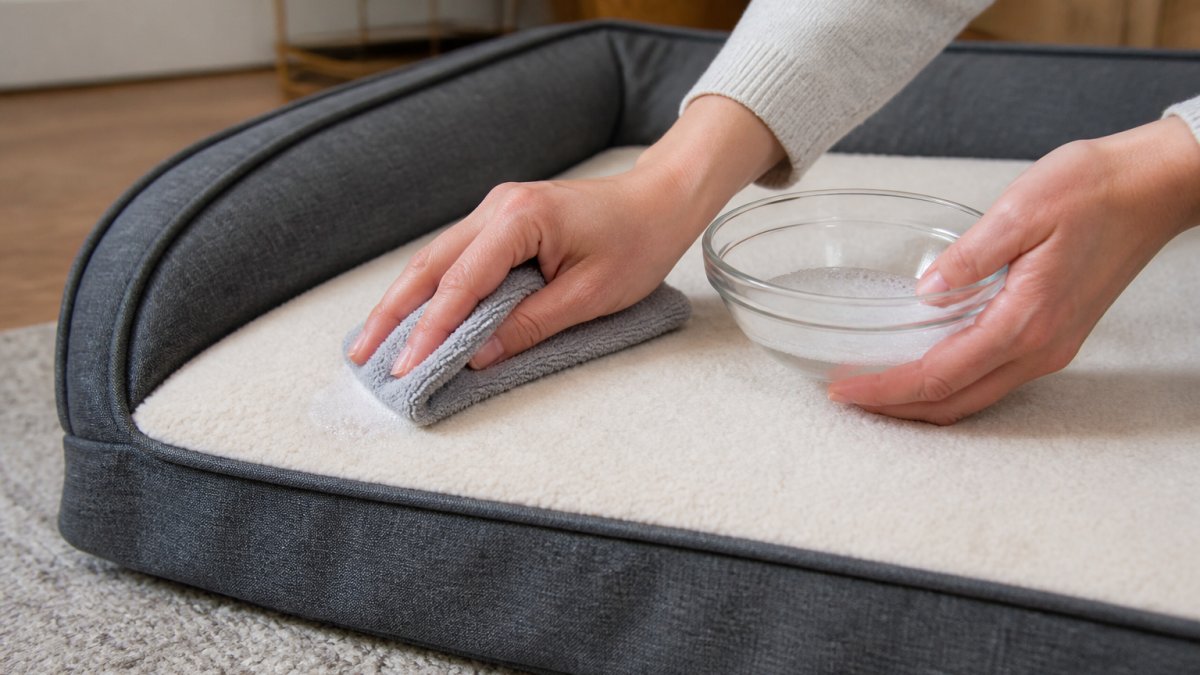
Safe cleaning method:
- Fill a bucket with cool or warm water and add a small amount of mild detergent
- Dip a soft cloth (microfiber works well) into the solution
- Wring out excess water, the cloth should be damp, not dripping
- Gently dab stains and soiled areas
- Use a second cloth with plain water to rinse
- Blot with a dry towel to remove moisture
The goal is to clean the surface without soaking the foam. Water that penetrates deep into memory foam takes days to dry and can promote mold growth inside the bed.
Never scrub, rub hard, or use a brush on memory foam. These actions compress the foam and damage its structure. Gentle dabbing lifts dirt without harming the material.
Spot-Cleaning Stains and Spills
Fresh stains come out easier than old ones. The faster you act, the better the result.
For fresh spills:
- Blot immediately with a dry cloth
- Don't rub, press down to absorb liquid
- Once dry, vacuum the area
- Spot-clean with damp cloth if needed
For set-in stains:
- Mix water with a tiny amount of mild detergent
- Apply to the stain with a damp cloth
- Let it sit for 5-10 minutes
- Blot gently with a clean, damp cloth
- Repeat if necessary
- Dry thoroughly
Some stains need multiple treatments. Be patient and gentle. Aggressive scrubbing won't remove the stain faster, it will just damage the foam.
Small Quiettime Deluxe Coco Chic Pet Bed, Ultra-Soft & Overstuffed, Machine →
Using Pet-Safe Detergent and Water Temperature
The detergent you choose matters. Your dog sleeps on this bed every night, so what you use affects their health.
Best choices for orthopedic dog bed cleaning:
- Mild, unscented laundry detergent
- Pet-specific detergents made for washable pet beds
- Baby shampoo (diluted heavily with water)
- Baking soda for light freshening between washes
Avoid anything with perfume, dyes, or harsh chemicals. These irritate sensitive skin and leave residue that bothers your dog. Strong-smelling products can also mask the bed's natural scent, making your dog less likely to use it.
Water temperature affects both cleaning and safety. Cool water (60-70°F) is gentlest on foam. Warm water (around 80°F) cleans slightly better but can damage some foam types. Never use hot water, it degrades memory foam and can cause shrinkage.
How to Remove Dog Bed Odor from Memory Foam
Odors come from bacteria, urine residue, and trapped moisture. Removing them requires addressing all three causes.
Odor-fighting steps:
- Ensure the foam is completely dry (moisture traps odors)
- Sprinkle baking soda over the surface
- Let it sit for 30 minutes to several hours
- Vacuum thoroughly to remove all baking soda
- Place in sunlight if possible (UV light kills odor-causing bacteria)
Baking soda is one of the safest natural deodorizers for pet beds. It absorbs odors without chemicals and won't irritate your dog's skin. It's also cheap and effective.
Sunlight is free odor control. Even 2-3 hours of direct sun helps. The UV rays kill bacteria and the warmth helps dry any remaining moisture deep in the foam.
Sanitizing After Accidents
Pet accidents need more than regular cleaning. Urine and vomit contain bacteria that multiply quickly and create strong odors.
Sanitizing after accidents:
- Blot immediately with paper towels
- Don't rub the area, blot to lift liquid
- Mix equal parts white vinegar and water
- Apply to the affected area with a cloth
- Let sit for 10-15 minutes
- Blot with clean water
- Sprinkle baking soda once dry
- Let sit overnight
- Vacuum completely
White vinegar kills bacteria and neutralizes urine odor. It's pet-safe and won't damage foam. The smell fades as it dries.
For severe accidents or repeated incidents, consider placing a waterproof pad under the orthopedic bed. This protects the foam from saturation and makes cleanup easier.
How to Clean a Dog Bed That Can't Be Washed
Some orthopedic beds have non-removable covers or special construction that doesn't allow machine washing. These beds need a different approach.
For non-removable covers:
- Vacuum thoroughly first
- Mix mild detergent with water
- Damp-wipe the entire surface with a cloth
- Use a second cloth with plain water to rinse
- Blot dry with towels
- Air-dry completely before use
The key is minimal moisture. You're cleaning the surface without soaking the bed.
For stubborn odors on non-washable beds, sprinkle baking soda, let it sit for several hours, then vacuum. Repeat weekly until the odor fades.
Some beds have waterproof liners that prevent washing altogether. Check your care label to confirm what's safe. If washing isn't allowed, surface cleaning and baking soda are your main tools.
Drying Your Orthopedic Dog Bed Properly
Improper drying damages the bed and creates health problems. Moisture trapped in foam leads to mold, mildew, and bacteria growth.
Air-Drying to Prevent Shrinkage and Mold
Air-drying is the safest method for orthopedic beds. Machine drying can damage foam and shrink covers.
Air-drying steps:
- Place the bed in a warm, dry location
- Choose an area with good air circulation
- Sunlight speeds drying (UV light also sanitizes)
- Flip the bed periodically to dry all sides
- Allow 24-48 hours for complete drying
- Check that the foam feels completely dry before your dog uses it
Moisture deep in the foam can take 2-3 days to evaporate fully. Don't rush this step. A damp bed is worse than a dirty one.
If you machine-washed the cover, hang it to dry instead of using the dryer. Air-drying prevents shrinkage and extends the cover's life.
For covers that must dry indoors, hang them near a window or in front of a fan. Air movement speeds drying significantly.
Once everything is completely dry, your orthopedic dog bed is ready to support your pet's comfort and health again. Regular cleaning keeps the foam structure intact and extends the bed's lifespan by years.
Your dog deserves a clean, comfortable place to rest. If you're looking for a premium orthopedic bed that's easy to maintain, the Small Quiettime Deluxe Coco Chic Pet Bed features a machine-washable cover and ultra-soft construction. For larger dogs needing elevated support, our Elevated Dog Cooling Bed offers easy-to-clean surfaces and promotes airflow to keep your pet comfortable year-round.


Frequently Asked Questions
How often should you wash an orthopedic dog bed?
Wash your orthopedic dog bed weekly if your dog spends most of its time there, sheds heavily, or has accidents. For lightly used beds, every 2-3 weeks works fine. Dogs with skin allergies or health conditions may benefit from weekly washing. Always check the manufacturer's care label, as some orthopedic beds have specific washing limits to preserve foam structure and warranty coverage.
Can you put an orthopedic dog bed in the washing machine?
Only wash removable covers in the machine using a gentle cycle with warm water and pet-safe detergent. Never machine-wash the memory foam core itself, as the agitation and saturation can damage the foam's orthopedic properties and reduce its lifespan. Many orthopedic beds, such as the Small Quiettime Deluxe Coco Chic Pet Bed, feature machine-washable covers.
How do you remove odors from a memory foam dog bed?
Sprinkle baking soda over the foam, let it sit for 15-20 minutes, then vacuum thoroughly. For stubborn odors from accidents, mix equal parts white vinegar and water in a spray bottle, lightly mist affected areas, and air-dry completely in sunlight if possible. Ensure the foam dries fully (24-48 hours) to prevent mold and mildew. Wash covers weekly and maintain good air circulation around the bed.
What should you use to clean an orthopedic dog bed?
Use only mild, unscented, pet-safe detergent, avoid bleach, fabric softener, or harsh chemicals that irritate sensitive skin or damage foam. For spot-cleaning, mix a small amount of detergent with cool to warm water and apply with a soft cloth. Baking soda and white vinegar are excellent natural alternatives for odor control. Always check the manufacturer's care label before using any cleaning product to protect your bed's warranty.