


How to Clean Puppy Teeth for Beginners: Step-by-Step
Table of Contents
- Start Early: Why Puppy Dental Care Sets the Stage
- What You'll Need to Clean Puppy Teeth
- Best Puppy Toothpaste for Beginners: What to Choose
- How to Get a Puppy Used to Having Their Teeth Brushed
- Step-by-Step Guide to Brushing Your Puppy's Teeth
- Troubleshooting: When Your Puppy Resists Brushing
- A Puppy Dental Care Schedule for Every Stage
- Conclusion
- Frequently Asked Questions
Last Updated: September 6, 2026
Brushing your puppy’s teeth is one of the most important habits you can build, yet most new owners skip it entirely. Learning how to clean puppy teeth for beginners doesn’t require a veterinary degree, just a few minutes a day and the right approach. Periodontal disease is one of the most common health issues in dogs, making early oral hygiene a cornerstone of canine health.
Start Early: Why Puppy Dental Care Sets the Stage
Starting dental care during the teething phase is the single most effective way to ensure your dog accepts brushing as an adult. Puppies are naturally curious, and their mouths are already experiencing discomfort from new teeth, making them more receptive to gentle handling. This early window builds positive associations with mouth handling, preventing the struggle of wrestling with a resistant adult dog.
A common mistake is waiting until a puppy has adult teeth or visible tartar. By then, the mouth is more sensitive, and the dog has learned to avoid fingers near their face. The American Veterinary Medical Association emphasizes that regular dental care is essential for overall pet health, and establishing this routine early dramatically reduces the risk of gingivitis and more severe infections.
What You'll Need to Clean Puppy Teeth
Before you start, gather the right tools. Using human toothpaste or a hard brush is a common error that can cause gum sensitivity and even toxicity. You need pet-specific supplies designed for a puppy’s smaller mouth and delicate enamel.
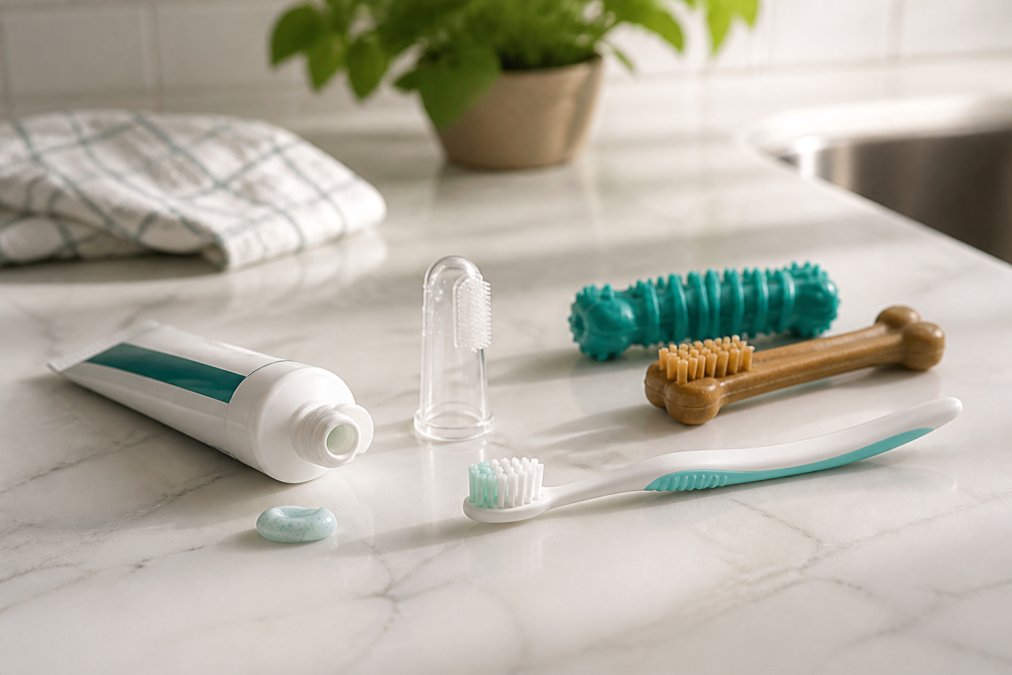
Your essential kit includes a soft-bristled toothbrush or a silicone finger brush. Finger brushes are excellent for the first few weeks because they let you feel the teeth and gums, but a small toothbrush with a long handle gives better reach to the back molars. You will also need canine toothpaste, which is enzymatic and breaks down plaque without vigorous scrubbing. Finally, have dental treats or a chew toy ready as a reward.
Choosing the Right Brush: Finger Brush vs. Small Toothbrush
- Silicone finger brushes (often sold in multi-packs for under $10 at major pet retailers) are ideal for the first 1-2 weeks. They let you feel the texture of the teeth and the pressure you’re applying, which is critical when your puppy is still learning to tolerate handling. However, they have a downside: the short, nubby bristles are less effective at removing plaque from the deep grooves of the molars, and they can be slippery when wet.
- A small, handled toothbrush with a compact head (about the size of your thumbnail) and extra-soft bristles is the end goal. Look for one with a long, ergonomic handle, this gives you the leverage to reach the upper molars without shoving your finger deep into the mouth. Many veterinary dental specialists recommend a brush with a tapered head that can angle into the space between the cheek and the back teeth.
A practical middle ground: use the finger brush for front teeth and canines, and switch to the handled brush only for the back molars once your puppy is comfortable.
Why Human Toothpaste Is a Hard No
Human toothpaste contains fluoride and often sodium lauryl sulfate (the foaming agent) (the FDA). While fluoride is safe for humans in small amounts, it can cause stomach upset in dogs. More critically, many human toothpastes contain xylitol, a sugar alcohol that is highly toxic to dogs, even a small amount can cause a rapid drop in blood sugar, leading to seizures or liver failure (avma.org). Always purchase a paste explicitly labeled for canine use.
The Toothpaste Label: What to Look For
When you pick up a tube of canine toothpaste, check the label for two things:
- Enzymatic formula: Look for ingredients like glucose oxidase or lactoperoxidase. These enzymes break down the bacterial cell wall in plaque, meaning the paste works chemically even where the bristles can’t reach.
- VOHC Seal: The Veterinary Oral Health Council (VOHC) accepts products that meet pre-set standards of plaque and tartar reduction in clinical trials (vohc.org). Seeing the VOHC seal on a toothpaste tube means it has been independently tested, not just marketed as effective.
Avoid pastes with artificial colors, strong mint flavors, or “whitening” agents, these add no benefit for a puppy and can cause aversion.
The Reward Item: Make It Non-Food Optional
While a small training treat works, a dental chew toy serves double duty. Look for a toy that is soft enough to bend but firm enough to provide abrasion, rubber nubs or ridges are better than smooth plastic. Keep this toy reserved only for post-brushing sessions so it retains high value.
Best Puppy Toothpaste for Beginners: What to Choose
The best toothpaste for a puppy is one that is enzymatic, xylitol-free, and comes in a flavor your dog loves.
Flavor matters more than most people think. Poultry, peanut butter, and malt flavors are typically the most appealing to puppies. When in doubt, ask your veterinarian, but any toothpaste carrying the Veterinary Oral Health Council (VOHC) seal is a safe bet for pet-safe ingredients and proven efficacy.
How to Get a Puppy Used to Having Their Teeth Brushed
Desensitization is the bridge between having the tools and using them. Forcing a toothbrush into a puppy’s mouth on day one will almost certainly create lasting fear and resistance.
Begin by dipping your finger in broth or peanut butter (xylitol-free) and letting your puppy lick it. While they lick, gently rub your finger along their outer gums and teeth. Keep sessions short, just a few seconds. Over several days, gradually lift the lips to expose the molars, mimicking the brush motion. Complete this phase without signs of stress, such as pulling away or whining.
Step-by-Step Guide to Brushing Your Puppy's Teeth
Once your puppy is comfortable with your fingers in their mouth, you are ready for brushing.
Step 1: The Desensitization Phase
This phase lasts for the first few days or until your puppy is relaxed with handling. Apply a pea-sized amount of canine toothpaste to your finger and let them lick it off. Then gently rub the paste along the gum line without brushing. End every session with praise and a treat. The goal is gradual introduction, not cleaning.
Step 2: Introducing the Toothbrush
Put a small amount of toothpaste on the brush or finger brush. Let your puppy lick the brush clean first. Once comfortable, gently lift their lips and brush the front teeth and canines using a circular motion. Do not worry about the back teeth yet, this step is about acclimating them to the bristles.
Step 3: Mastering the Brushing Motion
With your puppy comfortable, focus on the entire mouth. Hold the brush at a 45-degree angle to the teeth, targeting the gum line. Use gentle, circular motions on the outside surfaces, where most tartar accumulates. You do not need to brush the inside of the teeth, as the tongue naturally cleans that surface. A full session should take no more than 30 to 60 seconds.
Troubleshooting: When Your Puppy Resists Brushing
Resistance is normal, but it is not a dead end. If your puppy bites the brush, turns away, or runs off, it signals you are moving too fast or the experience is unpleasant. First check your own demeanor, if you are anxious, they will sense it. Then regress to an earlier step.
If they bite the brush, they are likely treating it as a chew toy. Allow them to chew for a few seconds, then gently guide it to the side of the mouth for a quick brush. If they turn away, stop and offer a treat for letting you touch their face. Consistency is key, short, successful sessions every day beat a long, stressful one weekly.
A Puppy Dental Care Schedule for Every Stage
Your approach to cleaning puppy teeth should evolve as your dog grows.
| Stage | Age Range | Frequency | Focus |
|---|---|---|---|
| Desensitization | 8-12 weeks | 2-3 times daily (1-2 min) | Finger rubbing, taste of toothpaste |
| Transition | 3-6 months | Daily brushing | Introduce brush, focus on front teeth |
| Maintenance | 6+ months | Daily brushing | Full mouth, 45-degree angle, gum line |
The Teething Transition: When to Pause and When to Push
The schedule above needs a major adjustment during the teething phase, which typically runs from 12 weeks to 6 months of age. During this window, your puppy is losing 28 baby teeth and pushing through 42 adult teeth. The gums become inflamed, tender, and sometimes bleed slightly when touched.
Signs that your puppy is actively teething:
- Increased chewing on furniture, your hands, or the brush itself
- Red, swollen gums, especially around the molars
- Mild drooling or a slightly reduced appetite for hard kibble
- Small blood spots on chew toys (not on the toothbrush)
What to do during a teething flare-up:
- Do not stop brushing entirely. Stopping for a week teaches your puppy that resistance ends the routine. Instead, drop the intensity, switch to a silicone finger brush or a piece of damp gauze wrapped around your index finger.
- Shorten the session. A 15-second gentle wipe of the outer surfaces maintains the habit without aggravating sore gums. You are not aiming for a perfect clean, you are preserving the routine.
- Use cold to your advantage. A chilled (not frozen) rubber teething toy given for 5 minutes before brushing numbs the gums slightly and reduces sensitivity. Do not use ice cubes directly, they can crack a puppy’s developing teeth.
- Watch for baby teeth that won’t fall out. By 6-7 months, most puppies have all their adult teeth. If you see a baby tooth still sitting next to an adult tooth (a condition called persistent deciduous teeth), this is a veterinary issue. The retained tooth can cause misalignment and trap food, leading to early periodontal disease. Your veterinarian may recommend extraction during the spay/neuter appointment.
The 6-Month Milestone: Switching to a Full Routine
Once your puppy has their full set of adult teeth (typically by 6-7 months), the daily routine becomes non-negotiable. Brush for a full 30-60 seconds, covering all outer surfaces. This is also the time to schedule your first veterinary dental check.
What About Dental Treats and Water Additives?
Dental treats and water additives are useful supplements, but they are not substitutes for brushing. The VOHC seal also applies to chews and additives, look for it for proven efficacy. Veterinarians often recommend a daily VOHC-approved dental chew for puppies over 6 months, paired with a chlorhexidine-based water additive. However, brushing remains the gold standard because it physically disrupts the biofilm that forms on teeth within 24 hours.
Conclusion
Building a dental care routine for your puppy is an investment in their long-term health. It prevents painful conditions like periodontal disease and bad breath, and saves you significant veterinary expenses. The key is patience and consistency, start slow, use the right tools, and always pair the experience with positive reinforcement.
The journey to a healthy smile is a daily one, and having the right supplies makes all the difference. At FurEver Finds, we curate premium pet essentials to support you at every stage. Get started with FurEver Finds and give your puppy the gift of a healthy, happy mouth.
Frequently Asked Questions
When should you start cleaning a puppy's teeth?
Start cleaning your puppy's teeth as soon as you bring them home, typically around 8 weeks old. While their baby teeth are coming in, the goal is to build comfort and a daily routine. Begin by letting your puppy lick canine toothpaste from your finger, then gradually introduce a soft-bristled toothbrush or silicone finger brush. This early start makes regular brushing feel normal, preventing plaque buildup and periodontal disease later in life.
Can I use human toothpaste on my puppy?
No, never use human toothpaste on a puppy. Human toothpaste contains fluoride and xylitol, an artificial sweetener that is highly toxic to dogs. Even a small amount can cause a dangerous drop in blood sugar. Always choose a canine toothpaste that is specifically formulated for pets. These are safe to swallow and often come in dog-friendly flavors like poultry or peanut butter, which makes the process of cleaning puppy teeth much easier.
At what age is puppy teething the worst?
Puppy teething is typically worst between 12 and 16 weeks of age, when the adult teeth start pushing through the gums. During this teething phase, you might notice increased chewing, drooling, and gum sensitivity. This is a good time to offer safe chew toys, like a durable rope toy, to soothe their gums. Continue your gentle dental routine, but be patient if your puppy is more resistant than usual.
What is the best way to clean puppies' teeth?
The best way to clean a puppy's teeth is with a soft-bristled toothbrush and enzymatic toothpaste designed for dogs. Start slowly by letting your puppy taste the toothpaste, then lift their lips to expose the teeth and brush in small, circular motions along the gum line. For a complete routine, pair daily brushing with dental chews or toys that help reduce plaque and tartar accumulation between brushings.