


How to Keep Dogs Entertained With Puzzle Feeders
Table of Contents
- What Puzzle Feeders Are and How They Work
- Mental Enrichment and Cognitive Stimulation for Dogs
- How to Stuff Puzzle Toys for Dogs
- Introducing Your Dog to Puzzle Feeders: A Step-by-Step Guide
- Food Puzzles for Dogs Who Are Not Food Motivated
- Slowing Fast Eating With Slow Feeder Dog Bowls and Puzzle Toys
- How to Prevent Boredom in Dogs Using Enrichment Strategies
- Safety, Cleaning, and Food Hygiene
- Frequently Asked Questions
Last Updated: October 21, 2026
What Puzzle Feeders Are and How They Work
Learning how to keep dogs entertained with puzzle feeders starts with understanding what they are: interactive toys that dispense food or treats as your dog rolls, flips, slides, or manipulates them to reach the kibble inside, turning mealtime into a mental challenge instead of a quick gulp.

Dogs evolved to work for food, but modern dogs get meals handed to them in a bowl; a puzzle feeder closes that gap by giving your dog a job at mealtime.
The right enrichment toy can transform a dog's day, slower eating plus real mental work.
Mental Enrichment and Cognitive Stimulation for Dogs
Dogs need mental challenges as much as physical exercise, and a puzzle feeder delivers both at once.
Mental stimulation reduces boredom behaviors. Bored dogs dig, chew furniture, bark excessively, or develop anxiety.
Cognitive challenges also build confidence: your dog solves the feeder, succeeds, and becomes more willing to tackle new problems.
The work-to-eat model also slows eating naturally, supporting better digestion and portion control.
How to Stuff Puzzle Toys for Dogs
Stuffing a puzzle feeder correctly makes the difference between a toy your dog loves and one they ignore. Aim for a repeatable system you can prep in minutes.
Start with the right food:
-
Use kibble your dog already eats as the base. Measure from your dog's daily ration so you do not overfeed.
-
Add pea-sized or smaller high-value treats for motivation so they move through compartments.
-
Skip wet food, peanut butter, and sticky pastes in sliding or rotating feeders, they gum up the mechanism, are hard to clean, and spoil quickly. Use a dedicated stuffable rubber toy for spreadables.
Portion math that prevents overfeeding:
- Subtract feeder food from your dog's daily kibble allotment. If your dog eats 1 cup per day and you stuff 1/4 cup into a feeder, that meal is 1/4 cup, not 1/4 cup plus a full bowl.
- Treats count toward daily calories; many reserve about 10% of daily calories for treats and enrichment, but confirm with your veterinarian.
- For dogs on prescription or weight-management diets, use only their prescribed food unless your veterinarian approves additions.
Fill strategically:
- Don't pack it too tight. Your dog needs to be able to move pieces and retrieve food. A good test: shake the filled feeder gently. You should hear and feel pieces moving.
- Leave some compartments easier than others for early wins and longer engagement.
- Vary treat spots each time but keep overall difficulty stable for a week before changing it.
Test before giving it to your dog:
- Make sure pieces move smoothly and food actually comes out when manipulated, or your dog gives up.
- Check that no piece is small enough to swallow whole or lodge in the throat, and discard broken treats and damaged toy parts.
Troubleshooting common stuffing failures:
- Dog ignores the feeder: the food isn't smelly enough or the mechanism is too hard. Try a higher-value treat in the easiest compartment and demonstrate by removing one piece.
- Dog gets frustrated and walks away: reduce difficulty with fewer compartments, looser packing, or larger openings.
- Dog finishes in under a minute: the feeder is too easy. Move to smaller openings or more steps, or freeze a stuffed rubber toy.
Cleaning and food hygiene:
- Wash after each use with warm soapy water; most plastic and rubber feeders are top-rack dishwasher-safe, but check the label.
- Dry completely before refilling; moisture breeds mold and bacteria.
- Inspect for cracks, loose parts, or chew damage and replace damaged feeders immediately.
The Interactive Puzzle Ball from FurEver Finds works well for this approach: it releases treats as your dog rolls and plays, and its fewer moving parts make it a good starting point for dogs new to feeders or easily frustrated.
Introducing Your Dog to Puzzle Feeders: A Step-by-Step Guide
Start With an Easy Feeder
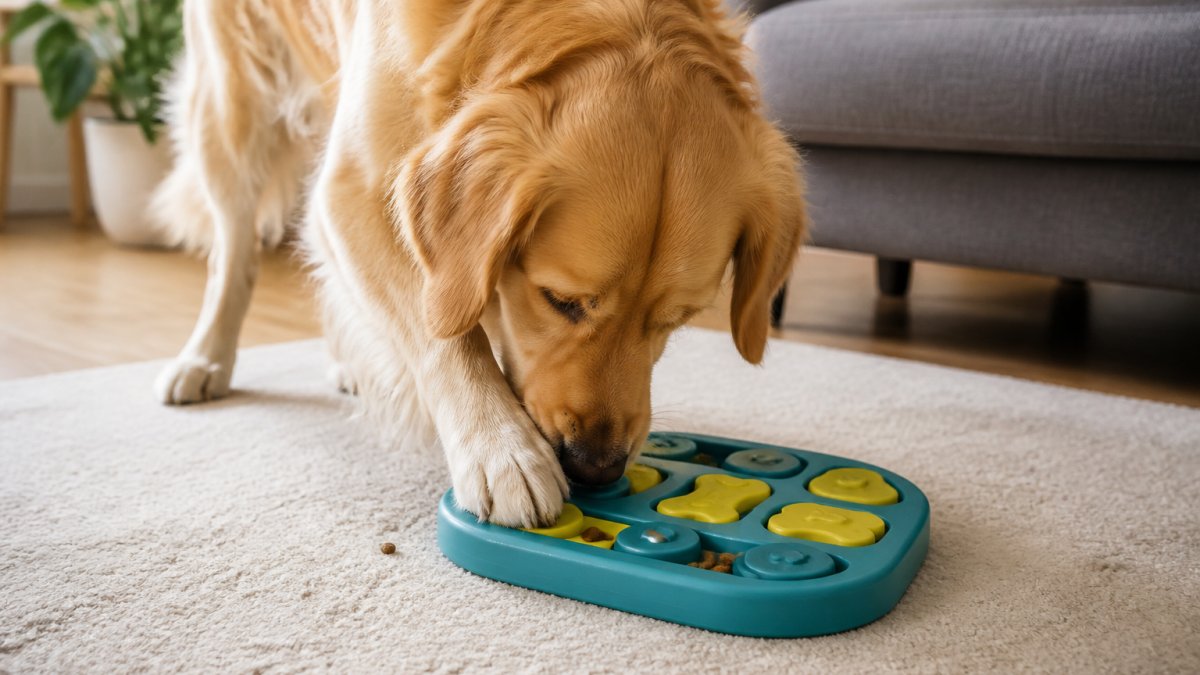
Your first puzzle feeder should be simple, large openings and few moving parts, so your dog can figure out how to get food out within a few tries.
Make the first experience successful: fill it with food your dog loves, show them where it comes out, and let them watch you put a treat in and remove it.
Build Difficulty Gradually
After your dog masters an easy feeder, introduce slightly harder ones at their pace.
Week 1-2: Use the easy feeder for one meal per day.
Week 3-4: Introduce a medium-difficulty feeder, keeping the easy one available too.
Week 5+: Add harder puzzles and rotate between difficulty levels.
Your dog will show you when they're ready. If they give up after a few minutes, it's too hard, move back to an easier version.
Food Puzzles for Dogs Who Are Not Food Motivated
Not every dog is food-driven; some prefer play, affection, or toys. A food puzzle won't work unless you adjust your approach.
Interactive Puzzle Ball – Fun-Filled Feeder for Smarter, Happier Pets →
Identify what motivates your dog:
- Loves toys? Use a puzzle feeder as a game, not a feeding tool.
- Prefers praise? Celebrate enthusiastically when they solve it.
- Social? Do puzzle time together, not alone.
Use high-value rewards:
- Skip regular kibble; use special treats your dog rarely gets, like small pieces of chicken, cheese, or apple.
- Rotate treats weekly; novelty keeps interest high.
Make it a game:
- Don't just hand over the feeder; play with it first and let your dog see you pull treats out.
- Engage with your dog while they work, your enthusiasm is contagious.
- Celebrate small wins, like figuring out one compartment.
Some dogs warm up to puzzles over time. If yours shows no interest after several tries, try sniff games, hide-and-seek with treats, or interactive toys that don't require food motivation.
Slowing Fast Eating With Slow Feeder Dog Bowls and Puzzle Toys
Fast eating is a common problem: gulping dogs can choke, vomit, or develop bloat. A puzzle feeder naturally slows eating because your dog can't inhale kibble when they must work for each piece.
Other ways to slow eating:
- Use a slow feeder bowl with ridges or obstacles
- Spread kibble across a large, flat surface
- Feed smaller portions more frequently
Watch for signs your dog is eating too fast:
- Finished meal in under 30 seconds
- Gulping or not chewing
- Vomiting shortly after eating
If your dog shows these signs, slow feeding becomes important for health, not just enrichment.
How to Prevent Boredom in Dogs Using Enrichment Strategies
Understanding how to keep dogs entertained with puzzle feeders is one tool. Preventing boredom requires variety, consistency, and a way to tell whether your plan is working.
Build a weekly enrichment rotation:
- Monday: puzzle feeder at dinner
- Tuesday: sniff game (hide treats in a blanket, box, or snuffle mat)
- Wednesday: interactive toy or training session
Session length and frequency by age and ability:
- Puppies: 5-10 minutes, several short sessions per day. Puppies tire quickly and lose focus; end on a success.
- Adult dogs: 15-30 minutes of combined mental and physical enrichment daily, split into two or three sessions.
- Senior dogs: 10-15 minutes, gentler puzzles, non-slip surfaces, and no jumping or standing on hind legs.
Measure whether enrichment is working:
- Engagement time: how long your dog stays with the feeder. Roughly 5-15 minutes is healthy for most adult dogs; under 2 minutes suggests the puzzle is too easy or not motivating.
- Eating pace: a puzzle feeder should stretch a meal from under 30 seconds to several minutes. If your dog finishes in under a minute, increase difficulty.
- Boredom behaviors: track destructive chewing, barking, digging, and pacing for one week before and after starting a routine. A reduction is a sign the plan is working.
Troubleshoot a dog who disengages or gets frustrated:
- If your dog ignores the feeder, try a higher-value treat, demonstrate by removing one piece, and reduce difficulty.
- If your dog becomes frustrated, stop the session, move back to an easier feeder, and end with a success.
- If your dog guards the feeder, feed in a separate space and consult a qualified trainer or veterinary behaviorist.
Change the environment:
- Rearrange furniture occasionally and introduce new smells (a blanket from a friend's house, a cardboard box with treats inside).
- Vary walking routes; new sights, sounds, and smells engage your dog's brain.
- Rotate toys weekly rather than leaving everything out at once.
Low-cost and DIY alternatives:
- Muffin tin with tennis balls on top: place treats in cups and cover with balls; your dog lifts the balls to get food.
- Cardboard box puzzle: put treats in a closed box with paper crumpled inside; supervise to prevent ingestion of cardboard.
- Snuffle mat or folded blanket: scatter kibble in the folds for nose-work.
| Enrichment Type | Time Needed | Frequency | Best For |
|---|---|---|---|
| Puzzle feeder | 5-15 minutes | Daily | All ages |
| Sniff games | 10-20 minutes | 3-4x weekly | Dogs who like to forage |
| Interactive toys | 15-30 minutes | Daily | High-energy dogs |
| Chew toys | 15-30 minutes | Daily | Dogs who need to chew |
| Training sessions | 10-15 minutes | Daily | Smart dogs, puppies |
Boredom often leads to destructive behavior. A dog with a job, even a small one, is happier and better behaved. But the job has to fit the dog. Use the measurements above to confirm your plan is working, and adjust rather than adding more toys.
Safety, Cleaning, and Food Hygiene
Puzzle feeders are safe when used correctly. But they need proper care.
Safety rules:
- Supervise your dog while using a puzzle feeder, especially at first
- Remove the feeder if your dog becomes frustrated or aggressive
- Check for loose parts or damage before each use
Cleaning:
- Wash after each use with warm soapy water; most puzzle feeders are dishwasher-safe, but check the label.
- Dry completely before refilling. Moisture breeds mold.
- Inspect for cracks or damage during cleaning. Replace if needed.
Food hygiene:
- Use fresh kibble or treats. Don't store food in the feeder between uses.
- In warm weather, don't leave a filled feeder sitting out for more than 30 minutes.
- If your dog has a sensitive stomach, stick with their regular food; new treats can cause digestive upset.
For older or mobility-limited dogs:
- Choose feeders that don't require jumping or standing on hind legs
- Place the feeder on a non-slip mat so it doesn't slide around
- Use easier puzzles and keep sessions shorter to avoid fatigue
FurEver Finds's Interactive Puzzle Ball is designed with durability and easy cleaning in mind. It's made of pet-safe materials that hold up to regular washing and daily use.
Frequently Asked Questions
Should dogs use slow feeders?
Yes. Slow feeders and puzzle feeders reduce eating speed, which improves digestion and prevents bloating. They also provide mental stimulation and reduce boredom-related behaviors. Dogs benefit most from using puzzle feeders several times per week as part of their regular routine, though daily use is safe for most healthy dogs. Consult your veterinarian if your dog has digestive issues or food-related anxiety.
How do I introduce my dog to a puzzle feeder?
Start with an easy puzzle feeder filled with highly motivating treats or kibble your dog loves. Place it on the floor and let your dog explore it without pressure. Reward any interaction with praise. Once your dog understands how to retrieve food from the feeder, gradually increase difficulty over several sessions. Most dogs catch on within 2-3 introductions.
What food can I put in a dog puzzle feeder?
Use your dog's regular kibble, small training treats, or low-sodium peanut butter (xylitol-free). Avoid anything sticky that could jam the mechanisms. For dogs not motivated by food alone, mix in high-value treats like freeze-dried meat or cheese. The Interactive Puzzle Ball from FurEver Finds works with dry food, small treats, or catnip, making it versatile for different motivation levels.
What should I do if my dog gets frustrated with a puzzle feeder?
Frustration usually means the puzzle is too difficult. Go back to an easier feeder or fill it with more accessible treats. Some dogs need 5-10 minutes to figure it out, but if your dog abandons it after that, the challenge level is too high. Break the puzzle into simpler steps by pre-loading some compartments or showing your dog how pieces move. Patience and positive reinforcement help dogs build confidence over time.
Puzzle feeders transform mealtime into enrichment. They slow eating, engage your dog's brain, and reduce boredom behaviors, all while your dog gets fed. Start with an easy feeder, fill it with food your dog loves, and watch your dog discover the joy of working for their meal. FurEver Finds offers thoughtfully selected puzzle toys designed to keep your dog engaged and happy. Explore our collection of enrichment toys today and give your dog the mental challenge they're missing.