


How to Select a Comfortable Harness for Small Dogs
Table of Contents
- Why Small Dogs Need a Different Harness Approach
- How to Measure a Dog for a Harness
- Step-In vs Overhead Dog Harness: Which Style Works Best
- Preventing Harness Chafing in Small Dogs
- Key Features to Look for in a Small Dog Harness
- Special Considerations for Senior and Post-Surgical Dogs
- Conclusion
- Frequently Asked Questions
Last Updated: September 22, 2026
Why Small Dogs Need a Different Harness Approach
A harness that works on a Labrador can hurt a Chihuahua. That's the core problem with how most owners shop for small dog gear. This guide from FurEver Finds explains how to select a comfortable harness for small dogs by focusing on anatomy, fit, and safety rather than fashion.
Tracheal Collapse Risk and Pressure Points
Tracheal collapse is a weakening of the windpipe that causes a harsh, honking cough (Tracheal Collapse). It's one of the most common respiratory problems in toy breeds.
Weight Distribution and Body Shape
Small dogs have short legs and deep chests relative to their size. A harness built for a bigger dog sits too low and rubs the shoulders.
How to Measure a Dog for a Harness
Learning how to measure a dog for a harness takes about two minutes. You need a soft tape, a treat, and a calm dog.
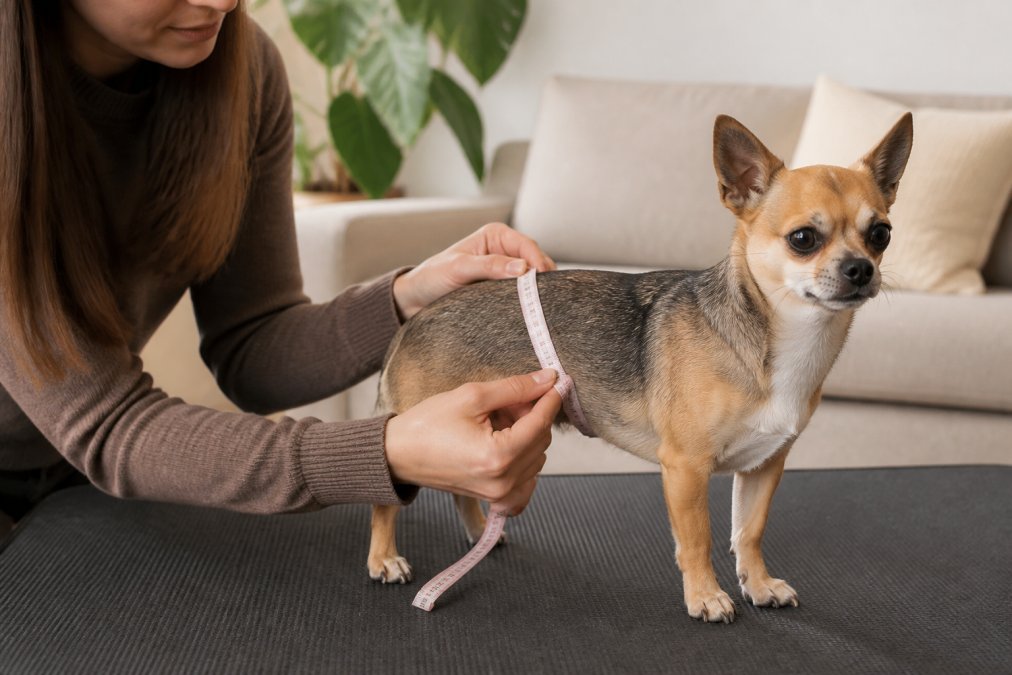
Girth, Neck, and Chest Measurements
Take three measurements:
- Girth: the widest part of the ribcage, just behind the front legs
- Neck circumference: the base of the neck, where a collar would sit
- Chest depth: from the top of the shoulder blade to the bottom of the sternum
Write each number down in inches or centimeters and keep it on your phone.
Using the Two-Finger Rule for Fit Checks
The two-finger rule is the fastest fit test there is. Slide two fingers under any strap. If they fit snugly, the strap is right. If you can't fit them, it's too tight. If you can fit four, it's too loose.
Step-In vs Overhead Dog Harness: Which Style Works Best
The step-in harness wins for most small dogs. Your dog steps into two loops, and you clip the buckle on top. No strap goes over the head.
Here's the trade-off:
| Feature | Step-In | Over-the-Head |
|---|---|---|
| Ease for nervous dogs | Easier | Harder at first |
| Speed to put on | Slower | Faster |
| Fit adjustment | More points | Fewer points |
| Best for | Senior or shy dogs | Calm, trained dogs |
Why Body Shape Decides More Than Style Preference
Most guides treat "small dog" as one body type. It isn't. A Dachshund's long back, a Pug's broad chest, and a Chihuahua's narrow ribcage each load a harness differently, and the style that fits one can chafe or slip on another.
- Deep-chested, narrow-waisted breeds (Whippets, Italian Greyhounds, some Miniature Pinschers): a step-in with a separate belly strap holds position better than an over-the-head that relies on a single girth strap.
- Long-backed breeds (Dachshunds, Corgis, some Shih Tzus): the harness must not bridge the spine. Look for a design with a short back panel and a chest plate that sits forward of the shoulder blades.
- Broad-chested, short-necked breeds (Pugs, French Bulldogs, Boston Terriers): over-the-head styles can drag across the throat on the way on. A step-in with a wide, padded chest plate avoids that pressure.
- Narrow-chested, escape-prone breeds (Chihuahuas, some Terriers): a second belly strap or a three-point design is the difference between a harness that stays on and one that ends up on the sidewalk.
The Weight-to-Strength Ratio Nobody Talks About
Small dogs are disproportionately affected by hardware weight. A metal D-ring and buckle set that feels trivial on a 70-pound dog can be a meaningful fraction of a 6-pound dog's body weight, and that extra mass shifts the harness off-center as the dog moves.
Adjustment Points and Where They Sit
Count the adjustment points, then check where they land on your dog:
- Chest strap: should adjust independently of the girth strap
- Girth strap: the primary fit point, just behind the front legs
- Shoulder straps: should not cross the point of the shoulder, where movement is greatest
- Belly strap (if present): should sit behind the ribcage, not across it
Matching Style to Temperament and Routine
Style choice also depends on how the harness gets used:
- Daily walks with a calm dog: over-the-head is fine and fast.
- Nervous or reactive dog: step-in avoids the head-handling that can trigger a freeze or snap.
- Senior dog with limited neck mobility: step-in, every time.
- Dog that pulls: front-clip attachment on either style gives you steering without throat pressure.
- Dog that slips harnesses: step-in with a belly strap and a snug girth.
Preventing Harness Chafing in Small Dogs
Preventing harness chafing in small dogs comes down to three things: material, fit, and hardware placement.
Breathable Mesh and Padded Chest Plates
Breathable mesh lets air reach the skin, which matters in warm weather. A padded chest plate cushions the sternum where pressure peaks.
Key Features to Look for in a Small Dog Harness
Four features separate a good small dog harness from a bad one: adjustment range, hardware, visibility, and leash attachment.
Adjustment Points and Hardware Quality
Look for at least four adjustment points. More straps mean a closer fit on an odd-shaped body.
- Reflective piping for early morning and evening walks
- Escape-proof design with a snug chest strap
- Reinforced stitching at every stress point
Reflective Piping and Leash Attachment Options
Leash attachment placement changes how your dog walks. A back-clip suits casual strolls. A front-clip discourages pulling by gently steering the chest.
Special Considerations for Senior and Post-Surgical Dogs
Senior and recovering dogs need support, not just containment. A harness with a lift handle lets you help a dog up stairs or into a car.
Why This Group Needs a Different Fit Logic
A harness for a healthy adult dog is designed to stay put during a walk. A harness for a senior or post-surgical dog has to do something harder: transfer your lifting force to the dog's body without pressing on a healing incision, a sore joint, or a weakened trachea.
That changes the fit priorities:
- Contact area matters more than snugness. A narrow strap concentrates lift force on a small patch of skin. A wide, padded chest plate spreads it.
- The lift point should sit over the sternum, not the belly. Lifting from the belly puts pressure on the abdominal wall and any incision there.
- The girth strap should clear the surgical site entirely. If the incision is on the flank or abdomen, a step-in with a high girth line is usually the only style that works.
- Hardware weight becomes a real factor. A dog recovering from surgery or managing arthritis has less muscle to carry the harness. Lighter buckles and D-rings reduce fatigue on short walks.
Matching the Harness to the Recovery Stage
Recovery isn't one phase. The harness that works on day two may not be the one that works on week four.
- Immediately post-op (first days home): minimize handling. A step-in with a single clip and a low chest plate lets you dress the dog with the fewest movements. Avoid anything that requires lifting a leg through a loop if the dog is sore.
- Early recovery (first two weeks): the dog may need help standing or steadying on stairs. A harness with a top lift handle positioned over the shoulders gives you a safe grip without pulling on the neck.
- Later recovery: as mobility returns, a standard step-in with a padded chest plate is usually enough. Keep the lift handle if stairs are still a challenge.
- Long-term senior management: prioritize light weight, wide padding, and a front-clip option for dogs that still pull despite arthritis.
Senior-Specific Fit Adjustments
Older small dogs often have a changed body shape, less muscle over the spine, a lower chest, and sometimes a thickened middle. A harness that fit at age five may not fit at age twelve.
- Re-measure girth every few months. Muscle loss along the spine can make a previously snug harness loose at the shoulders.
- Watch the armpits. Senior dogs with reduced mobility may not shift a sliding harness themselves, so chafing develops faster.
- Check the neck opening. A dog with tracheal collapse or a sensitive throat should have a harness that never contacts the windpipe, even briefly during dressing.
- Consider a front-clip attachment. It reduces pulling force on the throat and gives you more control if the dog stumbles.
What to Avoid
- Harnesses with a strap directly over a healing incision. No exceptions.
- Heavy hardware on arthritic dogs. The weight adds up over a walk.
- Over-the-head styles for dogs with neck pain or limited range of motion. The dressing motion itself can be painful.
- Tight girth straps on dogs with fluid retention or post-surgical swelling. Re-check fit daily during recovery.
A Note on Mobility Assistance
For senior dogs with hind-end weakness, a harness with a rear lift strap (sometimes sold as a mobility harness) lets you support the back end on stairs and into vehicles. These are different from standard walking harnesses and are worth considering separately if your dog needs help standing or rising.
Conclusion
Finding the right harness for a small dog takes ten minutes of measuring and one good fit test. Get the girth right, apply the two-finger rule, and pick a style that matches your dog's temperament.
Frequently Asked Questions
What is the most comfortable harness for a small dog?
A padded, step-in harness with breathable mesh and multiple adjustment points works well for most small dogs. Look for a front-clip option to reduce leash pulling and a back-clip for casual walks. The harness should sit low on the chest, away from the throat, to avoid pressure on the trachea. Always check the two-finger rule: you should fit two fingers between the harness and your dog's body at every adjustment point.
How do I know if my dog's harness is too tight?
Check for redness, fur loss, or chafing around the chest and armpits. Use the two-finger rule at every adjustment point. If you can't slide two fingers under the webbing, it's too tight. Also watch for changes in your dog's walking style: hesitation, scratching, or refusing to move can signal discomfort. A properly fitted small dog harness allows full shoulder movement without restricting the gait.
Should small dogs wear a harness or a collar?
Veterinarians generally recommend harnesses for small dogs because collars concentrate pressure on the neck, which can contribute to tracheal collapse. A well-fitted harness distributes force across the chest and shoulders. Collars are fine for ID tags, but for walks and leash attachment, a harness is the safer choice, especially for breeds prone to respiratory issues like Yorkies, Chihuahuas, and Pomeranians.
What type of harness is most comfortable for dogs that don't hurt their shoulders?
Look for a harness with a Y-shaped front that allows the shoulders to move freely. Avoid strap-only designs that cut across the shoulder joint. Padded chest plates and breathable mesh reduce friction. Step-in styles with wide, soft straps tend to work well for dogs with sensitive shoulders. Adjust the harness so the chest strap sits behind the front legs, not across them.