


Natural Ways to Manage Senior Dog Joint Pain at Home
Table of Contents
- Recognizing Senior Dog Arthritis Symptoms
- How to Help a Dog With Arthritis at Home: A Practical Plan
- Dog Joint Supplements for Arthritis and Joint Health
- Gentle Exercises for Dogs With Arthritis
- Tracking Pain and Mobility Progress
- When Home Care Is Not Enough: Red Flags and Next Steps
- Frequently Asked Questions
Last Updated: October 10, 2026
Recognizing Senior Dog Arthritis Symptoms
Stiffness after rest, reluctance to climb stairs, and limping are often the first signs of senior dog joint pain. Many pet owners miss these early signals, assuming aging dogs naturally slow down. The reality is different: arthritis is treatable at home when caught early.
Common signs include:
- Stiffness when getting up in the morning or after naps
- Reluctance to jump on furniture or climb stairs
- Limping or favoring one leg
- Difficulty walking on hard floors
- Swelling around joints
- Reluctance to play or go for walks
Dogs that improve most are those whose owners act as soon as symptoms appear. Early intervention makes a real difference in quality of life.
How to Help a Dog With Arthritis at Home: A Practical Plan
Managing senior dog joint pain at home works best with a phased approach: you'll see what works, avoid overwhelm, and know when to involve your veterinarian.
This plan divides home care into three tiers: immediate low-risk environmental changes (start now), supportive comfort upgrades (implement over 2-4 weeks), and supplements or therapies requiring veterinary guidance (discuss with your vet before starting).
Tier 1: Immediate Environmental Changes (Low Risk, High Impact)
Flooring and traction:
- Replace slippery hardwood or tile with non-slip rugs in high-traffic areas
- Add carpet runners on stairs to improve traction
- Use rubber-backed rugs in front of food and water bowls to prevent sliding
Layout optimization:
- Use baby gates to block off unnecessary stairs
- Keep food, water, and sleeping areas on the same level
- Remove obstacles and create a quiet rest zone with easy access
Temperature and comfort:
- Keep your home at a consistent, moderate temperature; cold worsens stiffness
- Provide blankets or heating pads (low setting) in winter; cool, shaded areas in summer
Timeline: Implement these changes within 1-2 days. You should notice improved mobility and reduced limping within 1-2 weeks.
Tier 2: Comfort Upgrades (Moderate Cost, Significant Comfort Gain)
These changes support your dog's joints during rest and movement. Implement them over 2-4 weeks as budget allows.
Bedding and support:
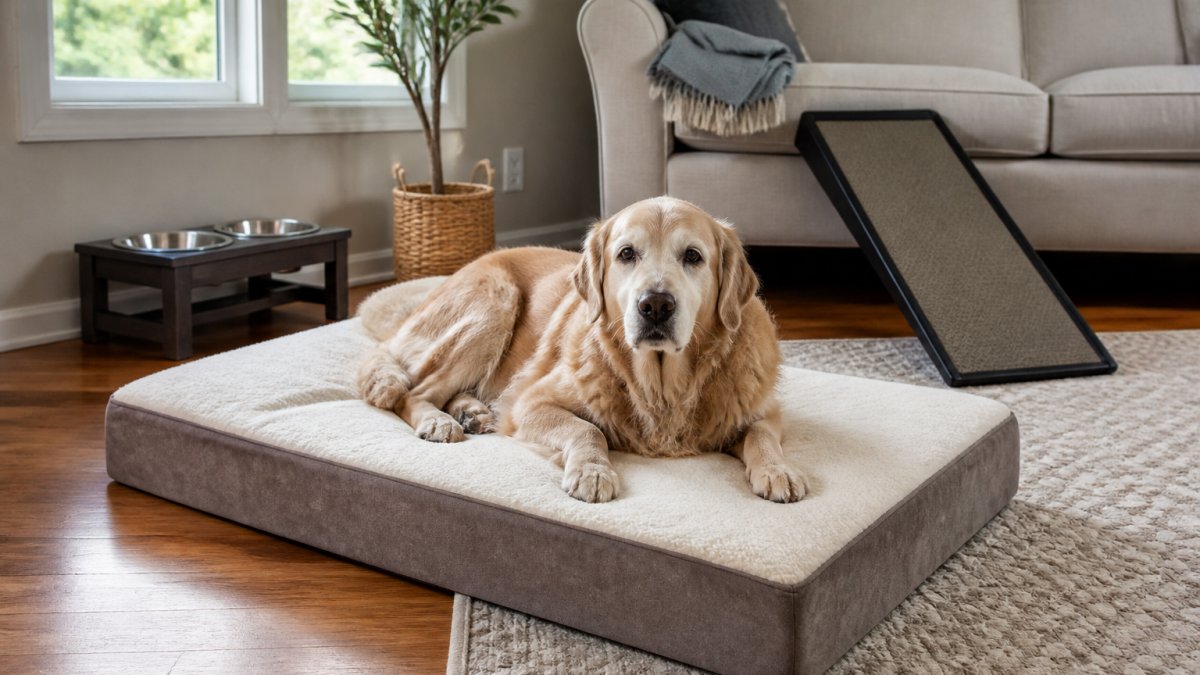
- Invest in an orthopedic bed with memory foam; your dog spends 12-18 hours daily resting, making this investment worthwhile for pain reduction and sleep quality
- Elevate the bed off cold floors using a raised platform to improve circulation
- Add extra blankets if a new orthopedic bed isn't immediately affordable
Stairs and ramps:
- Install ramps or stairs to prevent jumping, which sends shock through arthritic joints
- Use ramps for steep furniture and stairs for moderate heights
- Ensure non-slip surfaces to prevent sliding
Water and feeding:
- Elevate bowls 4-6 inches to reduce strain on neck, shoulders, and front legs
- Use non-slip mats under bowls
Timeline: Prioritize the orthopedic bed and ramps/stairs first, then add other upgrades as budget allows.
Tier 3: Supplements, Botanicals, and Therapies (Requires Veterinary Consultation)
These interventions require professional guidance because they may interact with existing medications, vary in quality and evidence, and need monitoring for side effects.
Before starting anything in this tier:
- Schedule a veterinary appointment to discuss pain level and mobility
- Bring a list of current medications or supplements
- Ask which supplements have the strongest evidence and request guidance on dosage, duration, and side effects
Common options your vet may recommend:
- Joint supplements (glucosamine, chondroitin, MSM)
- Omega-3 fatty acids for anti-inflammatory support
- Herbal remedies (turmeric, yucca root)
- Prescription pain medication
- Joint injections or other veterinary treatments
Timeline: Start Tier 3 interventions after 2-4 weeks of Tier 1 and 2 changes. This allows you to see what environmental and comfort changes alone can achieve, making it easier to assess whether supplements are actually helping.
Tier 1 + Tier 2 Baseline: What to Expect
Many dogs show significant improvement from environmental changes and comfort upgrades alone. You should observe:
- Reduced limping or stiffness within 1-2 weeks
- Improved willingness to move and play within 2-4 weeks
- Better sleep quality and less nighttime restlessness within 1 week of a new orthopedic bed
- Easier transitions (standing up, climbing stairs, jumping on furniture) within 2-3 weeks
If your dog shows little improvement after 4 weeks of consistent Tier 1 and 2 changes, or if pain worsens, consult your veterinarian before adding Tier 3 interventions. Worsening pain may indicate a condition requiring professional treatment beyond home care.
Dog Joint Supplements for Arthritis and Joint Health
Supplements work best alongside home modifications and exercise, supporting joints from the inside out but not replacing veterinary care.
Glucosamine and Chondroitin
Glucosamine and chondroitin help maintain joint structure and reduce cartilage breakdown. Give them at least 4-6 weeks before deciding if they're helping; results are steady rather than dramatic.
Omega-3 Fatty Acids and Anti-Inflammatory Support
Omega-3 fatty acids reduce inflammation and improve mobility. Use products formulated for dogs; your veterinarian can recommend the right dosage based on your dog's weight and condition.
Herbal Remedies and Natural Botanicals
Herbal remedies like turmeric (curcumin) and yucca root have traditional use for joint support. Start with one supplement at a time so you can tell what's actually helping.
Safety, Evidence, and Medication Interactions
Quality varies widely; some supplements contain fillers or interact with medications. Before starting any supplement, talk to your veterinarian, especially if your dog takes pain medication. Watch for digestive upset; if your dog develops vomiting, diarrhea, or loss of appetite, stop and call your vet.
Gentle Exercises for Dogs With Arthritis
Low-impact activity maintains joint flexibility and muscle strength without stressing arthritic joints. A structured, progressive routine prevents overexertion that can worsen pain.
Building a Low-Impact Exercise Routine
Start conservatively and progress slowly. Most dogs benefit from short, frequent sessions rather than one long activity. Here's a practical framework:
Week 1-2: Short walks on soft surfaces (5-10 minutes, twice daily), slow indoor walking, and gentle stretches. Stop if your dog limps or shows reluctance.
Week 3-4: Extend walks to 10-15 minutes, add controlled stair climbing (3-5 steps), and introduce gentle figure-eight patterns. Monitor for increased morning stiffness.
Week 5+: Vary terrain, add shallow-water wading, and incorporate gentle play. Adjust intensity if you notice limping or reluctance.
Critical Stopping Points
Stop or reduce exercise immediately if you observe:
- Limping during or after activity
- Reluctance to continue (sitting, lying down, or refusing to move)
- Increased stiffness the following morning
- Swelling around joints
- Yelping or signs of acute pain
- Difficulty rising after rest
These signs indicate your dog's current capacity has been exceeded. Rest for 2-3 days, then resume at a lower intensity.
Low-Impact Walking and Controlled Movement
Short, frequent walks are better than long hikes. A 10-minute walk twice daily is ideal for most senior dogs with arthritis.
Watch your dog's pace closely. If they're limping, moving slowly, or lagging behind, cut the walk short. You're looking for gentle movement, not exertion. The goal is maintaining range of motion and muscle tone, not building endurance or speed.
Pay attention to environmental factors: hot weather increases stiffness, cold weather may worsen pain. Adjust walk timing and duration seasonally. Many owners find early morning or late evening walks more comfortable for arthritic dogs in summer.
Swimming and Hydrotherapy
Water supports your dog's weight while they move, removing stress from arthritic joints while still allowing exercise. Swimming is one of the most effective activities for dogs with arthritis because it provides resistance (strengthening muscles) without impact (stressing joints).
Not every dog enjoys water, so introduce it gradually:
- Start in shallow water (ankle-depth) in a calm pool, lake, or kiddie pool
- Let your dog wade and walk in shallow water before attempting swimming
- Some dogs prefer walking in water to actual swimming; both provide excellent benefits
- Support your dog's rear end if they're nervous, but avoid holding them up entirely
- Sessions of 10-15 minutes, 2-3 times weekly, are typical
- Rinse your dog thoroughly after saltwater swimming to prevent skin irritation
If you don't have access to a pool, some veterinary clinics and rehabilitation centers offer hydrotherapy pools or underwater treadmills. These controlled environments allow precise exercise monitoring and are especially useful for dogs with severe mobility loss.
Massage and Therapeutic Touch
Gentle massage improves circulation and reduces muscle tension around arthritic joints. It also strengthens your bond and helps you notice changes in your dog's condition early.
Basic massage technique:
- Warm your hands first by rubbing them together
- Use slow, circular motions on affected areas (shoulders, hips, knees)
- Apply gentle pressure, your dog should relax, not tense up
- Avoid pressing directly on swollen joints; work the muscles around them
- Spend 5-10 minutes daily on affected areas
Massage doesn't cure arthritis, but it improves comfort, reduces anxiety, and helps your dog relax. Many owners find their dogs move more freely after a massage session.
For dogs with severe arthritis, consider professional canine massage therapy. A certified therapist can teach you techniques tailored to your dog's specific condition and identify problem areas you might miss.
Tracking Pain and Mobility Progress
You can't manage what you don't measure. Keep a simple record of your dog's mobility. Note what activities cause limping, how they move after rest, and whether stairs are getting easier or harder.
Use a scale from 1-10 to rate your dog's pain level each week. Track which interventions seem to help. This information guides your next decisions and helps your vet understand what's working.
Changes happen slowly. After 4-6 weeks of consistent home care, you should notice improvement. If your dog isn't improving, that's valuable information too. It tells you home care alone isn't enough.
When Home Care Is Not Enough: Red Flags and Next Steps
Home care helps many dogs, but some need additional veterinary treatment. Know the warning signs that professional help is necessary.
Contact your vet immediately if your dog:
- Can't move or is in severe pain
- Loses control of their hind legs
- Stops eating or drinking
- Shows signs of infection around joints
- Develops swelling that doesn't improve with rest
Your vet may recommend prescription pain medication, joint injections, or other treatments. These work alongside home care to give your dog the best quality of life.
Physical therapy with a veterinary specialist can also help. A therapist designs exercises tailored to your dog's specific condition and teaches you proper techniques.
Managing senior dog joint pain at home is achievable with the right approach. Start by modifying your environment and investing in supportive furniture like our Dog Stairs Ramp for Bed or Foldable 2-In-1 Dog Stairs to reduce joint strain.

Frequently Asked Questions
How do I know if my senior dog has arthritis or joint pain?
Common signs include stiffness when rising, reluctance to jump or climb stairs, limping, swelling around joints, and reduced mobility. Many senior dogs show signs after rest periods or in cold weather. If your dog avoids activities it once enjoyed or seems uncomfortable during movement, consult your veterinarian for an evaluation. Early recognition helps you start management strategies before pain becomes severe.
Are natural supplements like glucosamine and chondroitin safe for dogs with joint pain?
Glucosamine and chondroitin are generally considered safe for dogs and may help support joint health. However, quality varies significantly between brands, and some supplements can interact with medications. Always tell your veterinarian about any supplements you're giving your dog, especially if they're on pain medication or other treatments. Look for products with third-party testing and consult your vet before starting any new supplement regimen.
What are the best gentle exercises for a dog with arthritis?
Low-impact activities work best: short, slow walks on flat surfaces, swimming (if available), and controlled indoor movement. Avoid jumping, running, or activities on hard surfaces. Start with 10-15 minute sessions and adjust based on your dog's response. Massage and stretching can also help maintain flexibility. Always warm up gently before exercise and watch for signs of discomfort. Your veterinarian can recommend exercises tailored to your dog's condition.
When should I take my senior dog to the vet for joint pain instead of managing at home?
Seek veterinary care if your dog shows severe limping, inability to bear weight, signs of extreme pain, loss of appetite, or behavioral changes. If home modifications and gentle exercise don't improve mobility within a few weeks, or if pain worsens despite your efforts, professional evaluation is important. Your vet can rule out other conditions and discuss pain management options like medication or physical therapy that complement home care.