


Stop Destructive Chewing in Adult Dogs
Table of Contents
- Why Adult Dogs Develop Destructive Chewing Habits
- Dog Separation Anxiety Chewing: Recognizing the Signs
- Best Chew Toys for Aggressive Chewers
- How to Dog Proof Your Home and Restrict Access
- Physical Exercise and Mental Stimulation Strategies
- Supervision, Redirection, and Positive Reinforcement
- When to Consult a Veterinarian
- Frequently Asked Questions
Last Updated: September 23, 2026
Why Adult Dogs Develop Destructive Chewing Habits
Destructive chewing adult dogs display isn't random misbehavior, it's communication. Your dog is telling you something is wrong, whether that's boredom, anxiety, or a medical issue. Understanding the root cause is the only way to actually fix the problem instead of just managing the symptoms.
The good news: most cases are preventable and reversible once you identify what's driving the behavior.
Medical and Behavioral Root Causes
A veterinarian should always be your first stop if destructive chewing appears suddenly or intensifies. Medical issues like dental disease, nutritional deficiencies, or gastrointestinal problems can trigger compulsive chewing. Your vet can rule these out quickly.
Beyond health, the behavioral causes break into two categories. Boredom-driven chewing happens when dogs lack mental stimulation and physical exercise. They're not being destructive on purpose, they're just using the only entertainment available. Anxiety-driven chewing, by contrast, is a stress response. This type often happens when you leave the house or during thunderstorms.
The distinction matters because the fix is different. A bored dog needs more activity.
Breed-Specific Chewing Tendencies
Some breeds are hardwired to chew more than others. Retrievers, terriers, and hound breeds have strong oral fixations, it's genetic. They were bred to use their mouths to hunt and retrieve. An adult Labrador Retriever will always have a higher drive to chew than a Chihuahua.
Dog Separation Anxiety Chewing: Recognizing the Signs
Separation anxiety chewing looks different from boredom chewing. It's frantic, focused, and usually happens right after you leave or when you're about to leave. Your dog might target door frames, baseboards, or furniture near exits.
Best Chew Toys for Aggressive Chewers
Not all chew toys are created equal, and not all aggressive chewers have the same needs. Toy selection should match your dog's chewing style, breed tendencies, and the underlying cause of the behavior.
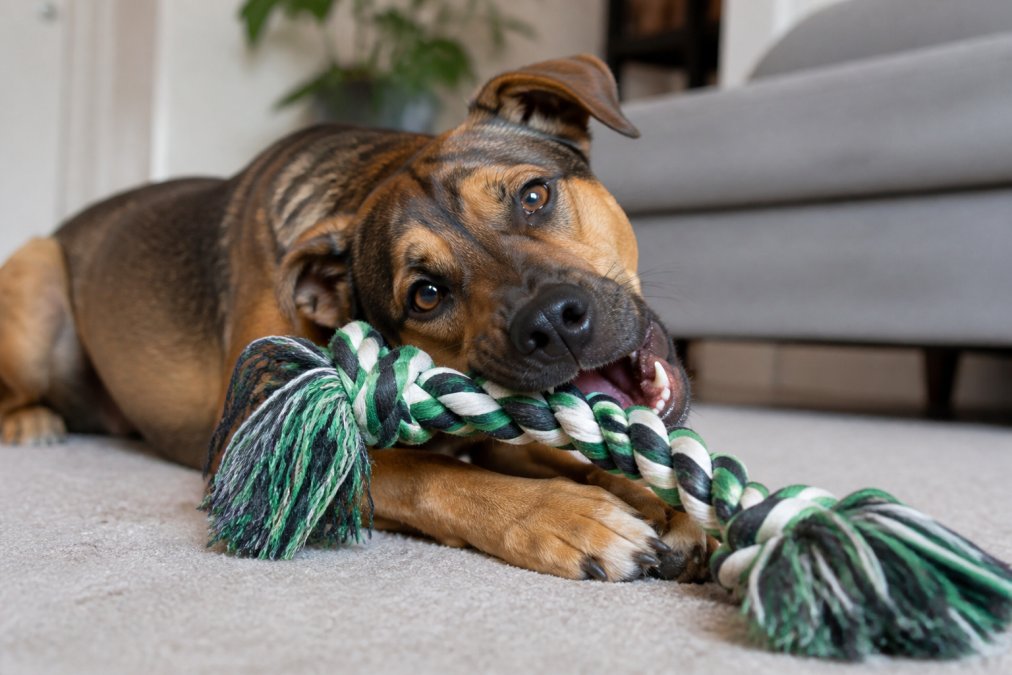
Matching toys to chewing style:
-
Rope toys and braided toys offer fibers that resist tearing and provide tactile feedback. They're ideal for dogs that like to grip and hold. Rope toys also support dental health by stimulating gums and helping remove plaque through friction. However, supervise rope toy use, some dogs swallow fibers, which can cause intestinal blockage. Remove the toy if it begins to fray significantly.

Dog Tug Rope Toy -
Natural chews (bully sticks, yak chews, bully springs) satisfy the chewing drive through sustained engagement. These are single-ingredient, digestible chews that break down slowly. Bully sticks are high in protein and low in fat, making them suitable for most adult dogs. Yak chews (also called Himalayan dog chews) are extremely hard and last longer than bully sticks, making them cost-effective for aggressive chewers. Monitor your dog while chewing; if pieces break off and are swallowed, they should pass without issue, but some dogs have sensitive digestion.
-
Rubber and nylon toys (like Kong Extreme or similar heavy-duty brands) are durable but carry a small risk. Some aggressive chewers can break off chunks, creating a choking hazard. These work best for dogs that chew but don't attempt to destroy the toy. Inspect regularly for cracks or missing pieces.
-
Interactive puzzle toys redirect chewing energy into problem-solving and mental engagement. These toys dispense treats as your dog manipulates them, combining physical and mental stimulation. This is critical for boredom-driven chewing, as it addresses the underlying cause (lack of mental engagement) rather than just providing an outlet. Puzzle toys work less well for anxiety-driven chewing, where the dog needs calming, not stimulation.
Matching toys to breed tendencies:
Breed-specific chewing drives require different toy types:
-
Retrievers and gun dogs were bred to carry and hold prey gently. They benefit from toys they can grip and carry, rope toys, soft rubber toys with handles, or toys designed to be held in the mouth. These breeds often prefer toys with texture and weight.
-
Terriers were bred to shake, kill, and tear prey. They need toys that allow shaking and tugging, rope toys, tug toys, or toys designed to be shaken. Terriers often enjoy toys with crinkle or squeaker sounds that mimic prey.
-
Hound breeds were bred to chase and hunt by scent. They benefit from toys that engage their nose, scent-based toys, puzzle feeders, or toys they can carry while sniffing. Chewing is secondary to their drive to hunt and track.
-
Companion breeds (toy breeds, companion spaniels) typically have lower chewing drives but may chew due to anxiety or boredom. They need softer, smaller toys that don't overwhelm their mouths. Puzzle toys and treat-dispensing toys work well.
Safety considerations:
Aggressive chewing can damage toys, creating hazards:
- Choking risk: Any toy that fragments should be removed immediately. Pieces swallowed can lodge in the throat or intestines.
- Intestinal blockage: Hard toys or toys that don't digest (rubber, nylon, plastic) can cause blockages if swallowed in large pieces. Monitor for vomiting, loss of appetite, or constipation.
- Dental damage: Extremely hard toys (like antlers or hard nylon) can crack teeth. If your dog has a history of dental problems, avoid very hard chews.
- Supervision: Always supervise your dog with new toys, especially during the first few sessions. This allows you to identify hazards before they cause injury.
Rotating toys to prevent boredom:
The role of toy selection in addressing root causes:
How to Dog Proof Your Home and Restrict Access
Destructive chewing adult dogs exhibit requires a different management approach than puppy-proofing. Puppies explore everything; adult dogs typically target specific items or areas. Your first step is identifying the pattern.
Assess the chewing pattern:
- Does your dog chew only when you're gone (separation anxiety)?
- Does chewing happen throughout the day (boredom or medical issue)?
- Are specific items targeted, furniture, baseboards, shoes, or is it random?
- Does chewing intensify at certain times (early morning, evening, during storms)?
Physical barriers and access restriction:
- Use baby gates or closed doors to block access to high-risk rooms when unsupervised
- Store shoes, socks, clothing, and small objects in closed containers or closets, these are high-value chew targets
- Move furniture your dog targets to areas they don't frequent, or use furniture covers as a temporary barrier
- Protect baseboards and door frames with plastic guards or deterrent tape; inspect these weekly for damage
- Keep remote controls, phone chargers, and other small items off tables and counters
Creating a designated chewing zone:
- Establish one area (a crate, pen, or specific room) where your dog is allowed to chew freely
- Stock this zone with appropriate toys rotated weekly to maintain novelty
- Reward your dog for using this space; make it the most rewarding place in the home
- Use this zone during times you cannot supervise, it prevents access to forbidden items and builds a positive association with confinement
Important: Deterrent spray safety. Many owners use bitter sprays (like capsaicin-based or citronella products) on furniture and baseboards to discourage chewing. However, not all deterrents are safe or effective. Some can irritate mucous membranes or cause allergic reactions in sensitive dogs. Others damage fabrics or leave stains. Before applying any spray:
- Test on a hidden area first to check for discoloration
- Read the label for toxicity warnings and ensure it's pet-safe
- Avoid sprays containing essential oils (tea tree, eucalyptus, citrus), which can be toxic to dogs
- Reapply frequently, most sprays lose effectiveness within hours
- Never spray directly on your dog's toys or mouth; the goal is to make forbidden items unappealing, not to punish the dog
Physical Exercise and Mental Stimulation Strategies
A tired dog is a well-behaved dog. This isn't a cliché, it's neurobiology. Exercise burns energy and reduces stress hormones that fuel anxiety.
Mental enrichment activities:
- Puzzle feeders and treat-dispensing toys
- Scent work and nose games
- Training sessions (5-10 minutes, multiple times daily)
- Hide-and-seek with toys or treats
- Rotating toy selection to maintain novelty
Supervision, Redirection, and Positive Reinforcement
Catching your dog in the act is your opportunity. Don't punish, redirect.
Redirection framework:
- Interrupt gently (no anger in your voice)
- Offer the appropriate toy
- Reward engagement with the right toy
- Repeat consistently
When to Consult a Veterinarian
Destructive chewing that appears suddenly, worsens rapidly, or doesn't improve with management warrants a vet visit. Your dog might have a medical issue you can't see.
Frequently Asked Questions
How do I know if my adult dog's destructive chewing is caused by separation anxiety or boredom?
Separation anxiety chewing typically occurs when you leave, intensifies when you prepare to depart, and involves focused destruction of doors, windows, or crates. Boredom-related chewing happens throughout the day regardless of your presence and targets whatever's accessible. Anxious dogs may also pace, whine, or show signs of distress. If chewing only happens when alone, separation anxiety is likely. If it's constant, lack of mental stimulation or physical exercise is the culprit. Consulting your vet helps rule out medical issues like dental pain or nutritional deficiencies.
What are the safest deterrent sprays for adult dogs, and do DIY options work?
Commercial deterrent sprays use bitter compounds like capsaicin or citronella to discourage chewing. These are generally safe when applied to furniture, not directly to skin. DIY options like vinegar or hot sauce are less reliable and may irritate your dog's mouth or eyes. The effectiveness of any deterrent depends on consistent application and pairing with positive reinforcement, redirecting your dog to appropriate chew toys when they approach forbidden items. Deterrents work best alongside environmental management and providing better chewing outlets; they're not a standalone solution.
How much physical exercise does an adult dog need daily to prevent destructive chewing from boredom?
Most adult dogs need 30 minutes to 2 hours of physical exercise daily, depending on breed, age, and energy level. High-energy breeds like Border Collies or Retrievers require closer to 2 hours, while calmer breeds may need 30-45 minutes. Beyond walks, incorporate fetch, swimming, or running. Exercise alone isn't enough, mental stimulation through puzzle toys, training sessions, and enrichment activities is equally important. Dogs that receive both physical and cognitive engagement show significantly fewer destructive behaviors. Start with your dog's current baseline and gradually increase activity to build stamina.
Do adult dogs grow out of destructive chewing, or is it a lifelong habit?
Adult dogs don't naturally outgrow destructive chewing the way puppies do during teething. However, the behavior can be modified through consistent training, environmental management, and addressing underlying causes like anxiety or boredom. Once a dog establishes a chewing habit, it becomes reinforced, the behavior feels rewarding because it relieves stress or provides stimulation. With intervention, most adult dogs can learn to redirect their chewing instinct to appropriate items within weeks to months. Without changes, destructive chewing typically persists or worsens over time, making early intervention critical.