


When to Use Anxiety Medication for Cats: A Vet-Guided Guide
Table of Contents
- Recognizing the Signs of Anxiety in Cats
- Common Triggers and Medical Conditions That Mimic Anxiety
- How to Calm an Anxious Cat Before Considering Medication
- When Anxiety Medication for Cats Becomes Appropriate
- Fluoxetine for Cats: What to Expect from Daily Medication
- Cat Sedatives and When to Use Them for Events
- A Practical Medication Trial and Monitoring Plan
- Conclusion
- Frequently Asked Questions
Last Updated: October 17, 2026
Recognizing the Signs of Anxiety in Cats
Anxiety medication for cats is a veterinary treatment option, not a first-line fix, and it belongs in the conversation only after you can name what you are actually seeing. This guide from FurEver Finds walks through the signs, the triggers, the non-drug steps worth trying first, and the point where a prescription becomes a reasonable next move.
Start with the body. Cats rarely announce stress with a meow.
Physical and Behavioral Red Flags
Watch for changes in litter box habits, appetite, grooming, and sleep. An anxious cat may over-groom a patch bald, hide for hours, or pace at night.
Behavior changes matter more than any single symptom. A cat that suddenly avoids the living room, hisses at a housemate, or stops using the box is telling you something changed.
Compulsive behaviors are a red flag. Repeated tail chasing, fabric sucking, and nonstop meowing point to distress that has been building.
- Hiding in closets or under beds for long stretches
- Spraying or missing the litter box
- Over-grooming to bare skin
- Pacing, yowling, or restless nights
- Flattened ears and a tucked tail when you approach
Situational vs. Chronic Anxiety
Situational anxiety shows up around a specific event: a vet visit, car travel, a thunderstorm, or fireworks. The cat is calm most other days.
Chronic anxiety is a baseline state. The cat is tense in a quiet house, startles at normal sounds, and never fully settles. This is the pattern that usually leads to a veterinary assessment.
Common Triggers and Medical Conditions That Mimic Anxiety
Before anyone writes a prescription, a veterinarian needs to rule out medical causes. This is the step most owners skip, and it is the one that matters most.
Several health problems look exactly like feline anxiety:
- Hyperthyroidism: restlessness, vocalizing, weight loss
- Dental pain: irritability, hiding, dropped food
- Arthritis: pacing, aggression when touched
- Vision or hearing loss: startling, clinginess
- Urinary disease: frequent box trips, crying
Environmental changes also drive anxiety triggers. A move, a new baby, a new pet, or a shifted work schedule can all set off behavior changes.
How to Calm an Anxious Cat Before Considering Medication
Most cats respond well to environmental enrichment and routine before drugs enter the picture. The goal of this phase is not to "try a few things", it is to build a documented baseline a veterinarian can use to judge whether non-drug treatment is working. Give each change at least two to four weeks before deciding it failed, and change one variable at a time so you can tell what helped.
Build the Environment First
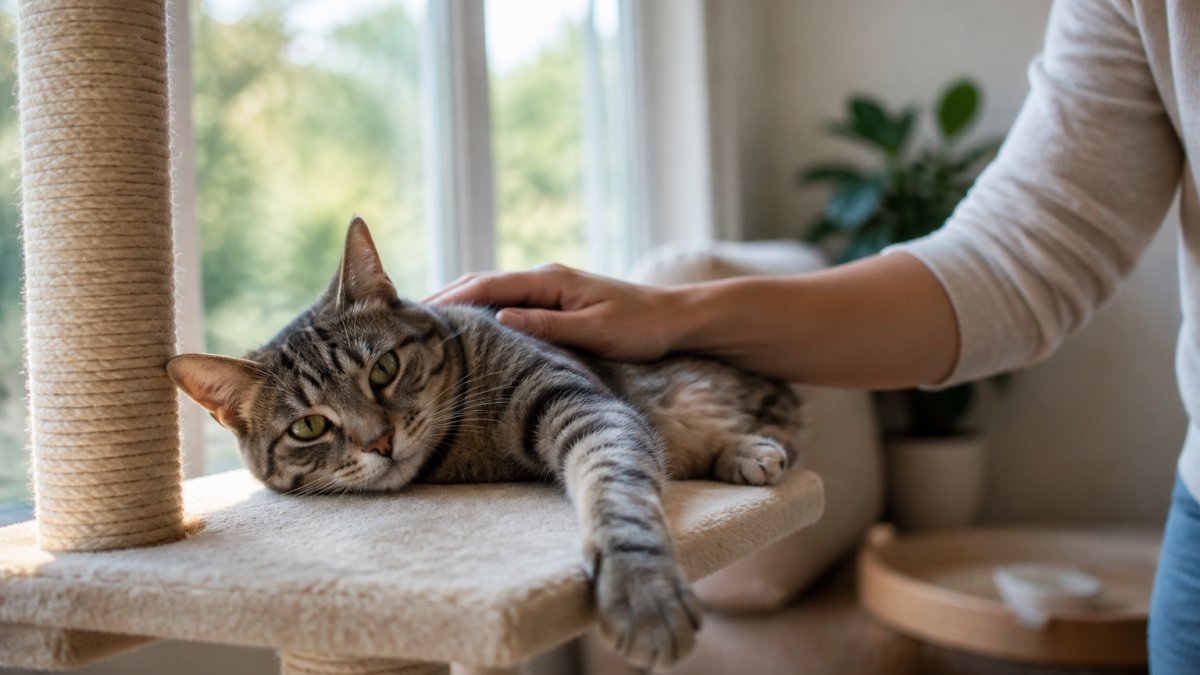
Start with the basics: a predictable schedule, a quiet room with a hiding spot, and vertical space to climb. Cats cope by controlling distance and elevation, so a cat tree near a window and a covered bed in a low-traffic room do more than most owners expect.
- Set up a window perch and scratching post
- Add puzzle feeders and rotating toys
- Use a pheromone diffuser in the cat's main room
- Keep meals and play at the same times daily
- Give the cat a quiet room during parties or repairs
- Provide at least one litter box per cat plus one, in separate locations
Behavior Modification That Actually Works
Behavior modification is the part owners skip, and it is the part that determines whether medication succeeds later. The mechanism is simple: a frightened cat learns safety through repeated, low-intensity exposure paired with something rewarding.
- Counter-conditioning: pair the trigger (carrier, doorbell, vacuum) with high-value food so the cat's emotional response shifts from fear to anticipation.
- Desensitization: start at a distance or volume the cat can tolerate, then increase gradually. If the cat hides or freezes, you moved too fast.
- Never punish: punishment suppresses the visible behavior and increases fear. A swat or a spray bottle teaches the cat that people are unpredictable.
- Keep sessions short: two to five minutes, several times a day, beats one long session.
Supplements and Natural Approaches
Natural supplements like catnip, valerian root, and L-theanine are popular, but evidence is limited and product quality varies. Pheromone products (synthetic feline facial pheromone diffusers and sprays) have the most consistent owner-reported benefit for mild situational stress. Talk to your vet before adding any supplement, especially if the cat takes other medication, and treat supplements as adjuncts, not substitutes, for behavior work.
When This Phase Is Not Enough
If four to six weeks of consistent enrichment and behavior work produce no measurable improvement, or if the cat is self-injuring, not eating, or soiling outside the box, that is the signal to move to a veterinary assessment. Medication is not a failure of this phase, it is often what makes this phase possible, because a cat too anxious to eat or play cannot learn.
When Anxiety Medication for Cats Becomes Appropriate
Anxiety medication for cats becomes appropriate when behavior and environmental changes have not worked, the cat's quality of life is clearly suffering, or the distress is severe enough to cause self-injury, appetite loss, or house soiling. A veterinarian makes that call after a full exam and bloodwork.
A Decision Framework for Pet Owners
Use this simple framework to prepare for the conversation with your vet:
| Situation | First Step | Medication Role |
|---|---|---|
| Mild, event-based stress | Behavior and environment changes | Event-based only, if needed |
| Daily distress, no medical cause | Full vet workup plus enrichment | Daily medication considered |
| Self-injury or appetite loss | Urgent vet visit | Medication often indicated |
| Sudden behavior change | Rule out medical causes first | Hold until diagnosed |
The key question is not "should we medicate" but "what is the least we can do that actually helps." For some cats, that is a diffuser and a routine. For others, prescription medication for cats is the difference between hiding all day and living normally.
Fluoxetine for Cats: What to Expect from Daily Medication
Fluoxetine is one of the most common daily anti-anxiety medications prescribed for cats. It is a selective serotonin reuptake inhibitor, meaning it raises serotonin levels in the brain to steady mood over time.
It is not a sedative. You will not see an instant change. Most cats need several weeks before the full effect shows, and your vet will adjust the dosage based on response.
What to know before starting:
- It is given daily, usually as a liquid or flavored tablet
- Full effect can take four to six weeks
- Never stop suddenly; taper under vet guidance
- Watch for appetite loss, lethargy, or unusual agitation
Cat Sedatives and When to Use Them for Events
Cat sedatives are short-term treatment for specific stressful events, not a daily solution. The distinction matters because daily anti-anxiety medication and event-based sedatives work differently, start working on different timelines, and are chosen for different problems. Mixing up the two is the most common mistake owners make.
Daily Versus Event-Based: A Use-Case Comparison
| Feature | Daily anti-anxiety medication | Event-based sedative |
|---|---|---|
| Best for | Chronic, baseline anxiety | Predictable short-term stress |
| Examples of use | Constant hiding, spraying, over-grooming | Car travel, vet visits, storms, fireworks |
| Onset | Weeks (often four to six) | Usually one to two hours |
| Duration | Ongoing, daily dosing | Single event, hours |
| Goal | Lower baseline anxiety so behavior work can succeed | Reduce fear and panic during a known stressor |
Common Event-Based Options
Common options include gabapentin and trazodone, plus fast-acting drugs like alprazolam in some cases. Your vet picks based on the event, the cat's health, and how long the effect needs to last. Gabapentin is frequently used for vet visits and travel because it reduces fear-related arousal; trazodone is often chosen when a longer window of calm is needed. None of these are available over the counter, and none should be given without a veterinary exam and a current weight.
Timing and Planning
Medication timing matters here. Most sedatives need to be given one to two hours before the event, so plan ahead and do a test dose at home before the day you actually need it.
- Car travel: give the dose before the carrier comes out
- Vet visits: call ahead and ask about timing and whether a test dose is advised
- Thunderstorms and fireworks: give at the first forecast, not the first boom
- Grooming or boarding: dose the night before if your vet advises
Safety Warnings
A Practical Medication Trial and Monitoring Plan
Treat the first prescription as a trial with clear checkpoints, not a permanent decision.
Week 1: Start the dose exactly as prescribed. Log appetite, litter box use, and any side effects.
Weeks 2 to 4: Keep behavior notes. Do not change the dose on your own.
Week 6: Recheck with your vet. Compare notes against your baseline.
Ongoing: Combine medication with behavior modification and environmental enrichment.
Track these signs of anxiety in cats against your starting notes:
- Hiding duration per day
- Litter box accidents per week
- Appetite and water intake
- Grooming changes
- Reaction to known triggers
Conclusion
Living with an anxious cat is exhausting, and guessing at treatment makes it harder. The path that works is a vet workup, honest behavior changes, and medication only when the evidence supports it.
At FurEver Finds, we stock the enrichment tools that make that first line of defense easier: puzzle feeders, cozy hideaways, and travel gear built for calm car rides.
Get started with FurEver Finds and give your cat a calmer, more comfortable daily life.
Frequently Asked Questions
What are the differences between clomipramine and fluoxetine for cats?
Both are prescription antidepressants, but they work differently. Fluoxetine is an SSRI that increases serotonin levels and is often used for ongoing anxiety, compulsive behaviors, and aggression. Clomipramine is a tricyclic antidepressant that affects serotonin and norepinephrine; it's sometimes chosen for separation anxiety or urine marking. Your veterinarian will pick based on your cat's specific symptoms, health history, and potential side effects. Never switch medications without veterinary guidance.
Is Prozac safe for cats?
Fluoxetine (the generic form of Prozac) is commonly prescribed for cats with anxiety, but it must be given under veterinary supervision. Cats metabolize it differently than humans, so the dose is much lower and requires careful adjustment. Never give human Prozac without a vet's prescription. Your veterinarian will assess your cat's liver and kidney function, monitor for side effects like appetite loss or lethargy, and adjust the dose as needed.
How long does anxiety medication take to work in cats?
Daily medications like fluoxetine typically take 4 to 6 weeks to reach full effect, though some cats show improvement in 2 to 3 weeks. Event-based sedatives work within 30 to 60 minutes but are not for daily use. Your vet will schedule follow-up visits to track progress and adjust the plan. Be patient and consistent with dosing; missing doses can delay results and cause withdrawal symptoms.
Can anxiety medication help a cat adjust to a new pet?
Yes, in some cases. If a cat shows severe, persistent anxiety when a new pet is introduced, short-term medication can reduce stress enough for behavior modification to work. However, medication is not a quick fix. It should be paired with gradual introductions, separate safe spaces, and environmental enrichment. Your vet can help decide if a temporary trial is appropriate.