


How to Choose Safe Puppy Toys: A 2026 Guide
Table of Contents
- Why Toy Safety Matters More Than You Think
- Step 1: Match the Toy to Your Puppy's Size and Breed
- Step 2: Understand Your Puppy's Chewing Style
- Step 3: Know Which Materials Are Safe (and Which to Avoid)
- Puppy Teething Toy Safety: What to Look For
- Durable Chew Toys for Aggressive Chewers: A Special Case
- Step 4: Inspect, Rotate, and Supervise
- Your Safe Puppy Toy Checklist
- Frequently Asked Questions
Why Toy Safety Matters More Than You Think
Choosing the wrong toy is one of the most common reasons puppies end up in the emergency vet. Beyond choking, many popular toys contain materials that can splinter, break into sharp pieces, or leach chemicals during aggressive chewing.
Safe puppy toys need to withstand your dog's specific chewing power while being free of toxic materials. At FurEver Finds, we curate every product with these safety standards in mind, because a toy your puppy destroys in minutes isn't just a waste of money, it's a hazard.
Step 1: Match the Toy to Your Puppy's Size and Breed
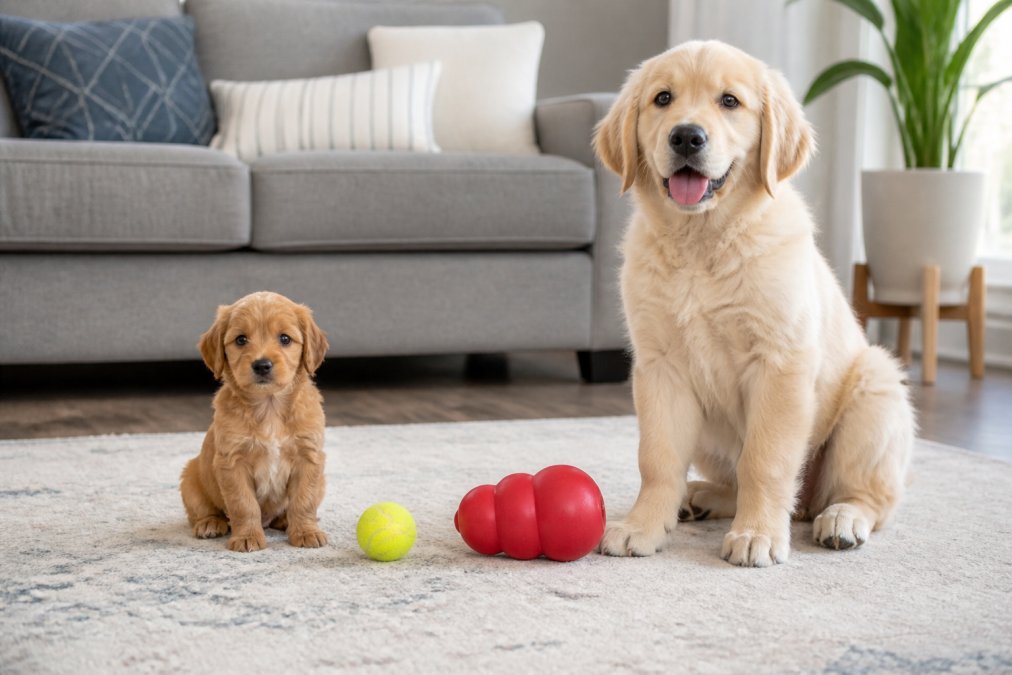
The first rule of toy selection is physics: a toy built for a 100-pound Labrador is dangerously hard for a 5-pound Chihuahua, while a toy sized for small breeds will be swallowed whole by a larger dog. Toy safety begins with matching the product to your puppy's expected adult size, not just their current weight.
Breed-specific tendencies matter as much as jaw size. Terriers are relentless shredders, retrievers need things to carry, and herding breeds often prefer toys they can chase and nip. Consider your puppy's breed traits when choosing between plush, rubber, and rope options.
Step 2: Understand Your Puppy's Chewing Style
Puppies generally fall into one of three chewing categories: light nibblers, moderate chewers, and aggressive destroyers. A light nibbler can enjoy plush toys for months, while an aggressive chewer will reduce the same toy to stuffing and squeaker parts in under an hour. Be honest about which category your puppy fits.
Watch how your puppy plays before you invest in a toy collection. Puppies that swallow pieces need firmer, single-piece toys without detachable parts like ribbons, buttons, or fluff.
Step 3: Know Which Materials Are Safe (and Which to Avoid)
Safe puppy toys are made from non-toxic, digestible-safe materials that won't splinter or fracture into sharp shards. High-quality natural rubber, thick cotton rope, and tightly woven fabrics are your safest bets. Look for toys labeled as non-toxic and free from BPA, phthalates, and lead, since puppies mouth everything and absorb chemicals through their gums.
The Chemical Safety Angle Most Guides Miss
Physical hazards like choking and splintering get most of the attention, but chemical safety deserves equal scrutiny. Puppies explore the world through their mouths, and their developing bodies are more susceptible to certain compounds than adult dogs.
Plasticizers and softening agents. Phthalates are commonly used to make PVC and other plastics flexible. The Consumer Product Safety Commission has restricted several phthalates in children's toys, and the same logic applies to puppy toys. Choose toys labeled phthalate-free, especially for teething puppies.
Bisphenol A (BPA). BPA appears in some hard plastics and the linings of certain chew toys. The FDA has raised concerns about BPA exposure in food containers, and while pet toys aren't regulated the same way, the precautionary principle suggests avoiding it.
Dyes and colorants. Bright colors attract puppies, but some synthetic dyes contain heavy metals or other contaminants. Look for toys using food-grade dyes or natural pigments. If a toy bleeds color when you rub it with a damp white cloth, that's a red flag.

Certification labels worth seeking. While no federal agency certifies pet toys specifically, third-party testing seals provide useful signals. Toys meeting ASTM F963 (the standard for children's toys) have undergone rigorous safety testing covering both chemical and physical hazards.
Materials That Fail the Safety Test
Avoid the materials that cause the most emergency visits: cooked bones that splinter, antlers and hooves that are hard enough to crack teeth, and cheap nylon that frays into sharp strands. Rawhide is especially dangerous because it softens into a gummy mass that can cause intestinal blockages.
Vinyl and PVC. Unlike natural rubber, vinyl often contains phthalates and can break down into sticky, hazardous pieces. If a toy has that distinctive chemical smell, leave it on the shelf.
Recycled rubber of unknown origin. While recycled rubber is eco-friendly, it can contain metal fragments or unknown chemical residues. Only choose recycled rubber toys from manufacturers that disclose their sourcing and testing.
Glow-in-the-dark additives. These toys often contain zinc sulfide or other phosphorescent compounds that are not meant for ingestion. The glow effect is fun, but the chemistry is questionable for a product designed to be chewed.
How to Verify Safety Claims
Manufacturers can say "non-toxic" without any testing to back it up. To verify claims, check whether the company publishes its material safety data sheets or lists specific third-party testing on its website. If a product page only says "premium materials" without specifics, that vagueness is itself a warning sign.
The FDA's guidance on substances in animal toys notes that while pet toys aren't pre-approved, manufacturers are responsible for ensuring their products don't contain harmful substances. When in doubt, contact the manufacturer directly and ask about phthalate content, BPA, and heavy metal testing. Companies that take safety seriously will have answers ready.
Puppy Teething Toy Safety: What to Look For
Puppy teething toy safety comes down to finding products that soothe sore gums without breaking down into swallowable pieces. During teething, which typically peaks between 12 and 24 weeks, puppies need something firm enough to provide counter-pressure but soft enough to flex.
The best teething toys are made from single-piece rubber or silicone that can be chilled in the freezer for extra relief. Avoid gel-filled teething toys that can rupture and leak, and skip anything with small nubs that might tear off under pressure. The American Veterinary Medical Association guidance on pet toy safety emphasizes that the right toy depends on your pet's size, chewing habits, and play style.
The Age-Based Toy Progression Most Guides Skip
Most puppy toy guides treat teething as a single phase, but your puppy's mouth changes dramatically in the first year. Matching toy firmness to dental development prevents ineffective soothing and dental damage.
Weeks 8-12: Baby teeth emerge. Your puppy has 28 deciduous teeth that are sharper but weaker than adult teeth. Choose very soft silicone or rubber toys that flex easily. Avoid anything that requires significant jaw pressure, as baby teeth roots are shallow and more easily dislodged.
Weeks 12-16: Active teething peak. This is when adult incisors and premolars begin pushing through, causing the most discomfort. Medium-soft rubber toys that can be frozen work well. Continue avoiding hard plastics or dense rubber that won't yield at all.
Weeks 16-24: Adult teeth emerging. Molars are coming in, and your puppy's jaw strength is increasing noticeably. Transition to medium-firm rubber toys that still have some give. Introducing adult-level hard chews too early can fracture immature molars.
Weeks 24-32: Adult dentition complete. By six to eight months, most puppies have their full set of 42 adult teeth. You can gradually introduce firmer chew toys, but avoid the hardest materials like antlers or dense nylon until your veterinarian confirms dental maturity, usually around 12 months.
Teething Toy Features That Actually Work
Freezable designs. Toys with a water-filled chamber that freezes provide longer-lasting relief than solid rubber. Always wrap a freezable toy in a thin cloth for the first few minutes to prevent tissue damage from extreme cold.
Textured surfaces. Grooves, ridges, and nubs massage gums and help clean emerging teeth. Look for varied textures on a single toy so your puppy can find the pressure point that feels best.
Size-appropriate shapes. During teething, puppies often prefer toys they can hold with their paws while chewing on one end. A bone or ring shape works better than a ball, which rolls away. Ensure the toy is long enough that your puppy can't swallow it whole.
What to Avoid During Teething
Ice cubes. While cold is soothing, whole ice cubes are hard enough to crack immature teeth. If you want to offer cold relief, use frozen washcloths or specially designed freezable toys instead.
Hard plastic bones. Many commercial "dental" bones are too hard for teething puppies. Apply the fingernail test: if you can't indent it, it's too hard.
Toys with removable parts. Teething puppies are indiscriminate chewers. Ribbons, fabric ears, or glued-on eyes can be pulled off and swallowed during a teething frenzy.
When to Transition Away from Teething Toys
Watch for signs that teething is winding down: reduced drooling, less interest in cold toys, and fewer attempts to chew on furniture. As adult teeth fully settle, gradually introduce more durable options while keeping one or two softer toys available for comfort. The transition isn't linear, and many puppies regress during stress or excitement.
Durable Chew Toys for Aggressive Chewers: A Special Case
For puppies that demolish everything, durable chew toys for aggressive chewers require a stricter standard. These puppies need toys made from high-density natural rubber or reinforced nylon designed for power chewers. The key is finding a toy durable enough to survive but not so hard that it damages teeth.
The ChewPal CuddleBuddy from our collection at FurEver Finds offers a plush option with a built-in squeaker that satisfies natural chewing instincts while promoting dental health, making it a smart choice for moderate chewers who need comfort and enrichment. For heavy chewers, the Dog Tug Rope Toy is crafted from durable, pet-safe materials built to withstand tugging and pulling while naturally cleaning teeth during play.

| Chewing Style | Best Toy Type | What to Avoid | Replacement Frequency |
|---|---|---|---|
| Light nibbler | Plush toys, soft rubber | Hard bones, antlers | Every 2-3 weeks |
| Moderate chewer | Rope toys, molded rubber | Rawhide, thin plastics | Weekly inspection |
| Aggressive chewer | High-density rubber, reinforced rope | Any toy with seams or stuffing | Daily inspection |
Step 4: Inspect, Rotate, and Supervise
Toy rotation is a safety practice disguised as an engagement strategy. Rotating toys every few days keeps your puppy interested while giving you a natural checkpoint to inspect each toy for wear. Look for loose threads, cracks, missing pieces, or exposed squeakers that signal the toy has reached the end of its safe life.
Supervision is non-negotiable for a new puppy. No toy is truly indestructible, and even the American Kennel Club's puppy toy safety recommendations stress that interactive play with your puppy is the best way to catch problems before they become emergencies. When you can't supervise, remove toys that could be destroyed and leave only the most durable options.
Your Safe Puppy Toy Checklist
Before you hit checkout, run through this final checklist. Every item should pass before you hand the toy to your puppy:
- Toy is too large to fit entirely inside your puppy's mouth
- Material is non-toxic and free from BPA, phthalates, and lead
- No small parts, ribbons, buttons, or eyes that can be pulled off
- Passes the fingernail test: not so hard it could crack teeth
- Matches your puppy's chewing style and expected adult size
- Single-piece construction for aggressive chewers
- No rawhide, cooked bones, antlers, or hooves
- You have a plan for regular inspection and replacement
The ASPCA's guidelines on choosing safe pet toys reinforces that the safest toy is one that matches your pet's individual needs and is used under supervision. Choosing safe puppy toys isn't complicated, but it does require paying attention to your puppy's habits and being willing to retire toys at the first sign of damage. Start with the right materials, match them to your puppy's chewing style, and stay consistent with inspection and rotation.
Frequently Asked Questions
What is the 7 7 7 rule for puppies?
The 7-7-7 rule is a training guideline, not a toy rule. It suggests your puppy should experience 7 different homes, meet 7 new people, and go on 7 new adventures within their first 7 weeks of life. While it focuses on socialization, it reminds you that new experiences, including new toys, should be introduced gradually. Add one new safe toy at a time so your puppy builds confidence without feeling overwhelmed.
What toys should puppies not have?
Avoid toys with small parts that can break off and become a choking hazard, like plastic eyes or buttons. Steer clear of cooked bones, antlers, and hard nylon blocks that can crack teeth. Also skip toys made with toxic materials or chemical dyes. For safe puppy toys, choose options labeled non-toxic and sized so they cannot fit entirely in your puppy's mouth.
How can I tell if a toy is the right size for my puppy?
A safe rule is that a toy should be too large to fit completely inside your puppy's mouth. This prevents accidental swallowing. For example, a toy that is about 1.5 times the width of your puppy's muzzle is a good starting point. As your puppy grows, re-check the size regularly. A toy that was safe at 8 weeks may become a choking hazard at 6 months.
How often should I inspect my puppy's toys for damage?
Give every toy a quick check before each play session and a thorough inspection weekly. Look for loose threads, torn fabric, exposed stuffing, or chunks missing from rubber toys. If you find damage, throw the toy away immediately. A torn toy can become a choking hazard or cause an intestinal blockage if swallowed. Replace worn toys promptly to keep playtime safe.
Every puppy deserves toys that are as safe as they are fun. At FurEver Finds, we select each product for quality you can trust, from enrichment toys that stimulate your puppy's mind to durable options that survive aggressive chewers. Our thoughtfully curated collection makes it easy to find safe, non-toxic toys your puppy will love, delivered fast so playtime can start right away. Get started with FurEver Finds and give your puppy the safe, joyful playtime they deserve.
This article was written using GrandRanker