


Signs Your Dog Needs a More Durable Toy
Table of Contents
- Signs Your Dog Needs a More Durable Toy
- Best Toys for Aggressive Chewers
- Safety Risks of Damaged Dog Toys
- How to Choose Safe Dog Toys
- Interactive vs. Solo Play Toys
- Building a Rotation Strategy
- Conclusion
Last Updated: August 26, 2026
Signs Your Dog Needs a More Durable Toy
Your dog's toys take a beating. There's a difference between normal wear and a sign that your dog has outgrown what you're offering. A toy with visible stuffing, frayed edges, or cracks in hard materials has crossed into territory where your dog could ingest pieces that cause serious problems. This guide from FurEver Finds breaks down exactly what to look for, how to assess your dog's chewing style, and what to do about it.
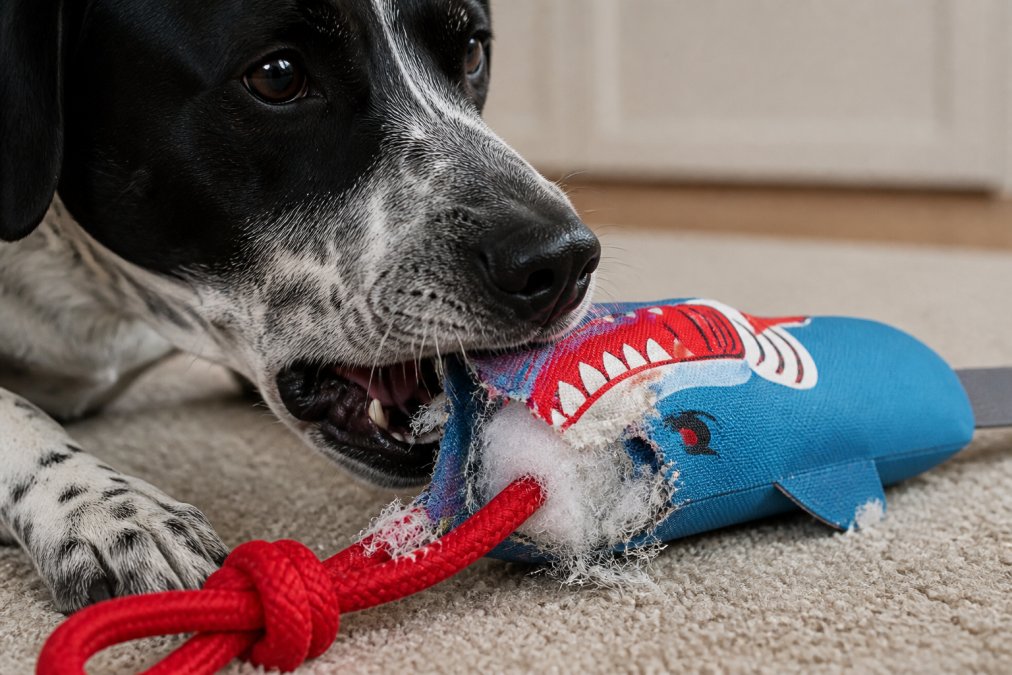
Visible Wear and Tear
Inspect toys every couple of weeks for specific damage patterns. Frayed strings and loose stitching are the first red flags. Dogs don't distinguish between rope they're supposed to chew and loose threads they shouldn't swallow. Unraveling seams shed pieces into your dog's digestive system, and stuffing ingestion can lead to blockages requiring surgery (peer-reviewed research).
Cracks in rubber or nylon bones indicate the material is degrading and will splinter. Run your fingers along cracked areas; if you feel rough edges, the toy needs to go. Persistent odor despite washing signals bacterial or mold colonization, a health risk particularly for dogs with sensitive stomachs. Missing pieces are non-negotiable; remove the toy immediately.
Behavioral Red Flags
Excessive destructive behavior focused on one toy type signals your dog has outgrown that material's durability. If your dog demolishes plush toys in days but leaves rubber toys alone, plush isn't durable enough for your dog's chewing intensity.
Boredom with soft toys is another indicator. Aggressive chewers who lose interest in plush toys after minutes might be frustrated because it's too easy to destroy. These dogs need the mental challenge and physical resistance of truly durable materials. Mouthing and nipping at toys without active play suggests your dog is looking for something more substantial to withstand extended, low-intensity chewing.
Best Toys for Aggressive Chewers
Aggressive chewers need toys engineered for durability. Rubber toys are the gold standard. Natural rubber and reinforced synthetic rubber can handle heavy chewing without splintering or degrading quickly (the FDA). Kong toys and similar options are designed with this exact use case in mind.
Ballistic fabric toys use the same material as military and law enforcement equipment, built to resist tearing and shredding. Dogs can chew on ballistic fabric toys for extended periods without creating loose threads or ingestion risks.
Nylon bones offer a different approach for dogs who want something to work at over time. Quality nylon bones are formulated to break down slowly into small, digestible pieces rather than splintering (aafco.org). Look for bones labeled as digestible or designed specifically for heavy chewers.
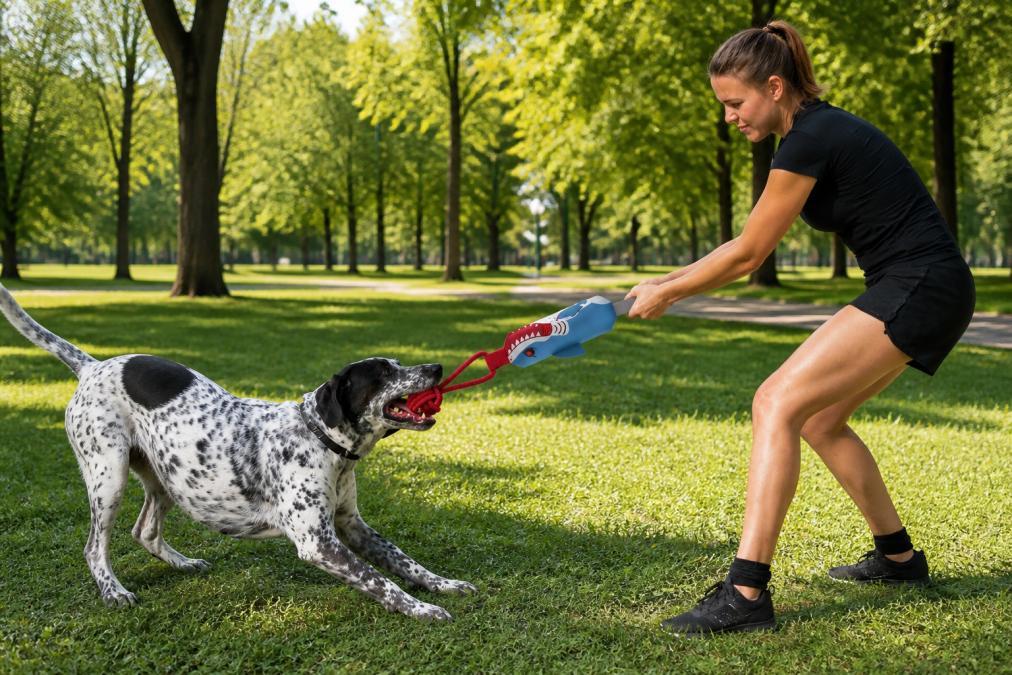
The Dog Tug Rope Toy from FurEver Finds is crafted from durable, pet-safe materials designed to withstand tugging, pulling, and chewing while helping clean your dog's teeth naturally. At $56.99, it's an investment in a toy that will last through multiple play sessions.

For dogs who need something to work on over longer periods, the 6 Inch Medium Size Bully Sticks from FurEver Finds offer a natural chewing outlet. High in protein and low in fat, they provide both nutritional value and extended chewing satisfaction. At $69.58 for a 25-count bulk package, they give your aggressive chewer a rotating supply of safe, digestible chewing material.
Safety Risks of Damaged Dog Toys
Damaged toys create genuine health risks. Ingestion of toy materials is the primary concern. Stuffing from plush toys, strings from rope toys, and fragments from degraded rubber or nylon can lodge in the digestive tract. In mild cases, this causes vomiting or diarrhea. In severe cases, it causes intestinal blockage requiring surgical removal.
Choking hazards emerge when pieces are large enough to lodge in the throat. Small squeakers, plastic pieces, or chunks of rubber are all risks. Cuts and injuries to the mouth and gums occur when dogs chew on toys with sharp edges or splinters. Bacterial and mold contamination develops in toys that aren't cleaned regularly or retain moisture.
How to Choose Safe Dog Toys
Material Matters
Natural rubber is safer than cheap synthetic rubber because it degrades predictably without splintering. High-quality synthetic rubber is reinforced and designed to resist tearing. Ballistic fabric is engineered to resist tearing and shredding, making it ideal for aggressive chewers.
Avoid toys with small decorative elements like plastic eyes or bells unless permanently secured. Similarly, avoid toys with multiple layers of different materials stitched together; when one layer fails, the others follow quickly. Surface-washable toys are a practical advantage, extending toy life and keeping them clean.
Size and Supervision
A toy should be large enough that your dog can't fit the entire thing in their mouth and swallow it. For a large dog, that means toys at least 3-4 inches in diameter.
Supervision matters more than toy design. An aggressive chewer left alone for hours will do more damage than the same dog playing under your watch. Remove toys from rotation when you're not home to prevent worst-case scenarios where your dog has unlimited time to destroy them.
Interactive vs. Solo Play Toys
Interactive toys are designed for play between you and your dog: tug toys, fetch toys, toys you throw or move. These benefit from the engagement and structure your participation provides. Your dog focuses on interaction with you, not destroying the toy. Interactive play also gives you real-time feedback about toy condition.
The Dog Tug Rope Toy works exceptionally well for interactive play because it's engineered to withstand actual tug-of-war stress. Interactive toys tend to last longer because play is structured and supervised.
Solo play toys are what your dog chews independently: long-lasting chews, puzzle toys, toys left for self-directed play. These need to be dramatically more durable because your dog has unlimited time to work on them. A solo play toy appropriate for an aggressive chewer needs to withstand 30 minutes of work without creating damage.
Building a Rotation Strategy
Toy rotation extends toy life and keeps your dog engaged. Divide your dog's toys into groups of 3-4. Leave one group out for a week, then rotate to the next. Toys put away get a break, extending their lifespan. When rotated back in after a week, they feel new to your dog.
For aggressive chewers, rotate toys every 3-5 days rather than weekly. More frequent rotation keeps their interest high and reduces the risk that any single toy gets destroyed before you notice damage. Include both interactive and solo toys in your rotation to ensure different types of mental and physical stimulation.
Conclusion
Recognizing when your dog needs a more durable toy is about preventing problems rather than reacting to them. Watch for visible damage like frayed seams, cracks, and persistent odor. Pay attention to your dog's behavior; if they're demolishing certain toy types or ignoring others, that's information about what will hold up to their chewing style.
FurEver Finds curates premium pet toys specifically designed for dogs who are hard on their gear. The Dog Tug Rope Toy and bulk Bully Sticks offer durable alternatives to toys that fall apart in days. With next-day delivery for orders placed by 12 PM, you can have replacement toys on your doorstep before your dog destroys their current rotation. Start with a rotation strategy, inspect toys regularly, and choose materials built to last.

Frequently Asked Questions
Q: What are the signs that a dog toy is unsafe?
A: A toy becomes unsafe when it shows frayed strings, loose stitching, cracks, splinters, or pieces small enough to be swallowed. If stuffing is exposed, squeakers are torn out, or the toy has a persistent odor indicating mold, it's time to discard it. Any toy with sharp edges or loose parts poses a choking hazard or ingestion risk and should be removed immediately.
Q: How do I choose the right toy for an aggressive chewer?
A: Select toys made from durable materials like ballistic fabric, reinforced rubber, or thick nylon bones designed to withstand heavy chewing. Look for toys labeled for aggressive chewers with minimal stuffing or squeakers that can be destroyed. Supervise play initially to assess your dog's chewing habits, and choose toys appropriately sized for your dog to prevent choking hazards. Interactive toys and rope toys like the Dog Tug Rope Toy provide both mental stimulation and a safe outlet for destructive behavior.
Q: How often should you replace dog toys?
A: Replace toys as soon as visible wear and tear appears, not on a fixed schedule. Heavy chewers may need replacements every few weeks, while light chewers might use toys for months. Rotating toys helps extend durability and maintains your dog's interest, reducing boredom-related destruction. Inspect toys weekly for damage, and discard any showing signs of fraying, cracks, or loose pieces immediately to prevent ingestion risk.
Q: Can any dog toy truly be indestructible?
A: No toy is completely indestructible, but some are far more durable than others. Heavy-duty toys made from ballistic fabric, reinforced rubber, and nylon bones withstand aggressive chewing far longer than plush toys. Even durable toys eventually show wear and tear, which is why regular inspection and rotation are essential. Pairing durable toys with appropriate supervision and mental stimulation through interactive play significantly reduces destruction and extends toy lifespan.
This article was written using GrandRanker