


Safe Indoor Plants for Puppy Owners: 2026 Guide
Table of Contents
- Non-Toxic Indoor Plants for Dogs: 10 Puppy-Safe Options
- Plants Toxic to Dogs: What Puppy Owners Must Avoid
- How to Keep Dogs Away from Plants: Practical Strategies
- Is Money Tree Safe for Dogs? What You Need to Know
- What to Do If Your Puppy Eats a Houseplant
- Puppy-Proof Plant Selection by Care Conditions
- Conclusion
- Frequently Asked Questions
Last Updated: October 14, 2026
Non-Toxic Indoor Plants for Dogs: 10 Puppy-Safe Options
Bringing home a puppy means rethinking everything, including your houseplants. If you are searching for safe indoor plants for puppy owners, the good news is that plenty of beautiful safe indoor plants exist. The ASPCA's toxic and non-toxic plant database is the gold standard for checking any plant before it enters your home.
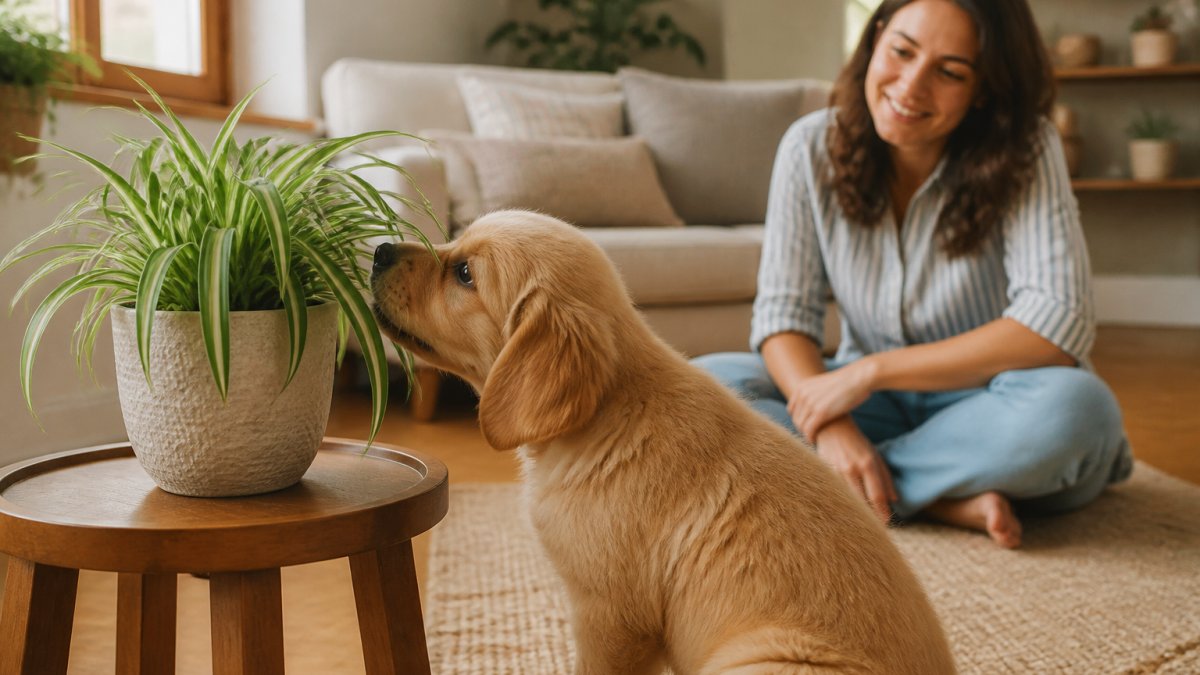
**1.
2. Areca Palm (Dypsis lutescens) A feathery palm that adds a tropical feel.
3. Bromeliad (Bromeliaceae) A colorful, low-maintenance plant with a bold center rosette.
**4.
5. African Violet (Saintpaulia) A compact bloomer with fuzzy leaves.
6. Money Tree (Pachira aquatica) A braided-trunk plant often given as a gift.
7. Watermelon Peperomia (Peperomia argyreia) A small plant with striped, watermelon-like leaves.
**8.
9. Hoya (Hoya spp.) A trailing plant with waxy leaves and star-shaped flowers.
**10.
| Plant | Light Needs | Watering | Beginner-Friendly? |
|---|---|---|---|
| Spider Plant | Bright, indirect | Weekly | Yes |
| Areca Palm | Bright, indirect | Regular | Yes |
| Bromeliad | Bright, indirect | Occasional | Yes |
| Orchid | Bright, indirect | Weekly soak | Moderate |
| African Violet | Bright, indirect | Consistent | Moderate |
| Money Tree | Low to bright | Infrequent | Yes |
| Watermelon Peperomia | Medium, indirect | When drooping | Yes |
| Ponytail Palm | Bright | Rare | Yes |
| Hoya | Bright, indirect | When dry | Yes |
| Succulents | Bright | Rare | Yes |
Plants Toxic to Dogs: What Puppy Owners Must Avoid
Understanding why a plant is toxic determines how fast you need to act.
Calcium oxalate plants (mouth and throat irritants) These plants contain microscopic, needle-shaped crystals called raphides.
- Peace Lily (Spathiphyllum), a common gift plant with white blooms. Symptoms: drooling, pawing at the mouth, vomiting, and lip or tongue swelling.
- Pothos (Epipremnum aureum), the trailing "devil's ivy" found in nearly every beginner collection. Mouth irritation, drooling, and vomiting.
- Philodendron (Philodendron spp.), including heartleaf and split-leaf varieties. Same oxalate irritation as pothos.
- ZZ Plant (Zamioculcas zamiifolia), often marketed as indestructible, a common low-light pick. All parts contain oxalate crystals, and the sap irritates skin.
- Dieffenbachia (Dieffenbachia spp.), called dumb cane for the swelling it causes. Severe mouth and throat swelling is possible.
- Elephant Ear (Colocasia and Alocasia spp.), large ornamental leaves especially tempting to a puppy. Among the more painful oxalate reactions.
Saponin and irritant-sap plants These cause gastrointestinal upset and sometimes skin irritation rather than immediate mouth pain.
- Aloe vera, vomiting and diarrhea in dogs; the latex layer under the skin is the main irritant.
- Rubber Plant (Ficus elastica), milky sap irritates skin and mouths. Ingestion can cause drooling, vomiting, and mouth pain.
- Jade Plant (Crassula ovata), a popular succulent toxic to dogs, causing vomiting, depression, and incoordination.
- Snake Plant (Dracaena trifasciata), often listed as mildly toxic. Saponins cause nausea, vomiting, and diarrhea.
Severe and life-threatening plants A small number of houseplants cause organ damage rather than stomach upset.
- Sago Palm (Cycas revoluta), highly dangerous, especially the seeds. Even small amounts can cause serious liver failure. Most veterinarians single this out as the worst-case scenario for a curious puppy.
- Oleander (Nerium oleander), toxic in all parts, including dried leaves. Affects the heart.
- Lily of the Valley (Convallaria majalis), cardiac effects from a single chewed leaf.
- Kalanchoe (Kalanchoe spp.), a common flowering succulent that can cause heart rhythm changes in addition to stomach upset.
A note on "non-toxic" versus "harmless" The plants in the safe list earlier are non-toxic, meaning they do not contain a known poison, but they are not food. A puppy that eats a large volume of any plant, safe or not, can still vomit or have diarrhea from the bulk and fiber. The distinction matters when deciding whether to call the vet: a chewed spider plant leaf is wait-and-watch, while a chewed sago palm frond is an emergency.
Common look-alikes that trip people up
- "Palm" is not a safety category. Areca and ponytail palms are safe; sago palm is not.
- "Succulent" is not a safety category. Haworthia and echeveria are generally considered safe; jade and kalanchoe are not.
- "Lily" is not a safety category. Peace lily is an oxalate irritant; true lilies like lily of the valley are far more dangerous.
How to Keep Dogs Away from Plants: Practical Strategies
Prevention beats treatment, but generic advice like "put plants up high" misses how puppies behave.
Start with the puppy, not the plant Before deciding where a plant goes, watch your puppy for a few days:
- Mouth-and-carry puppies pick up leaves, dropped soil, and fallen petals. For these dogs, the floor is the danger zone, not the shelf.
- Diggers go straight for the pot. Loose potting mix, especially fresh mix with fertilizer beads, gets scattered and eaten.
- Tippers push pots with their noses or paws. A tall, narrow pot on a low stand is an invitation.
- Climbers and jumpers will reach a windowsill if there is furniture nearby to launch from.
Match your strategy to the pattern you see, not to a generic checklist.
- Living room: Where the puppy spends the most unsupervised time. Use hanging planters, wall-mounted shelves above tail height, or tall, heavy floor pots in corners the puppy does not patrol. Avoid low coffee-table plants during teething.
- Bedroom: If the puppy sleeps in a crate or pen, plants inside the pen are off-limits. Plants on a dresser or high windowsill are usually safe. Avoid trailing plants near the bed, where a vine can dangle within reach.
- Kitchen: The biggest risk is not the plant, it is the fertilizer, pest spray, and plant food stored under the sink. Keep all of it in a latched cabinet; a puppy that gets into liquid fertilizer can have serious gastrointestinal symptoms.
- Bathroom: Humidity-loving plants do well here, but puppies are often left here briefly. A closed door solves the problem; if the door stays open, move plants to a high shelf.
- Home office or entryway: High-traffic, low-supervision areas. Wall-mounted planters and ceiling hooks work well. Floor plants should be in heavy, tip-resistant pots.
Elevation options that actually work
- Ceiling hooks and macrame hangers for trailing plants like pothos, hoya, and spider plant. Hang high enough that a jumping puppy cannot reach the lowest leaf.
- Wall-mounted shelves at least four feet off the floor, with no climbable furniture beneath.
- Tall plant stands with a wide, weighted base. A stand that wobbles when you bump it will not survive a puppy.
- Closed cabinets with glass doors for small, high-value plants, the only truly puppy-proof option.
- Baby gates to close off a plant room during teething, the simplest, most reliable solution for a determined chewer.
Protect the soil, not just the leaves Most plant-safety guides stop at leaf toxicity, but growing materials are a real risk.
- Fertilizer: Many granular and liquid fertilizers are not pet-safe, and slow-release beads look like kibble to a digging puppy. Use pet-safe formulations, or top-dress pots with stones too large to swallow.
- Pest treatments: Systemic insecticides are absorbed into the plant, so a chewed leaf carries the pesticide. Neem oil and insecticidal soap are lower-risk, but read the label and keep treated plants out of reach until dry.
- Potting mix: Some mixes contain perlite, vermiculite, or moisture-retention polymers that can cause blockages if swallowed in quantity. Cover exposed soil with a fitted screen or large stones.
- Decorative additives: Colored stones, moss, and small figurines are choking hazards. Skip them during the puppy stage.
Redirect the behavior, do not just block it Blocking access works only while you are watching.
- Offer a puppy-safe chew toy whenever the puppy approaches a plant. Reward the redirect immediately.
- Train a firm "leave it" command early, starting with low-value items and working up to plants.
- Rotate enrichment toys so the puppy does not get bored with the same chew. A bored puppy is a destructive puppy.
- Provide a legal digging outlet, such as a shallow tray of shredded paper or a snuffle mat, for puppies that dig in pots.
The supervision rule During the first several months, assume any plant within reach will eventually be chewed. Supervise directly, block access, or elevate the plant, there is no fourth option that works reliably.
Is Money Tree Safe for Dogs? What You Need to Know
Yes, the money tree is generally considered non-toxic to dogs and cats, and it is popular in pet-friendly homes for its low-maintenance care needs.
"Non-toxic" does not mean "edible": a puppy that eats large amounts of any plant can still get an upset stomach. Keep the plant on a stand or shelf if your puppy is a determined chewer; the leaves can cause mild stomach upset in quantity, even without toxins.
What to Do If Your Puppy Eats a Houseplant
Act quickly, but do not panic. Most non-toxic plant ingestion causes only mild stomach upset.
- Identify the plant. Save a leaf or take a photo.
- Note how much was eaten and when.
- Watch for symptoms: vomiting, drooling, diarrhea, or lethargy.
- Call your veterinarian or a pet poison hotline.
- Bring the plant sample or photo to the vet.
For toxic plants, call immediately. Do not wait for symptoms to appear. The Pet Poison Helpline offers 24/7 guidance for concerned owners.
Puppy-Proof Plant Selection by Care Conditions
Match plants to your home, not the other way around.
Low light rooms: Money tree, spider plant, and most peperomias handle dimmer spaces well.
Bright, sunny windows: Succulents, ponytail palm, and hoya thrive with strong light.
Forgetful waterers: Ponytail palm, succulents, and hoya tolerate dry spells.
Frequent travelers: Choose drought-tolerant varieties that survive a week alone.
Also check soil, fertilizer, and pest treatments: many are not pet-safe even when the plant is.
Conclusion
Creating a safe home for a curious puppy takes planning, but it is doable: choose non-toxic plants, place them out of reach, and keep enrichment toys on hand to redirect chewing. If your puppy nibbles a plant, identify it fast and call your vet.
At FurEver Finds, we offer premium pet essentials chosen for quality and safety.
Get started with FurEver Finds and find products that can help your puppy and your plants both thrive.
Frequently Asked Questions
Which houseplants are non-toxic to puppies?
Many common houseplants are non-toxic to puppies, including spider plants, areca palms, bromeliads, orchids, African violets, money trees, watermelon peperomia, ponytail palms, and hoya. These plants are considered safe by the ASPCA, meaning they don't contain toxins that harm dogs. However, eating any plant can cause mild stomach upset, so it's best to keep them out of reach. Always verify plant identification before bringing one home.
What should I do if my puppy eats a houseplant?
If your puppy eats a houseplant, first identify the plant. If you're unsure, take a photo or sample. Call your veterinarian or a pet poison control hotline immediately. Watch for symptoms like vomiting, diarrhea, drooling, or lethargy. Do not induce vomiting unless instructed by a vet. If the plant is toxic, quick action is critical. For non-toxic plants, monitor for mild stomach upset and provide fresh water.
How can I keep my puppy from chewing houseplants?
To keep your puppy from chewing houseplants, place plants on high shelves or hang them out of reach. Use bitter-tasting sprays on leaves, provide plenty of chew toys, and block access with baby gates. You can also train a 'leave it' command. Ensure your puppy gets enough exercise and mental stimulation to reduce boredom chewing. Consistent supervision and redirection are key.
Are money trees safe for dogs?
Yes, money trees (Pachira aquatica) are considered non-toxic to dogs according to the ASPCA. They don't contain toxins that cause serious harm if chewed or ingested. However, eating plant material can still cause mild gastrointestinal upset, such as vomiting or diarrhea. If your puppy consumes a large amount, monitor for symptoms and contact your vet if you're concerned.